
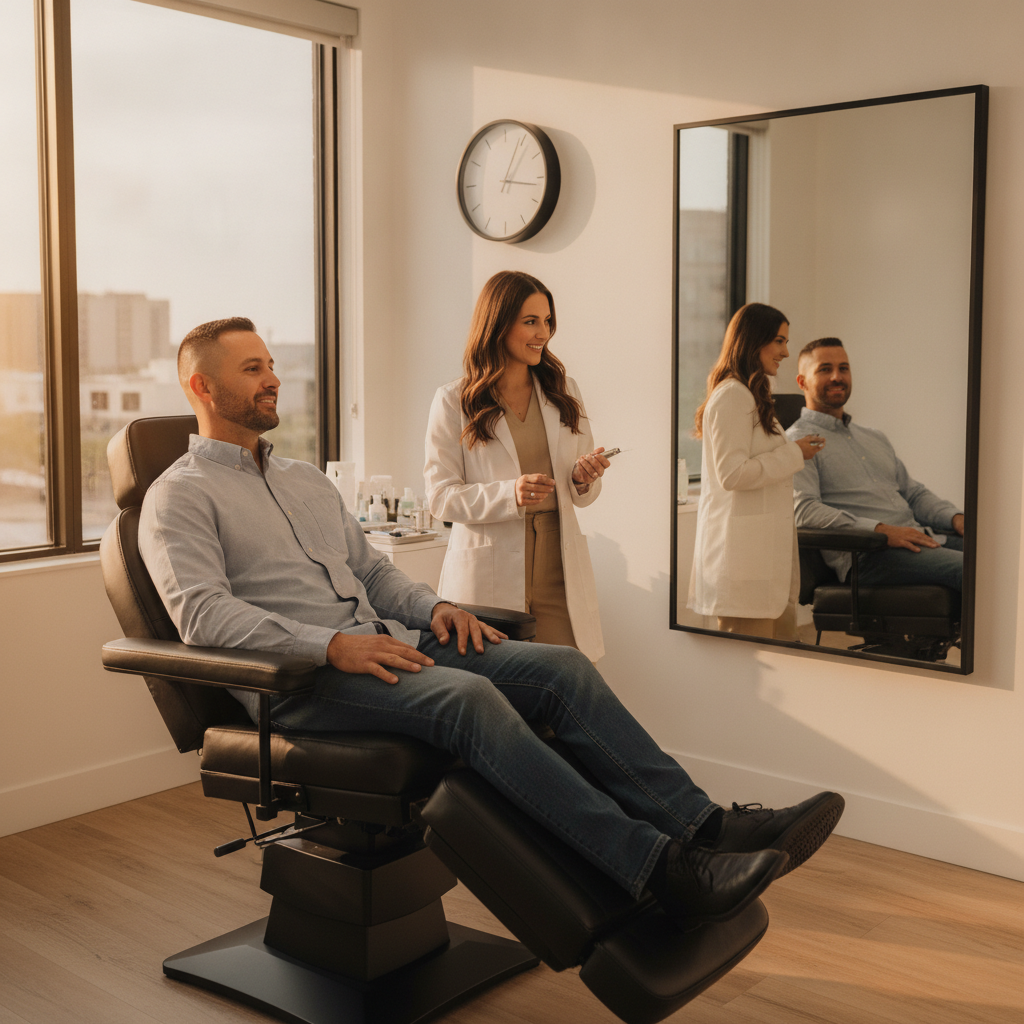
How Soon Can You Return to Work After SMP? What Stockton Professionals Should Know About Downtime and Recovery
If you work in healthcare, agriculture, construction, or any field around Stockton where you can’t easily disappear for a week, your first question about scalp micropigmentation probably isn’t about results — it’s about recovery. How red will your scalp look? Can you go back to work the next day? Will your coworkers immediately notice what you’ve had done? These are completely reasonable things to wonder, and the answer is genuinely more encouraging than most people expect. For the majority of clients, SMP requires little to no formal time off work. But there are a few things worth knowing before you book your first session.
What Your Scalp Actually Looks Like Right After a Session
Immediately following an SMP session, your scalp will look slightly red — similar to a mild sunburn — and the pigment will appear noticeably darker and more defined than the final healed result. This is completely normal. Your skin has just been worked on in a detailed, precise way, and it’s responding accordingly. Most clients describe the redness as fading within a few hours to a day. By the time you wake up the morning after your first session, most of the obvious redness is gone.
The pigment, on the other hand, will look dark and sharp for the first few days. This can actually catch some clients off guard — the dots look crisper and more prominent than they will once healed. That’s not a problem; it’s just the nature of fresh pigment before the skin settles around it. Over the following four to seven days, the treated area will lighten and soften noticeably as the outer layer of skin naturally exfoliates. What you’re left with is a more subdued, realistic look — and that’s what you’ll refine in session two and three.
Can You Go Back to Work the Next Day?
For most Stockton clients, yes — you can return to a standard office, retail, or service environment the very next day. There’s no surgical wound, no bandaging, and no swelling that would make you look like you’d had a medical procedure. What people might notice, if they’re paying close attention, is that your scalp looks a little more defined or that something seems different. Most coworkers won’t be able to put their finger on what changed, because SMP doesn’t announce itself the way surgery does.
The main exceptions are roles with very specific physical demands. If your job involves heavy sweating — think outdoor agriculture work in the San Joaquin Valley heat, or long shifts in a hot kitchen — you’ll want to take at least 72 hours before exposing your scalp to conditions that cause significant perspiration. Sweat in the first few days can interfere with how the pigment sets. Similarly, if your job requires a hat or helmet worn tightly against the scalp all day, check with your SMP artist about timing and fit, since friction on fresh pigment isn’t ideal.
How the Multi-Session Structure Works in Your Favor
One thing most competitor sites in the Sacramento and Central Valley area don’t explain clearly enough is how the session spacing actually gives you built-in recovery time — and how to use it strategically. Scalp micropigmentation is typically completed across two to three sessions, with each session spaced roughly seven to fourteen days apart. That gap isn’t just for healing — it’s part of the artistic process. The first session lays down the foundational layer of pigment. The second refines density and sharpness. The third, if needed, adds final detail and addresses any areas that need touch-up.
Because each session looks progressively more natural as it heals, there’s no single dramatic moment where you walk into the office looking completely different. The change is gradual and stacks subtly across several weeks. Many clients find this preferable to, say, showing up after a hair transplant with a visibly worked scalp and red scabs. With SMP, you simply look a little sharper after each session — and most people assume you’ve been getting better sleep or finally found a good barber.
For professionals in Stockton, Manteca, or Lodi who commute or work in client-facing roles, scheduling your sessions on a Thursday or Friday means you have the weekend to let the initial redness settle before Monday morning. That’s a planning detail worth thinking about when you book.
What You Should Avoid at Work During Healing
The aftercare rules aren’t complicated, but a few of them do affect your workday habits for the first four to five days after each session:
- Avoid direct sun on your scalp. If you work outdoors — common across the agricultural communities along Highway 99 — wear a loose-fitting hat that doesn’t press tightly against your scalp, or use a broad-spectrum sunscreen once the skin has closed (your artist will advise on exact timing). The intense Central Valley summer sun can affect how pigment heals if you’re out in it unprotected.
- Skip the gym for a few days. Intense cardio or anything that produces heavy sweating should wait until the scalp has sealed properly. A brisk walk is fine; a full workout session in a hot gym is not ideal in those first 72 hours.
- Don’t touch or scratch your scalp. As the treated area heals, it will feel a bit dry and may flake slightly. This is normal. Picking or rubbing it — even absentmindedly at your desk — can pull pigment before it’s fully set.
- Stay out of pools and locker room steam rooms. Chlorinated water and prolonged steam exposure should be avoided for at least a week after each session.
None of these restrictions require you to be absent from work. They just require a little mindfulness during the healing window — something most working adults can manage without disrupting their routine significantly.
The Emotional Side of Going Public Right After SMP
Here’s a part of the recovery conversation that rarely gets addressed honestly: some clients feel anxious about going back to their workplace before the results have fully settled. That’s understandable. You’ve taken a meaningful step toward feeling better about yourself, and you want the results to look the way you envisioned — not halfway through the healing process.
What’s worth remembering is that even on day two or three, when the pigment still looks a bit dark and the redness is fading, you don’t look like something went wrong. You look like someone who shaved their head recently or who’s been getting a tighter fade at the barber. The process of healing is built into the design of SMP — your artist knows what fresh pigment looks like and has accounted for how it will settle. You’re not going to walk into the office looking like a mistake. You’re going to walk in looking like someone who made a decision. The team at Infusion SMP understands the emotional weight of that transition, and it’s part of every consultation conversation.
Frequently Asked Questions About SMP Recovery in Stockton
Can I wear a hat to work right after my SMP session?
Yes, but keep it loose for the first few days. A hat that sits snugly and rubs the treated area can affect how pigment settles. A relaxed-fit baseball cap is generally fine; a tight beanie or hard hat worn for extended periods is something to discuss with your artist ahead of time.
Will my scalp look obviously red at work the day after?
Mild redness is possible the day after, but it typically fades significantly within 24 hours for most clients. Many people return to work the next day without anyone remarking on their appearance at all.
I work outside in the Stockton heat. Does that affect my recovery plan?
Yes — outdoor workers should plan their sessions with sun and heat exposure in mind. Try to schedule so you have at least two to three days indoors or with reliable head coverage before returning to full outdoor shifts. The dry Central Valley summer sun is not something you want beating down on a freshly treated scalp without protection.
How many total days should I expect my scalp to look noticeably different after each session?
The most obvious phase — darker pigment, possible mild redness — typically lasts three to five days. By day seven, most clients notice significant softening and a more natural appearance. The full settled look is visible around days ten to fourteen, right around the time your next session would be scheduled.
Do I need to tell anyone at work what I had done?
Absolutely not. That’s entirely your choice. Many clients in Tracy, Lodi, and across San Joaquin County go through their entire multi-session process without ever mentioning it to coworkers — and the gradual, natural progression of results makes that easy. SMP is designed to look like your own hair, not like a procedure.
Ready to Plan Your SMP Around Your Schedule?
If you’ve been putting off SMP because you’re not sure how it fits around a demanding work life, the good news is that it fits better than almost any other hair restoration option available. No surgery, no recovery room, no bandages, and no extended time off. Just a few sessions spaced over a few weeks, with some straightforward aftercare that won’t derail your daily routine.
If you want to talk through your specific schedule, your job environment, and how to plan your sessions in a way that works for your life, reach out to Infusion SMP Scalp Micropigmentation in Stockton for a free consultation. We’ll walk through everything — what to expect day by day, how to time your sessions, and what your results will look like at every stage of healing. You deserve to feel confident at work and everywhere else — and you deserve to get there without turning your life upside down to do it.