
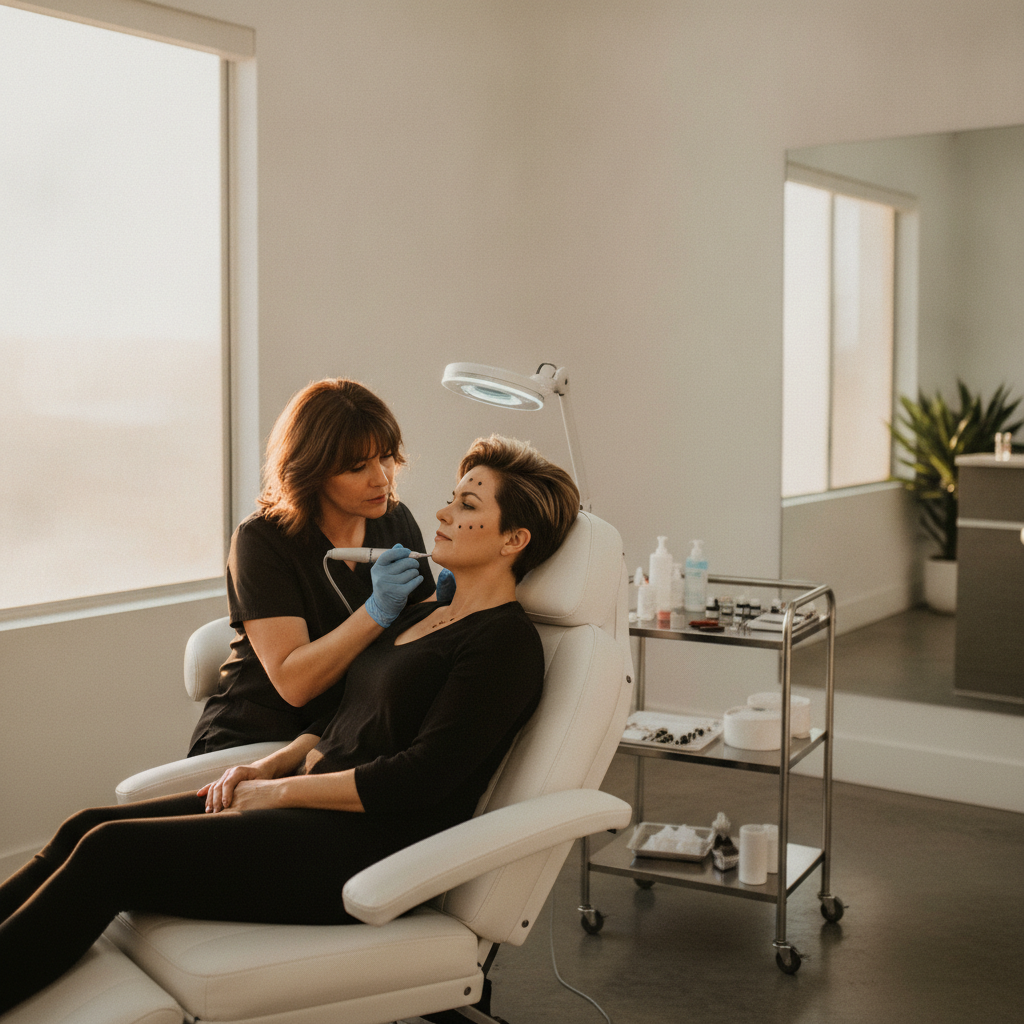
Can SMP Help If You Have Alopecia Areata? What Stockton Clients Should Know About Patchy Hair Loss
Yes — scalp micropigmentation can be a meaningful option for people living with alopecia areata, and it’s one of the most underserved conversations in the SMP world. If you’re in Stockton or anywhere in the Central Valley and you’ve been silently dealing with those unpredictable bare patches, you already know that most hair loss advice out there wasn’t written with you in mind. Rogaine is designed for pattern baldness. Hair transplants don’t work on alopecia-affected scalp. And wigs or hairpieces can feel like a daily reminder that you’re hiding something. SMP is different — and for many people with alopecia, it’s the first solution that actually makes sense.
What Alopecia Areata Actually Does to the Scalp
Alopecia areata is an autoimmune condition, not a hormonal one. Your immune system mistakenly targets the hair follicles, causing hair to fall out in distinct, often circular patches. The follicles themselves aren’t destroyed — they’re just dormant — which is why hair can sometimes regrow, and why this condition is so frustratingly unpredictable. For some people, it stays as a few isolated patches. For others, it progresses to alopecia totalis (complete loss of scalp hair) or alopecia universalis (loss of all body hair).
That unpredictability is exactly what makes alopecia so emotionally draining. You can’t plan around it. You can’t guarantee that what regrows will stay. And that uncertainty makes committing to any treatment feel risky. So let’s talk honestly about what SMP can and can’t do — because you deserve a straight answer, not a sales pitch.
What SMP Can Do for Alopecia Areata
Scalp micropigmentation deposits tiny, precise pigment dots into the upper layers of the scalp to mimic the look of hair follicles. When applied over or around alopecia patches, it reduces the visible contrast between the bare skin and surrounding hair — making those patches far less noticeable, or in some cases, virtually invisible depending on hair length and color.
Here’s where it gets nuanced. SMP works best for alopecia in a few specific scenarios:
- Patchy alopecia with surrounding hair: If you have isolated patches but still have significant hair around them, SMP can blend pigment into those bare areas so the contrast disappears. At a normal viewing distance, the patches look like normal scalp with short-cropped hair.
- Alopecia totalis or extensive loss: If you’ve lost most or all of your scalp hair, a full-scalp SMP treatment can give you the clean, confident look of a deliberately shaved head. Many clients with totalis find this liberating — instead of trying to hide the loss, they own the look entirely.
- Women with diffuse or patchy alopecia: Women tend to wear their hair longer, which means the goal shifts slightly. Rather than full coverage, SMP can be used to darken the scalp beneath thinning areas so the exposed skin is less stark. This reduces the appearance of widening parts or visible patches without requiring a shaved-head style.
If you’re curious how density work factors into alopecia coverage, the approach overlaps with what we use for thinning hair — you can read more about that on our hair density enhancement page.
The Honest Conversation About Regrowth and SMP
This is the part most SMP providers gloss over, and it matters. Alopecia areata can come and go. If pigment is applied to a patch that later regrows hair, you’ll have both the returning hair and the SMP pigment in the same area. In most cases, this isn’t a problem — the hair simply grows through and the pigment blends naturally into the background. But if your hair regrows at a significantly different density or texture than the surrounding area, it can sometimes require a touch-up to rebalance the look.
This is why your consultation matters more with alopecia than with almost any other condition. A skilled SMP artist will talk through your history — how stable your patches have been, whether you’re currently on any treatment, what your expectations are — before recommending a plan. At Infusion SMP, that conversation happens before any pigment ever touches your scalp.
Why Alopecia Clients in the Central Valley Deserve Better Options
If you’re coming from Tracy, Manteca, or out in Modesto, you’ve probably noticed that most SMP studios in the broader Sacramento area focus almost entirely on pattern baldness and receding hairlines in men. Alopecia, especially in women, barely gets a mention on their websites. It’s treated as an afterthought, if it’s treated at all.
That’s a real gap. Alopecia affects roughly 2% of the population — men, women, and children — and it shows up across every ethnicity and skin tone. People in the Central Valley healthcare and agriculture workforce deal with the stress-related triggers that can worsen autoimmune conditions. And the emotional weight of alopecia is often heavier than pattern baldness because it’s less understood by people around you. When coworkers or family don’t quite grasp what alopecia is, the isolation gets worse.
SMP doesn’t treat the autoimmune condition itself. But it can give you back something that alopecia took: control over how you present yourself to the world.
What to Expect Across Your SMP Sessions for Alopecia
Most SMP treatments are completed across two to three sessions, spaced a few weeks apart. The first session lays down the foundational pigment layer. The second session adds depth and begins refining the density and tone. By the third session, the artist fine-tunes the edges, blends any transitions, and ensures the overall look is cohesive and natural.
For alopecia clients, the session structure may look slightly different depending on the extent of coverage needed. Larger treated areas or more complex blending work can require additional time per session. Your artist will walk you through the expected timeline during your consultation so there are no surprises.
Aftercare in Stockton’s Central Valley climate is worth mentioning here. The hot, dry summers in San Joaquin County mean your scalp may be more prone to dryness during healing, and UV exposure needs to be managed carefully in the weeks following each session. Keeping the treated area moisturized, avoiding direct sun, and not picking at any flaking are the essentials. Your artist will give you specific guidance based on your skin type and the time of year.
You can learn more about the full scope of what we do and who we serve on our SMP services page.
Frequently Asked Questions About SMP and Alopecia
Can SMP be done if my alopecia is still active and patches keep changing?
It depends on the stability and extent of your current loss. Active, rapidly spreading alopecia may not be the right time to commit to full coverage — but targeted blending of established patches is often still possible. A thorough consultation will help determine what makes sense for your specific situation right now.
Will the SMP pigment look strange if my hair grows back in a treated patch?
In most cases, no. Returning hair grows through the pigment naturally and tends to blend well, especially if the hair regrows at a similar density to the surrounding scalp. If regrowth creates an uneven appearance, a minor touch-up session can rebalance the look.
Does SMP work for women with alopecia areata?
Yes, and it’s more versatile for women than many people realize. For women who wear their hair longer, the goal is usually darkening the visible scalp beneath thin or bare areas so patches are less stark — not replicating a shaved-head look. The technique is adapted to work with your existing hair rather than replacing it visually.
Is SMP painful on scalp areas affected by alopecia?
The sensation is similar to any other SMP session — a mild scratching or light pressure feeling. Alopecia-affected skin isn’t inherently more sensitive, though every person’s comfort level is different. Topical numbing is available and makes the process much more comfortable.
How much does SMP for alopecia typically cost compared to other hair loss treatments?
SMP pricing varies depending on the size of the area being treated and the complexity of the work. Generally, SMP is a fraction of the cost of a hair transplant (which can run $10,000 or more and isn’t even appropriate for alopecia areata). It’s also a one-time investment rather than an ongoing monthly expense like medication or hairpiece maintenance. Contact us directly for a personalized estimate based on your specific situation.
You Don’t Have to Keep Working Around It
Alopecia areata changes the way you style your hair, the angles you choose in photos, the hats you wear on bad days. It’s exhausting. And it’s especially frustrating when the solutions you find online weren’t designed for you. SMP won’t stop the autoimmune process — but it can take away the visible evidence that you’re fighting it, and that matters more than most people outside of this experience can understand.
If you’re in Stockton, Modesto, Tracy, Manteca, or anywhere in the Central Valley and you’re ready to have a real conversation about what SMP could do for your alopecia, we’re here for it. No pressure, no hard sell — just an honest look at your scalp and what’s possible.
Reach out to Infusion SMP Scalp Micropigmentation to book your free consultation. Let’s talk through your situation and figure out whether SMP is the right fit for where you are right now.