
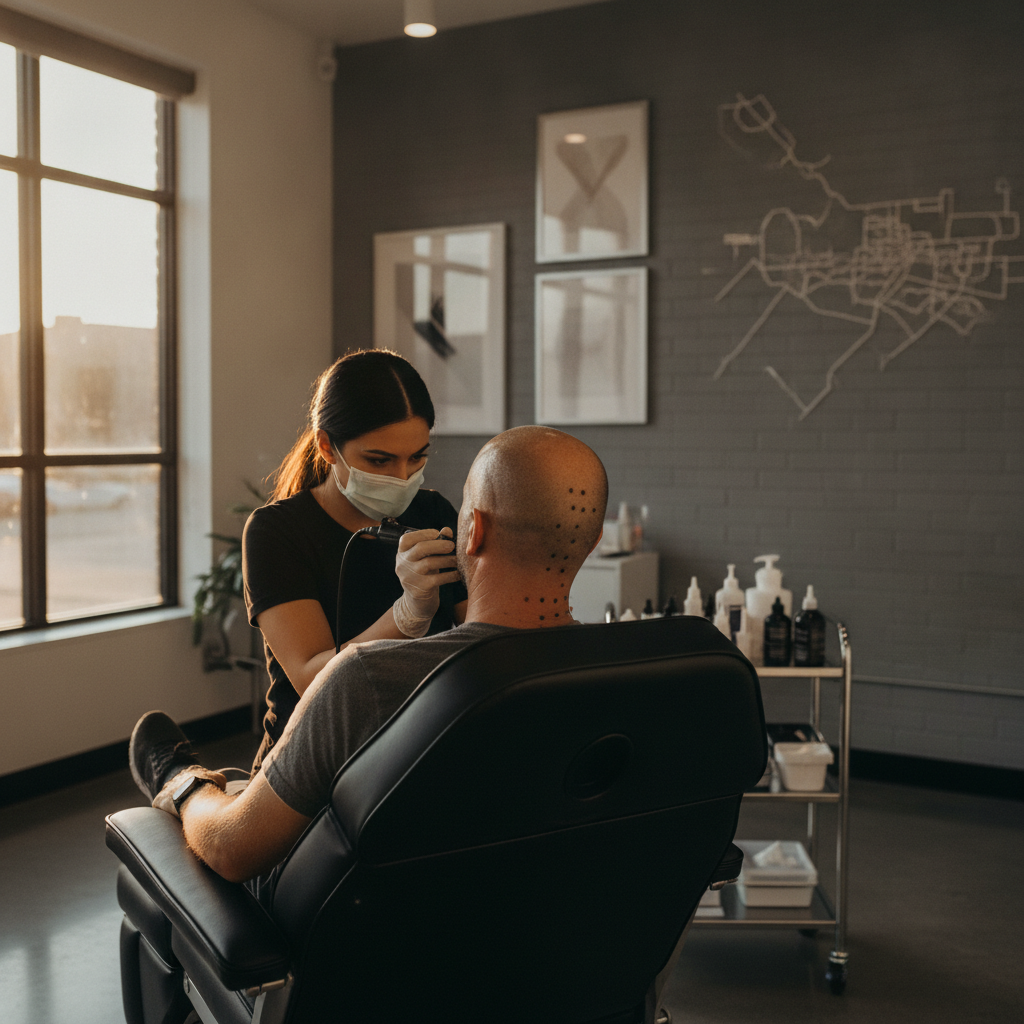

How Does SMP Work If You Have Scalp Hyperhidrosis or Excessive Sweating? What Stockton and Modesto Clients Should Know
Uncategorized9 min read

How Does SMP Work If You Have Scalp Hyperhidrosis or Excessive Sweating? What Stockton and Modesto Clients Should Know
Yes — scalp micropigmentation can absolutely work for you, even if you sweat heavily from your scalp. That said, excessive sweating does raise some real and legitimate questions about healing, pigment retention, and long-term results, and those questions deserve honest answers. If you’re in Stockton, Modesto, or anywhere across the Central Valley, you already know that living through 100-degree summers is not a dry, air-conditioned experience. Add scalp hyperhidrosis on top of that, and it’s completely fair to wonder whether SMP is a durable, realistic option for someone with your physiology. Here’s what you actually need to know.
What Is Scalp Hyperhidrosis and Why Does It Matter for SMP?
Scalp hyperhidrosis is a condition where the sweat glands in the scalp produce more moisture than is needed for temperature regulation. Some people experience this mildly — a bit of shine and dampness after a workout. Others deal with it constantly, to the point where their scalp is visibly wet throughout the day regardless of heat or activity level. It can be embarrassing on its own, and when you’re already self-conscious about hair loss, the combination can feel relentless.
When it comes to scalp micropigmentation, the concern is a reasonable one: if your scalp produces excess moisture, will that affect how the pigment sits in the skin, how it heals between sessions, and how long it ultimately holds up? The short answer is that sweat alone is not a dealbreaker — but it does call for some honest conversation and a few specific aftercare adjustments.
Does Sweating Cause SMP Pigment to Fade Faster?
This is the question most people are really asking, and there’s nuance here worth unpacking — because most SMP providers gloss over it entirely or don’t address it at all.
Sweat itself is mostly water and trace minerals. It doesn’t chemically break down or dissolve SMP pigment the way some people fear. Once pigment has settled into the dermis after the initial healing period, normal perspiration — even heavy perspiration — doesn’t wash it away. What sweat can do is affect the critical healing window between sessions, and that’s where people with hyperhidrosis need to pay close attention.
In the first four to seven days after each SMP session, your scalp is in an active healing state. The pigment is still settling. The treated skin forms a very fine protective layer over the implanted dots, and during this window, excessive moisture — whether from sweat, humidity, or premature contact with water — can cause the pigment to blur, lighten, or not settle as crisply as it should. For someone with scalp hyperhidrosis, this window requires a bit more intentional management than it does for the average client.
What the Central Valley Heat Adds to the Equation
Living in Stockton or Modesto means your outdoor environment does some of the work your body is already doing. Summer temperatures across San Joaquin County and Stanislaus County regularly climb above 100°F, which means even people without hyperhidrosis are contending with scalp sweat during the healing window. If you have hyperhidrosis on top of that, the need to protect your scalp from excess moisture in the first week post-session becomes even more important.
This is especially relevant for clients in Manteca, Tracy, and Lodi who work outdoor jobs — agriculture, construction, field services — where staying cool and dry isn’t always an option. It’s also relevant for the many healthcare workers across the Central Valley who wear close-fitting head coverings or hats during long shifts. If your work or lifestyle puts you in conditions that are likely to cause heavy sweating, that timing conversation is something you’ll want to have with your SMP artist before you book your first session.
How to Manage Healing If You Sweat Heavily
The good news is that this is very manageable with the right approach. Here’s what tends to work best for clients with hyperhidrosis or heavy scalp sweating:
- Schedule sessions strategically. If possible, plan your SMP sessions during cooler months or during a stretch where your schedule allows you to stay in air-conditioned environments for the first several days post-session. For Central Valley clients, that often means avoiding peak summer months for your initial sessions if you have significant hyperhidrosis.
- Avoid strenuous outdoor activity during the healing window. The first four to five days after each session, steer clear of activity that will spike your sweat response. This isn’t forever — just during the critical early healing phase.
- Keep the scalp clean and lightly moisturized as directed. Your SMP artist will give you specific aftercare instructions. Following them closely matters more for heavy sweaters than for people with normal perspiration levels, because your scalp environment during healing is more variable.
- Communicate openly with your artist before your first session. This is not a dealbreaker topic — it’s an information-sharing conversation. A skilled SMP artist will adjust technique, session timing, and aftercare guidance based on your specific scalp condition.
Will SMP Look Different on a Scalp That Sweats a Lot?
When properly healed, no — SMP on a scalp that tends to sweat does not look any different from SMP on a drier scalp. The concern some people have is that a sweaty scalp looks shinier, which could make the work look more artificial. This is a valid aesthetic consideration, but it’s also one that applies to all SMP clients, not just those with hyperhidrosis.
Scalp shine is managed through a combination of technique and your own daily habits. Lightweight, alcohol-free mattifying products can reduce surface shine without affecting your pigment. Using a light scalp moisturizer regularly (once fully healed) also helps the skin look healthy and more natural, rather than overly reflective. If shine is a specific concern for you going in, bring it up during your consultation — it’s worth addressing directly rather than worrying about quietly.
For clients considering SMP for thinning hair or density enhancement rather than a fully shaved look, the shine question is less pronounced since your existing hair diffuses light across the scalp naturally.
Long-Term Pigment Retention for Heavy Sweaters
Over the long term — years, not weeks — all SMP fades gradually and benefits from an occasional touch-up. For people with hyperhidrosis, there’s no strong clinical evidence that chronic sweating significantly accelerates pigment fade once the work is fully healed. Sun exposure, skin type, and aftercare habits are generally more influential factors in long-term retention than perspiration levels.
What does matter is protecting your investment. That means consistent sunscreen use on your scalp (a lightweight SPF 30+ on exposed areas is a reasonable habit), staying adequately hydrated so your skin maintains its barrier function, and coming in for a touch-up when you notice the work beginning to soften — typically every three to five years for most clients, though this varies.
Frequently Asked Questions: SMP and Scalp Sweating in Stockton and the Central Valley
Can I get SMP if I sweat heavily from my scalp every day?
Yes. Scalp hyperhidrosis is not a contraindication for SMP. It does require some extra attention during the healing windows between sessions, but it doesn’t prevent you from getting great, lasting results. Talk openly with your artist about your condition before your first session.
How long do I need to avoid sweating after each SMP session?
Most artists recommend minimizing heavy sweating for the first four to five days after each session. Light perspiration from normal daily activity is generally fine, but intense workouts, outdoor labor in extreme heat, and activities that cause significant scalp sweating should be avoided during that early healing window.
Will the summer heat in Stockton or Modesto affect my SMP healing?
It can, particularly during the first week after each session. If you’re planning SMP during Central Valley summer months, try to schedule sessions at times when you can spend the first few days in air-conditioned environments. Your artist can help you think through the timing based on your lifestyle and work schedule.
Does SMP look shinier or more obvious on someone who sweats a lot?
Not inherently. Scalp shine is a concern for many SMP clients regardless of hyperhidrosis. Using a lightweight, non-comedogenic scalp moisturizer and keeping the scalp healthy reduces excessive shine. Your artist can also advise on technique adjustments that help achieve a more matte, natural finish.
Is Infusion SMP in Stockton familiar with working on clients who have skin or scalp conditions?
Yes. Working with real people means working with a wide range of scalp conditions, skin types, and lifestyle considerations. At Infusion SMP, the consultation process is specifically designed to understand your individual situation before any work begins — so that your sessions, healing timeline, and aftercare plan are built around you, not a generic template.
You Deserve a Clear Answer — Not a Runaround
One of the most frustrating experiences people report when researching SMP is getting vague, non-committal answers to specific questions about their situation. If you sweat heavily from your scalp, you deserve a direct, honest conversation about what that means for your results — not a sales pitch that glosses over your concerns.
At Infusion SMP Scalp Micropigmentation in Stockton, we work with clients from across San Joaquin County, Stanislaus County, and the broader Central Valley, including plenty of people who deal with the unique challenges that come with this climate and their own physiology. Scalp hyperhidrosis is a real condition, and it’s one we can work around — with the right planning, timing, and aftercare guidance.
If you’ve been holding back from exploring SMP because you weren’t sure whether your sweating would be a problem, don’t let that uncertainty make the decision for you. Reach out and have the actual conversation. You may find that the path forward is a lot more accessible than you assumed.
Ready to get honest answers for your specific situation? Contact Infusion SMP Scalp Micropigmentation today to book your free consultation. We’re here to help you figure out what’s right for you — no pressure, no guesswork.
Results vary. SMP is a cosmetic tattoo procedure, not a medical treatment, and does not regrow hair. Individual results depend on skin, scalp, hair and aftercare.