
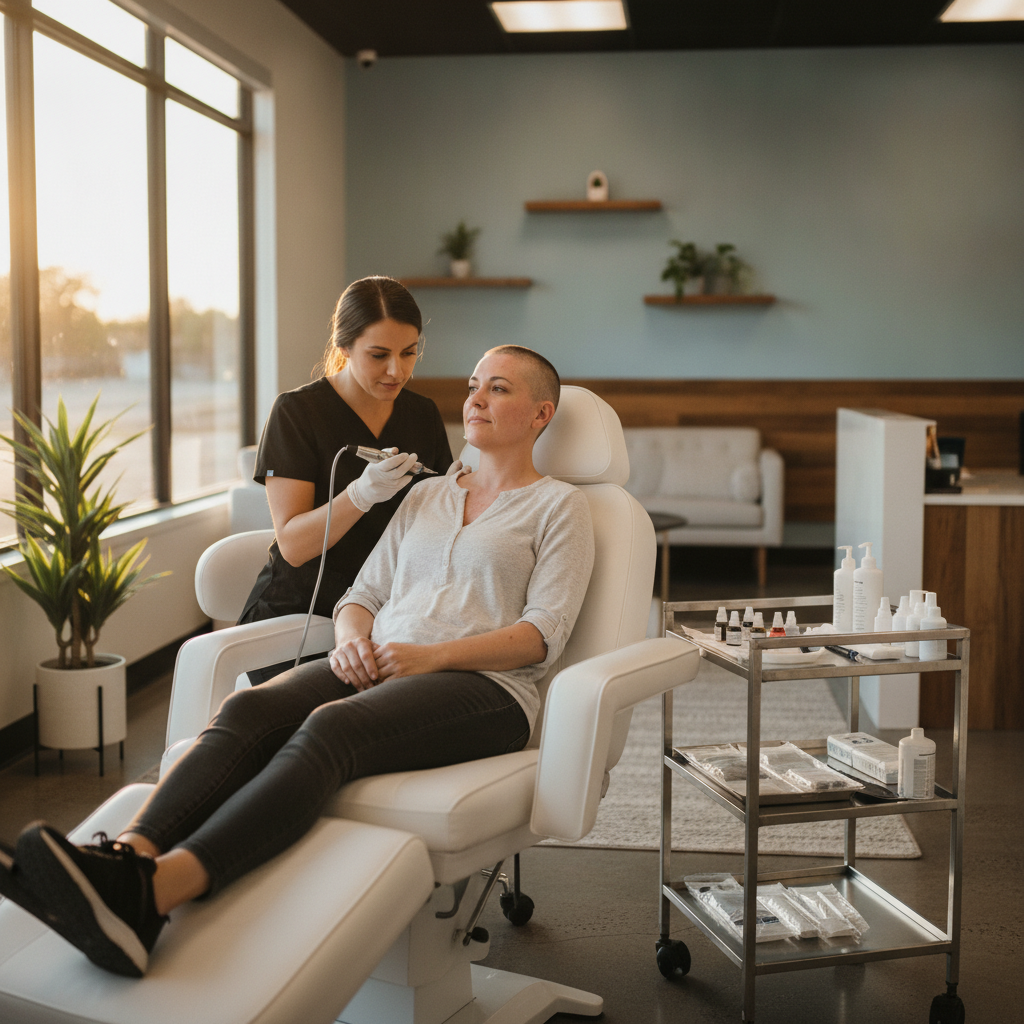

Can You Get SMP If You Have Sensitive Skin, Eczema, or Psoriasis on Your Scalp? What Stockton and Modesto Clients Should Know
Uncategorized9 min read

Can You Get SMP If You Have Sensitive Skin, Eczema, or Psoriasis on Your Scalp? What Stockton and Modesto Clients Should Know
Yes — many people with sensitive skin, eczema, or scalp psoriasis can absolutely get scalp micropigmentation. But there’s an honest and important conversation that needs to happen before you book a session, because the condition of your scalp on the day of treatment matters more than your diagnosis itself. If you’ve been sitting on the fence about SMP because you’re not sure your skin can handle it, this is the guide you’ve been looking for. And if you’re in Stockton, Modesto, or anywhere in the Central Valley, there are a few regional factors — including our notoriously dry, hot summers — that make scalp health an even bigger piece of the puzzle.
Why Scalp Conditions Like Eczema and Psoriasis Come Up in SMP Consultations
Eczema (atopic dermatitis) and psoriasis are both chronic skin conditions that can affect the scalp, causing inflammation, flaking, redness, and in some cases open or cracked skin. For anyone dealing with hair loss on top of these conditions — and there’s meaningful overlap, since both can contribute to thinning or patchy hair — the idea of SMP as a solution is completely understandable. The problem is that a lot of generic SMP content online doesn’t address this at all. You’ll find plenty of before-and-after photos but almost nothing that answers the question: what if my skin doesn’t behave like a healthy, neutral canvas?
That gap is exactly why this conversation is worth having openly. Scalp micropigmentation works by depositing pigment into the upper dermis of the scalp using a specialized needle. When the skin is actively inflamed, flaking, or compromised — as it can be during an eczema or psoriasis flare — that process becomes unpredictable. Pigment may not settle evenly, the skin may not heal cleanly, and you risk irritating an already-reactive area. That’s not a scare tactic; it’s just the reality of working with living tissue.
The Key Question: Are You in Remission or Mid-Flare?
This is the single most important factor for anyone with a chronic scalp condition considering SMP. If your eczema or psoriasis is currently in a flare — meaning there’s active redness, raised plaques, weeping skin, or visible irritation on the areas you want treated — that’s not the right moment to book a session. A responsible SMP artist will tell you the same thing at your consultation, and if they don’t, that’s a red flag.
However, if your condition is well-managed and your scalp is in a calm, stable state, the picture changes considerably. Many clients with a history of eczema or psoriasis proceed with SMP successfully, achieving clean, natural-looking results that hold well over time. The distinction isn’t your medical history — it’s the current state of your skin.
If you’ve been working with a dermatologist and your condition is controlled with a topical treatment or medication, bring that information to your consultation. An experienced SMP artist will want to understand what you’re using, how your skin typically responds to minor trauma, and whether any areas of your scalp are more reactive than others. This isn’t unusual territory for a skilled practitioner — it’s just part of doing the job properly.
How the Central Valley Climate Affects Sensitive Scalp Skin
Here in Stockton and across San Joaquin County, the climate adds a layer of consideration that clients in cooler, more humid coastal areas don’t always have to think about. Our summers are long, dry, and intensely sunny — the kind of heat that dehydrates skin quickly and can trigger flares in people who are already prone to them. If you have eczema or psoriasis, you may already notice that your skin behaves differently during a Stockton summer versus the cooler months.
This matters for two reasons. First, scheduling your SMP sessions during a period when your skin tends to be calmer can improve your outcomes. For many people with reactive scalp conditions, fall and winter — when the heat eases and humidity is a little more stable — can be a better window. Second, aftercare in a hot, dry climate requires more attention. You’ll want to keep your scalp moisturized during healing without exposing it to harsh sun, and those instructions become even more critical for sensitive skin types.
If you’re commuting from Manteca, Tracy, or Lodi for work and spending time outdoors, or if you work in agriculture or a physically demanding role in the heat, make sure your artist knows about your lifestyle when building out your session plan and aftercare guidance.
What to Expect If You Have Sensitive Skin But No Active Condition
Not everyone asking this question has a formal diagnosis. A lot of people simply have reactive or sensitive skin — they flush easily, their scalp gets irritated by certain shampoos, or they notice redness after minor friction. That’s a different conversation than managing a chronic inflammatory condition, and the threshold for proceeding is generally lower.
For clients with general skin sensitivity, the main things your artist will watch for are how your skin responds to a test area, whether you tend to scar or hyperpigment, and what your healing looked like from past procedures or injuries. At Infusion SMP, this kind of nuanced assessment is part of every consultation — because no two scalps are the same, and cookie-cutter approaches don’t produce natural-looking results for everyone.
You deserve to walk out of here confident in how you look, not second-guessing whether the process was right for your skin. That only happens when the evaluation is honest and thorough from the start.
Aftercare Matters More for Reactive Skin — Here’s Why
Regardless of whether you have a diagnosed condition or simply sensitive skin, your aftercare protocol becomes more important, not less. In the days and weeks after each SMP session, the treated area is healing, and keeping it clean, calm, and protected from irritation is what allows the pigment to settle cleanly and the results to look their best.
For anyone with reactive skin, that means:
- Avoiding any topical treatments that could cause irritation to the scalp during the healing window — check with both your dermatologist and your SMP artist about what to pause temporarily
- Using a fragrance-free, gentle moisturizer if your artist recommends hydrating the scalp between sessions
- Staying out of direct sun during the initial healing period, especially given how intense Central Valley sun exposure can be
- Avoiding anything that could trigger a flare — high heat, excessive sweating, or harsh hair products — for the first several days after each session
- Communicating immediately if you notice anything beyond normal healing, such as unusual inflammation or a reaction at the treatment site
The session structure itself — typically two to three appointments spaced several weeks apart — actually works in your favor here. You have time between sessions to assess how your skin responded, address anything that needs adjusting, and confirm your scalp is in a good state before the next round of work.
Frequently Asked Questions
Can I get SMP if I have scalp psoriasis that’s currently mild and well-controlled?
Possibly, yes. If your psoriasis is in remission and the areas you want treated are not actively inflamed or flaking, many clients in this situation are able to proceed. The key is full transparency during your consultation and a careful evaluation of the specific areas involved. Your artist should assess each zone individually, not treat the scalp as a uniform surface.
Will SMP trigger a psoriasis or eczema flare?
There is a known phenomenon in psoriasis called the Koebner response, where skin trauma — including needling — can trigger a new lesion to appear at the site. It doesn’t happen to everyone, but it’s a real consideration. This is one of the reasons working with a knowledgeable, experienced SMP artist matters so much. They should know about this risk and factor it into your candidacy discussion, not skip over it.
What if my eczema is on my neck or ears, not directly on my scalp?
If the eczema is present in areas adjacent to the scalp but not on the scalp itself, that’s a more manageable situation. Your artist will still want to know, as it gives context for how reactive your skin tends to be overall. The treatment area can often be planned to avoid zones of active irritation.
Are there any SMP pigments or products that are better for sensitive skin?
Pigment formulations vary between providers. If you have known sensitivities or allergies, this is absolutely worth raising in your consultation. A patch test ahead of your first full session can help identify any reactivity before you’re committed to a full treatment.
I’m in Modesto — do I need to travel to Stockton for my consultation?
Yes, Infusion SMP is based in Stockton, but clients come from across San Joaquin County and Stanislaus County regularly — including from Modesto, Tracy, Manteca, and Lodi. The consultation is well worth the short drive, especially for something as personal and permanent as this. You can book your free consultation here and we’ll take the time to go through your skin history properly before any commitment is made.
Ready to Find Out If SMP Is Right for Your Skin?
Having sensitive skin, eczema, or psoriasis doesn’t automatically put SMP out of reach — but it does mean your consultation needs to be more thorough than the average appointment, and your artist needs to genuinely understand what they’re working with. At Infusion SMP Scalp Micropigmentation in Stockton, that’s exactly how we approach it. We’d rather take the time upfront to make sure SMP is the right fit for you than rush into a session that doesn’t serve your skin or your confidence.
If you’ve been holding back because you weren’t sure whether your skin could handle it, let’s have an honest conversation. Reach out to us at infusionsmp.com/contact-us to schedule your free consultation. We serve clients across Stockton, Modesto, Manteca, Tracy, Lodi, and throughout the Central Valley — and we’re here to help you figure out whether SMP is the right next step for you.
Results vary. SMP is a cosmetic tattoo procedure, not a medical treatment, and does not regrow hair. Individual results depend on skin, scalp, hair and aftercare.