
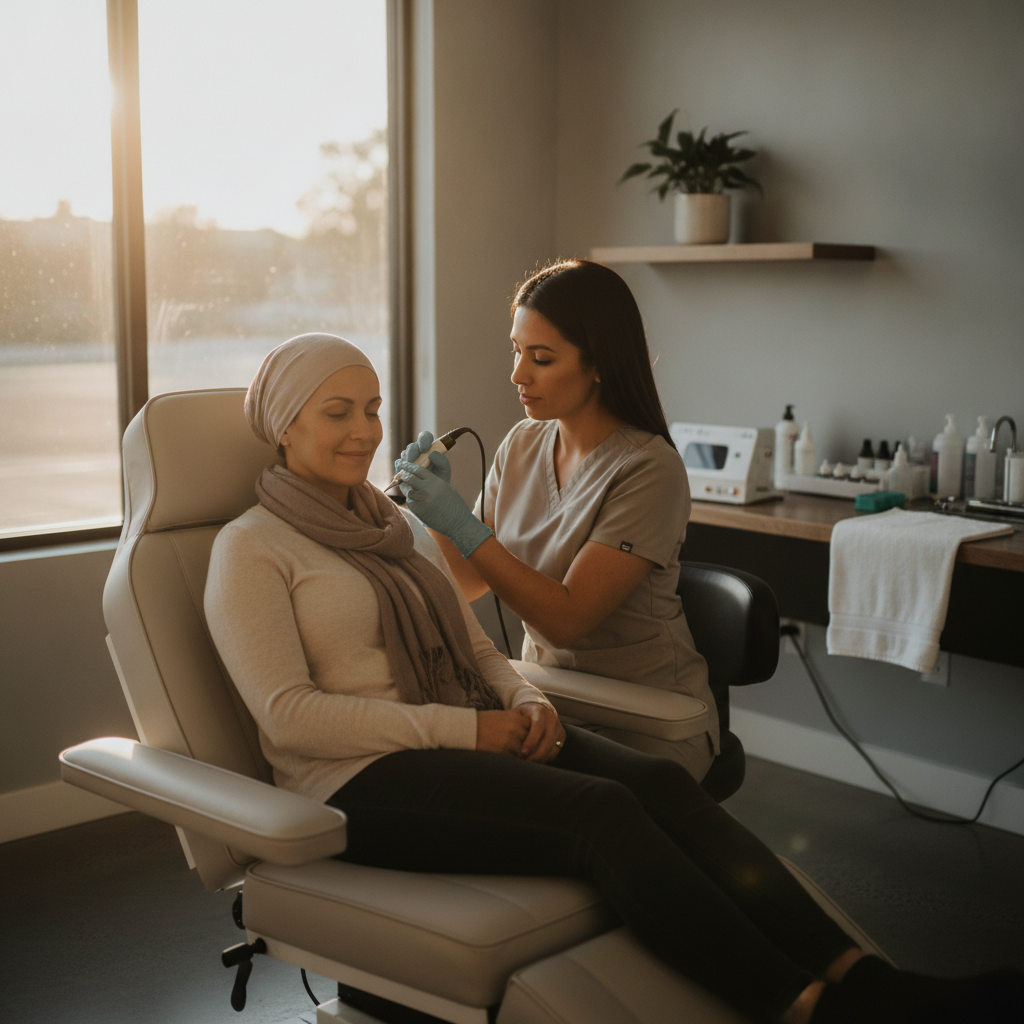

Is SMP a Good Option If You’re Going Through Chemotherapy or Medical Hair Loss? What Stockton and Modesto Clients Should Know
Uncategorized9 min read

Is SMP a Good Option If You’re Going Through Chemotherapy or Medical Hair Loss? What Stockton and Modesto Clients Should Know
If you’re dealing with hair loss caused by chemotherapy, radiation, or another medical treatment, scalp micropigmentation may be something worth exploring — but the timing, your health status, and an open conversation with your doctor all matter enormously. The short answer is: SMP can be a powerful, confidence-restoring option for many people experiencing medically-induced hair loss, but it’s not a one-size-fits-all decision, and there are important things to understand before you book a session. If you’re in Stockton, Modesto, or the surrounding Central Valley, here’s what you need to know.
Why Medical Hair Loss Hits Differently Than Pattern Baldness
Losing your hair gradually to male or female pattern baldness is one thing. Losing it suddenly — sometimes within weeks — because of cancer treatment is something else entirely. For many people going through chemotherapy, hair loss isn’t just a physical change. It’s a visible reminder of what your body is fighting, and it can strip away a sense of normalcy and control at the exact moment you need it most.
This is territory that most SMP providers — including several studios serving the Sacramento and Central Valley area — barely mention on their websites. The focus tends to be on pattern baldness or hairline recession, which are the most common reasons people seek SMP. But medically-induced hair loss is a real and deeply personal experience, and you deserve honest, compassionate guidance on whether SMP fits your situation.
Can You Get SMP During Chemotherapy?
This is the most important question, and the honest answer is: probably not during active treatment — and here’s why that matters.
Chemotherapy suppresses the immune system and significantly affects your body’s ability to heal. Because scalp micropigmentation involves depositing pigment into the upper layers of the skin using fine needles, your scalp needs to be healthy enough to respond normally to the process and heal properly afterward. During active chemo, that healing response is compromised. There’s also increased risk of infection and skin sensitivity, and the scalp itself often becomes fragile, dry, or inflamed during treatment.
For these reasons, most experienced SMP artists will recommend waiting until you’ve completed chemotherapy and your doctor has cleared you for cosmetic procedures. This is not a limitation unique to SMP — it applies to most skin procedures that involve any kind of needle or instrument contact with the scalp.
If you’re in the middle of treatment right now and you came here hoping for a solution today, we understand. But our job is to give you real information, not just tell you what you want to hear. The right timing protects your health and gives you the best possible result.
When SMP After Chemotherapy Makes a Lot of Sense
Once treatment is complete and your oncologist or physician has cleared you for elective procedures, SMP becomes a genuinely compelling option — especially in two scenarios:
- If your hair has not regrown, or regrowth is patchy or thinner than before: Some people find their hair grows back with a different texture, thinner than it once was, or simply doesn’t return to its previous density. SMP can blend into existing regrowth to create the appearance of fuller, more uniform coverage — or replicate a clean-shaved look if that’s the aesthetic you prefer.
- If you’ve decided to embrace a shaved or close-cropped look: Many people who go through chemotherapy find they actually feel empowered wearing their head shaved or very short. SMP can give that look a sharp, defined appearance — restoring the visual cues of density and shadow that make a shaved head look intentional and confident rather than sparse.
Either way, scalp micropigmentation works by depositing tiny, precise dots of pigment into the scalp to replicate the appearance of hair follicles. It doesn’t require your existing hair to do anything — it works with what you have, or on its own.
What About Other Forms of Medical Hair Loss?
Chemotherapy gets the most attention, but it’s far from the only medical cause of hair loss. Clients in Stockton and across San Joaquin County have come to us after experiencing hair loss related to:
- Lupus and other autoimmune conditions
- Thyroid disorders
- Trichotillomania (compulsive hair pulling)
- Radiation therapy to the scalp or head
- Long-term medication use that affects the hair growth cycle
- Scarring from skin conditions or surgical procedures
In many of these cases, SMP is a viable option — but the approach depends on whether the hair loss is stable or still progressing, and whether the scalp skin itself is healthy enough to accept pigment and heal normally. A consultation with an experienced SMP artist, alongside communication with your physician, is the best way to assess your specific situation.
For clients dealing with diffuse thinning from autoimmune or hormonal causes — including women in Stockton and Modesto who experience thinning from conditions like lupus or thyroid imbalance — density enhancement SMP can add the appearance of thickness without disturbing existing hair. You can learn more about that approach on our hair density enhancement page.
The Central Valley Climate Factor: What It Means for Healing After Medical Hair Loss
If you’re recovering from cancer treatment and considering SMP in Stockton or the greater Central Valley — including Modesto and surrounding Stanislaus County — there’s one local factor worth keeping in mind: the heat.
Central Valley summers are intense, with temperatures regularly hitting triple digits. Scalp healing after SMP requires avoiding direct sun exposure, excessive sweating, and anything that irritates or inflames the scalp in the first week or two after each session. For someone who is already managing post-treatment skin sensitivity, this is worth planning around. Scheduling sessions in the fall, winter, or early spring — when the heat is manageable — makes the aftercare process significantly easier and more comfortable.
This is something your SMP artist should be proactively discussing with you. If a studio in the Sacramento or Central Valley area doesn’t mention the local climate’s effect on healing, that’s a sign they may not be thinking carefully about your individual situation.
What to Ask Before You Book
If you’re considering SMP after chemotherapy or another medical cause of hair loss, here are the questions worth asking during a consultation:
- How long after completing chemotherapy do you recommend waiting before starting SMP?
- Do you have experience working with clients who’ve had medically-induced hair loss?
- How will you assess whether my scalp is healthy enough to hold pigment well?
- What adjustments do you make for skin that may still be sensitive or reactive from treatment?
- If my hair continues to change after SMP — growing back thicker or thinner — what are my options?
A good SMP artist will welcome these questions. They’ll take time to understand your health history and won’t pressure you to book before you’re ready. Reach out to Infusion SMP if you’d like to have an honest, no-pressure conversation about whether SMP is right for where you are right now.
Frequently Asked Questions
Can I get SMP while I’m still on maintenance chemotherapy or immunotherapy?
It depends on the specific medications and your immune system’s current state. Some maintenance protocols are less suppressive than active chemo — but you should always get clearance from your oncologist before any skin procedure. We’re happy to work alongside your medical team to find the right timing.
Will SMP still work if my hair has grown back thinner after chemo?
Yes. SMP works by adding the visual appearance of follicle density to the scalp, which can blend seamlessly with thinner or patchier regrowth. In many cases, the combination of real regrowth and SMP pigmentation creates a remarkably natural-looking result that neither option could achieve on its own.
I’m in Modesto — do I need to travel to Stockton for a consultation?
Infusion SMP is based in Stockton and serves clients from throughout the Central Valley, including Modesto and Stanislaus County. The drive is straightforward along Highway 99, and many clients from Modesto find it well worth the trip. We’re happy to answer questions by phone or email before you commit to making the drive.
What if my hair loss from a medical condition is still active or unpredictable?
This is a real consideration. If your hair loss is still changing — either still falling out or in an uncertain phase of regrowth — it’s often better to wait until things stabilize before committing to SMP. That way, the design and coverage approach can be tailored to what your scalp actually looks like long-term, not a temporary phase.
Is SMP covered by insurance for medically-caused hair loss?
SMP is generally considered a cosmetic procedure and is not covered by health insurance, even when hair loss is medically-caused. However, because SMP is a one-time investment rather than an ongoing cost, many clients find it more financially manageable over time than hair systems, wigs, or repeated medication expenses. We’re happy to discuss what’s involved during a free consultation.
You’ve Been Through Enough — You Deserve to Feel Like Yourself Again
Chemotherapy and medical hair loss take so much from you. If reclaiming your appearance — on your terms, at the right time — is something that would help you feel more like yourself again, scalp micropigmentation may be worth exploring. At Infusion SMP Scalp Micropigmentation in Stockton, we approach every client with the care and honesty that a decision like this deserves. We’re not here to sell you a procedure — we’re here to help you figure out whether it’s the right fit for you.
When you’re ready to have that conversation, we’re here. Contact us to schedule a free consultation, and we’ll take it from there — at whatever pace feels right for you.
Results vary. SMP is a cosmetic tattoo procedure, not a medical treatment, and does not regrow hair. Individual results depend on skin, scalp, hair and aftercare.