
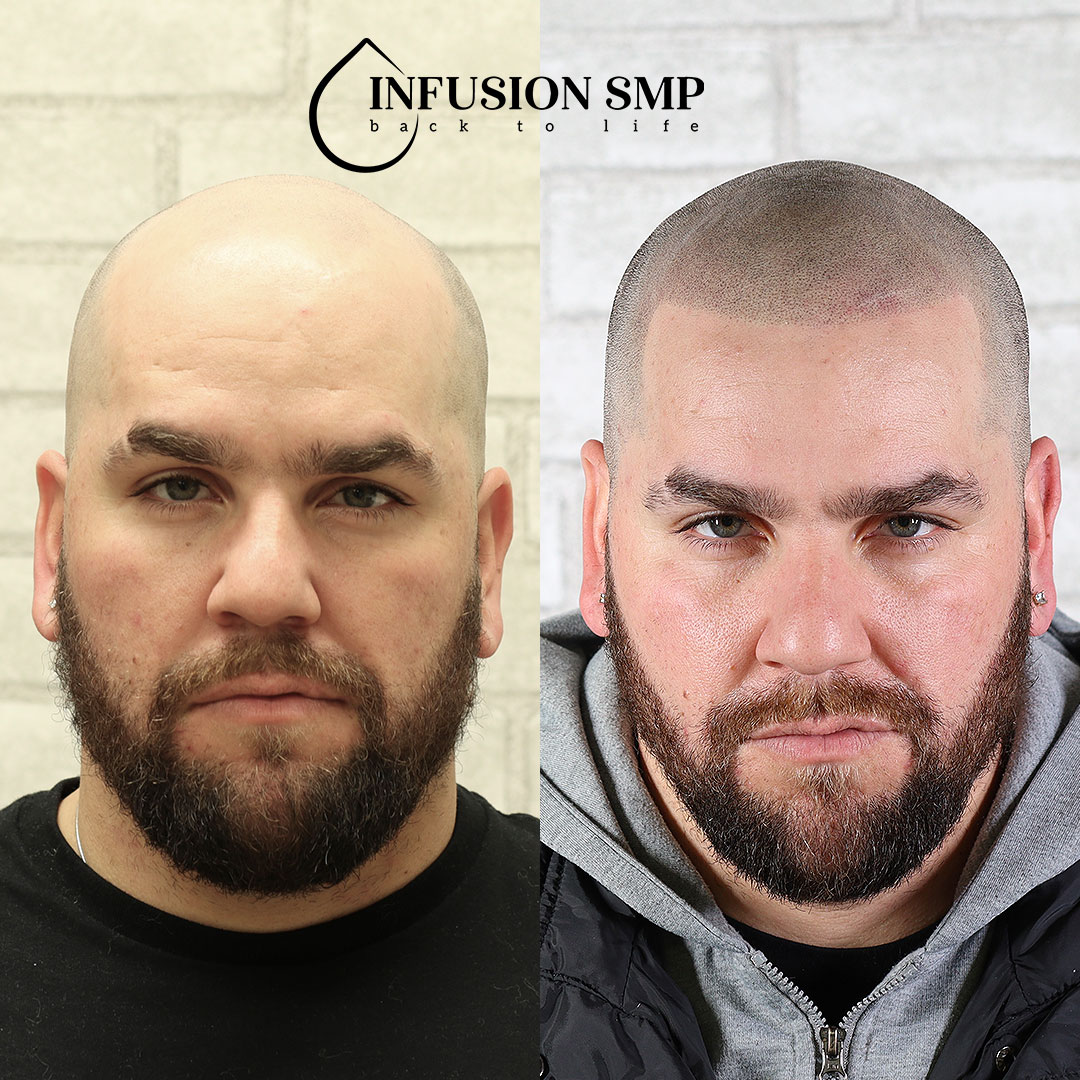

Does SMP Work If You Have a Shaved Head with Visible Scalp Shine? What Stockton and Lodi Men Should Know About Getting a Natural-Looking Finish
Uncategorized8 min read

Does SMP Work If You Have a Shaved Head with Visible Scalp Shine? What Stockton and Lodi Men Should Know About Getting a Natural-Looking Finish
Yes — SMP absolutely works on a shaved head, even if your scalp has a noticeable shine to it. But there’s a real conversation that needs to happen before you book, because shine is one of the most misunderstood factors in how SMP results look once the pigment settles. If you’re in Stockton, Lodi, or anywhere across San Joaquin County, and you’ve been hesitating because you’re worried your shiny scalp will make SMP look fake or mismatched — you’re asking exactly the right question. The good news is that a skilled artist knows how to work with your scalp’s natural characteristics to create a result that looks sharp, natural, and completely undetectable.
Why Scalp Shine Matters More Than Most Studios Admit
Here’s what most competitor websites in the Sacramento area gloss over: the contrast between a shiny, bare scalp and the matte texture of SMP pigment dots can look jarring if it isn’t properly addressed. Scalp micropigmentation replicates the look of freshly shaved stubble — tiny hair follicles rendered in pigment. Real stubble has a slightly matte, textured appearance. A bare scalp that reflects light heavily does not. If the two don’t match in finish, the result can look like dots on a glass ball rather than a natural shaved head.
This doesn’t mean SMP won’t work for you. It means your artist needs to understand your scalp’s specific characteristics before starting — and you need to be equipped with the right aftercare habits to manage shine going forward. Both of those things are entirely achievable.
What Actually Causes Scalp Shine?
Shine on a shaved scalp comes from a few different sources, and not all of them are permanent or uncontrollable:
- Sebum overproduction: Your scalp’s oil glands naturally produce sebum to keep the skin healthy. On a fully shaved or closely cropped head, that oil has nowhere to go and sits on the surface, creating a reflective sheen.
- Skin tone and undertone: Some skin tones — particularly lighter complexions — reflect light more visibly than others. This doesn’t mean SMP is harder to achieve; it just affects how the artist calibrates pigment depth and tone.
- Scalp texture: Smoother skin surfaces reflect more light. Scalps with some natural texture or pore visibility tend to look more naturally matte after SMP because the surface itself scatters light rather than bouncing it back in one direction.
- Moisturizers and products: Many men apply lotion or moisturizer to a shaved scalp without realizing it amplifies shine dramatically, especially in warm weather.
The Central Valley heat is worth mentioning here, too. In Stockton’s summers — where triple-digit days are common from June through September — your scalp sweats more, your sebaceous glands are more active, and the reflective sheen on a bald head is often more pronounced than it would be in a cooler climate. That’s a factor your artist should be aware of when planning your treatment and aftercare guidance.
How a Skilled SMP Artist Addresses Shine — Both During and After Treatment
The short answer is: through technique, pigment selection, and aftercare education. Here’s what that looks like in practice.
Pigment Calibration and Layering
Experienced SMP artists don’t just apply a uniform layer of pigment across the scalp. A well-executed scalp micropigmentation treatment for a shaved-head look involves building density across multiple sessions, typically two to three, spaced several weeks apart. Each session allows the skin to heal and the pigment to settle. Over those sessions, your artist can assess how your scalp is taking the pigment and adjust tone, depth, and dot size to ensure the final result matches your natural scalp texture rather than fighting against it.
On shinier scalps, experienced artists may also work with slightly softer pigment tones in certain areas to reduce contrast between the treated and untreated portions of the scalp, creating a more uniform, seamless appearance.
Post-Treatment Skin Care — This Part Is on You
Once your SMP sessions are complete, managing shine is largely an aftercare issue. Your artist should walk you through this clearly, but the key habits are simple:
- Use a matte-finish moisturizer designed for scalps rather than standard facial lotion or body cream, which can increase reflectivity.
- Keep the scalp clean and lightly exfoliated — buildup of dead skin cells combined with sebum is a major driver of visible shine.
- Apply a broad-spectrum SPF that has a matte or dry finish when you’re outdoors — especially important in the Central Valley sun, where UV exposure also affects pigment retention over time.
- Avoid heavy oils or balms on the scalp that are marketed for beard or skin hydration but dramatically increase surface shine.
Men who follow consistent aftercare routines find that their SMP results look more natural and last longer — and shine becomes a manageable daily habit rather than a structural problem with the procedure.
The Gap Most Studios Don’t Fill: Honest Conversations About Scalp Characteristics
Browsing competitor websites in Sacramento and the surrounding region, you’ll find plenty of polished before-and-after galleries and general service descriptions. What’s harder to find is frank, practical information about how individual scalp characteristics — like shine, texture, skin tone, or oiliness — actually affect the treatment plan. Most sites treat SMP as a one-size-fits-all procedure, when in reality the best results come from a customized approach that accounts for your specific scalp.
At Infusion SMP in Stockton, the consultation isn’t just a formality — it’s where your artist actually looks at your scalp, asks about your daily routines, and builds a plan around what’s going to work for you specifically. If your scalp is notably oily or shiny, that conversation happens before the first needle touches your skin, not after you’re already three sessions in wondering why the result looks off.
What About Men in Tracy, Manteca, or Lodi Who Are Comparing Studios?
If you’re weighing your options across the Central Valley — maybe comparing a studio in Stockton against one in Sacramento or Manteca — the question to ask isn’t just about price. It’s about whether the artist you’re talking to has actually worked on a range of scalp types and skin tones, and whether they’re willing to have a real conversation about your specific concerns before you commit.
A consultation that doesn’t include any discussion of your scalp’s characteristics, your lifestyle, or your expectations for finish and appearance is a red flag. You deserve more than a generic pitch. You deserve a result that looks like you — just sharper, cleaner, and more confident.
Frequently Asked Questions
Will SMP make my scalp look shinier than it already does?
No — SMP pigment itself has a matte quality that, when properly applied, tends to reduce the appearance of shine rather than amplify it. The key is working with an experienced artist who accounts for your scalp’s oil production and texture from the start.
Do I need to shave my head completely for SMP to work?
For the full shaved-head or stubble look, yes — you’ll want to shave down to a very short length so the pigment blends seamlessly with any remaining hair. Your artist will guide you on exactly what length works best for your specific result before your first session.
How do I control shine on my scalp after SMP is done?
A matte-finish scalp moisturizer, regular gentle cleansing, and a dry-finish SPF for outdoor days are the main tools. Your artist should give you specific product guidance based on your skin type as part of your aftercare plan.
I work outdoors in Stockton’s summer heat — will sweating affect my SMP finish?
During the initial healing period after each session — typically around ten days — you’ll want to limit heavy sweating to protect the pigment while it settles. After that, sweat doesn’t damage the treatment. Long-term, consistent sun protection is the most important habit for maintaining your results in a hot, dry climate like the Central Valley.
Does SMP for a fully shaved head cost more than a hairline treatment?
Generally, yes — full scalp coverage involves more surface area and typically requires more session time than a focused hairline restoration or density treatment. The exact cost depends on your specific scalp size and the scope of work involved. A consultation gives you a clear, honest estimate before you commit to anything.
Ready to See What’s Possible for Your Scalp?
If shine has been holding you back from exploring SMP, you’re not alone — it’s one of the most common concerns men bring into the consultation room. But it’s also one of the most solvable. With the right artist, the right technique, and a simple daily routine, a shaved-head SMP result can look completely natural — even up close, even in bright light, even in the middle of a Central Valley summer.
Infusion SMP Scalp Micropigmentation is based in Stockton and serves clients throughout Lodi, Tracy, Manteca, Sacramento, and the broader San Joaquin County region. If you’re ready to have an honest conversation about what SMP can realistically do for your scalp — and get a clear plan before you invest a single dollar — reach out to us today to schedule your free consultation. There’s no pressure, no obligation, and no generic sales pitch. Just a real conversation about your scalp and what’s going to work for you.
Results vary. SMP is a cosmetic tattoo procedure, not a medical treatment, and does not regrow hair. Individual results depend on skin, scalp, hair and aftercare.