
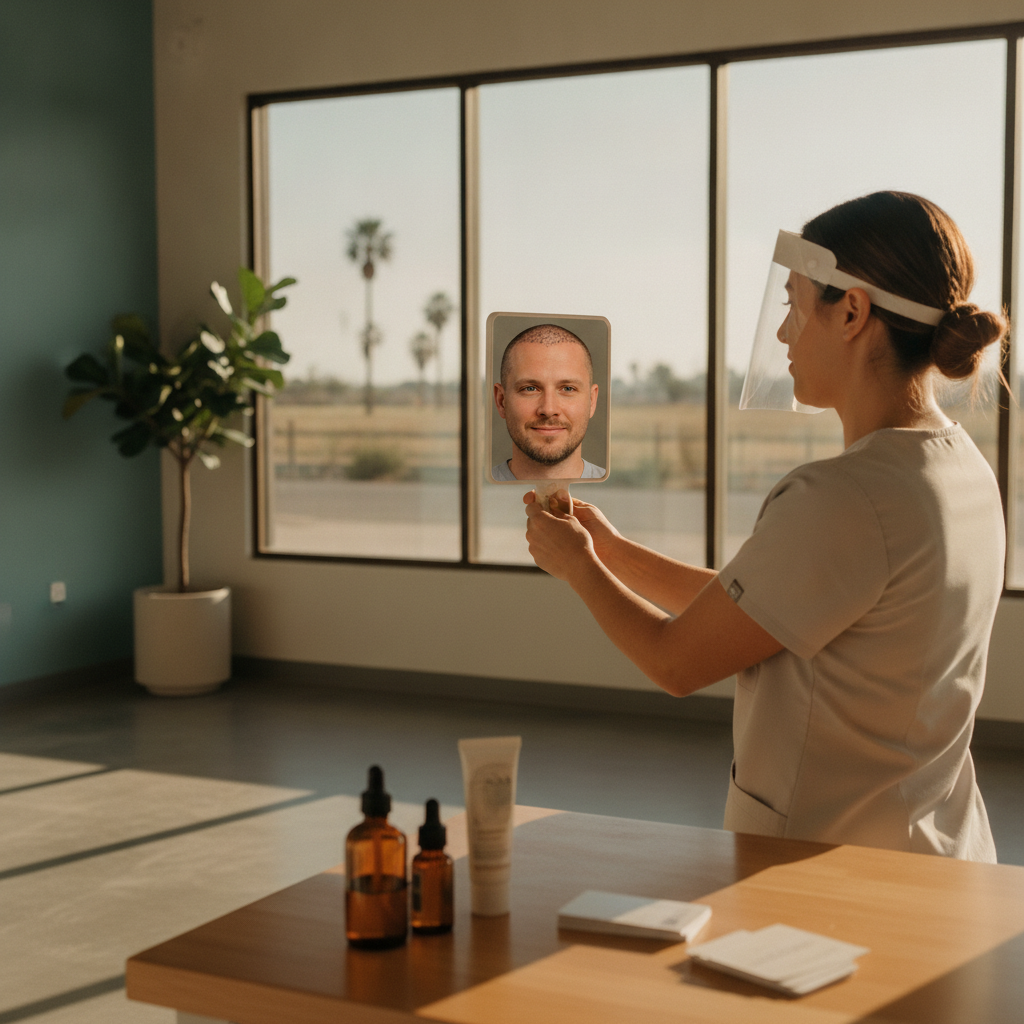

What Happens During SMP Healing? What Stockton and Modesto Clients Should Know About the Days and Weeks After Each Session
Uncategorized8 min read

What Happens During SMP Healing? What Stockton and Modesto Clients Should Know About the Days and Weeks After Each Session
You can spend hours researching scalp micropigmentation before you book your first session — watching videos, reading reviews, comparing studios. But almost nobody talks about what comes after you leave the chair. For clients in Stockton, Modesto, and the broader Central Valley, that gap in information can lead to unnecessary anxiety when healing looks different than expected. So let’s clear it up. SMP healing is a process, not an event — and once you understand what’s happening at each stage, you’ll feel far more confident about the results unfolding in front of you.
Why the Healing Process Matters More Than People Realize
SMP isn’t a single appointment. It’s typically completed over two to three sessions, spaced roughly seven to fourteen days apart. Each session builds on the last, and the healing that happens between sessions is actually part of what makes the final result look natural and dimensional. Skipping aftercare steps — or panicking when pigment appears to lighten during healing — is one of the most common reasons clients think something went wrong when it didn’t.
Understanding the healing arc also matters more here in the Central Valley than in some other climates. Stockton summers regularly push past 100°F, the air is dry, and UV exposure is intense. That combination can accelerate surface-level flaking, dehydrate the scalp faster, and — if you’re not protecting your head — affect how well pigment holds over the long term. This is a specific consideration that most national clinic websites gloss over entirely, and it’s worth addressing directly.
Day by Day: What Normal SMP Healing Actually Looks Like
Days 1–3: Fresh, Dark, and a Little Tender
Right after your session, the treated area will look darker and more defined than the final result. That’s completely normal. The pigment is sitting closer to the surface of the skin, and there may be slight redness or sensitivity in the treated zones. Some clients describe a mild sunburn feeling — nothing dramatic. You should avoid washing your scalp for the first few days, skip the gym (sweat can affect freshly deposited pigment), and stay out of direct sun as much as possible. If you’re commuting on Highway 99 or working outdoors in Manteca, Tracy, or the surrounding agricultural areas, a lightweight hat is your best friend during this window.
Days 4–7: The Lightening Phase — This Is Not Fading
This is the stage that surprises most clients. As the outer layer of your skin begins to heal and lightly exfoliate, the pigment will appear to lighten noticeably. Some people look at the mirror around day five and think the ink is disappearing. It isn’t. What you’re seeing is the natural process of your skin healing over the top of the deposited pigment. The dots may look softer, slightly blurred, or less dense than they did immediately after your session. This is expected. It’s part of the reason SMP is designed as a multi-session process — session two will re-establish depth and definition once the skin has fully settled.
During this phase, keep the scalp moisturized but don’t over-apply products. A light, fragrance-free moisturizer — applied gently — helps prevent excessive dryness, which is especially relevant during dry Central Valley winters and the low-humidity stretches that hit Lodi and Turlock hard in summer. Avoid picking, scratching, or rubbing the scalp. Let the skin do what it needs to do.
Days 7–14: Settling In
By the end of the first week, most of the surface healing is complete. The scalp feels more normal, the treated area has softened into the skin naturally, and you’re getting a preview of what the finished result will look like — though you’re still not fully there yet. This is typically when clients return for their second session. Scalp micropigmentation works in layers, and session two is where your artist adds density, refines the hairline, and blends everything into a cohesive result.
Between Sessions: The Window That Shapes Your Final Result
The spacing between sessions isn’t arbitrary. Your skin needs time to fully heal so the second layer of pigment is deposited into stable, recovered tissue. Rushing back too early can actually interfere with pigment retention. Waiting too long may mean session two has to cover more ground than intended. Most clients in Stockton and Modesto come back seven to fourteen days after their first appointment — your artist will advise you based on how your skin healed.
Use this window to protect your investment. Sun exposure is the biggest threat to long-term pigment retention, and the Central Valley’s UV index during summer months is not forgiving. Wear SPF 30 or higher on the treated area whenever you’re outside. If you spend time outdoors for work — whether that’s in agriculture, construction, or any other field that keeps you under the Stockton sun — building in a sun-protection habit during healing will pay dividends years from now.
After Session Two (and Sometimes Three): What to Expect
Most clients complete their SMP in two sessions. Some, particularly those treating larger areas, more advanced hair loss, or scar camouflage, may benefit from a third. Each session follows the same healing pattern: initial darkness, a lightening phase around days four through seven, and then a settling period that reveals the true result.
By the time you’ve fully healed from your final session — usually four to six weeks after your last appointment — the result should look natural, dimensional, and consistent. If anything looks uneven after full healing, that’s what a touch-up session is for. A good artist will want to see you through that process.
For clients exploring SMP for thinning hair or density enhancement, the healing process is essentially the same, though the treated zones may be more dispersed across the scalp rather than concentrated along a hairline.
Long-Term Aftercare: What Keeps SMP Looking Sharp
Once fully healed, SMP requires minimal upkeep — which is one of the reasons it appeals to busy healthcare workers, tradespeople, and commuters across San Joaquin County who don’t have time for high-maintenance hair solutions. That said, a few habits will keep your results looking their best over the years:
- Use SPF regularly. UV exposure is the primary driver of premature pigment fading. This matters more in the Central Valley than almost anywhere in Northern California.
- Keep the scalp moisturized. Dry, cracked skin doesn’t hold pigment as well over time. A light daily moisturizer helps the treated skin stay healthy.
- Avoid harsh exfoliants or medicated shampoos on the treated area without checking with your artist first.
- Schedule a touch-up when needed. Most clients do a refresh every few years, depending on skin type, sun exposure habits, and lifestyle.
Frequently Asked Questions About SMP Healing in Stockton and the Central Valley
Is it normal for my SMP to look lighter after a few days?
Yes — this is one of the most common concerns, and it’s completely normal. As your skin heals, the surface layer lightly exfoliates over the pigment, making it appear softer or lighter. This is part of the process. The depth and definition return after subsequent sessions and full healing.
Can I go back to work right after my SMP session?
Most clients return to desk work or low-activity jobs within a day or two. If your job involves heavy sweating, direct sun exposure, or wearing a helmet or hat for extended periods, talk to your artist about timing — especially during the first week of healing.
Does the Central Valley heat affect SMP healing?
It can. Excessive sweating during the first week may affect pigment retention, and prolonged sun exposure without SPF will accelerate long-term fading. If you’re in Stockton, Modesto, or Turlock during the summer months, sun protection isn’t optional — it’s part of your aftercare plan.
How many sessions will I need before I see the full result?
Most clients complete their SMP in two to three sessions. The full result — including how the pigment has settled, blended, and healed — is typically visible four to six weeks after your final session. Patience during this period is genuinely worth it.
What if something looks off after healing is complete?
Touch-ups exist for a reason. Skin varies from person to person, and occasionally an area needs a little more attention after full healing. A reputable SMP artist will assess the healed result and advise on whether a touch-up is warranted. Don’t judge the final outcome until your skin has fully recovered from the last session.
Ready to Start the Process in Stockton?
Healing from SMP is straightforward when you know what to expect — and knowing what to expect is exactly what a good consultation is for. At Infusion SMP Scalp Micropigmentation, we walk every client through the full process before, during, and after each session. We’re based in Stockton and serve clients from across San Joaquin County, Modesto, Lodi, Manteca, and beyond.
If you’re ready to ask your questions, see real healed results, and find out whether SMP is right for you, we’d love to hear from you. Reach out to schedule your free consultation — no pressure, just an honest conversation about what SMP can do for you and what the full experience looks like from start to finish.
Results vary. SMP is a cosmetic tattoo procedure, not a medical treatment, and does not regrow hair. Individual results depend on skin, scalp, hair and aftercare.