
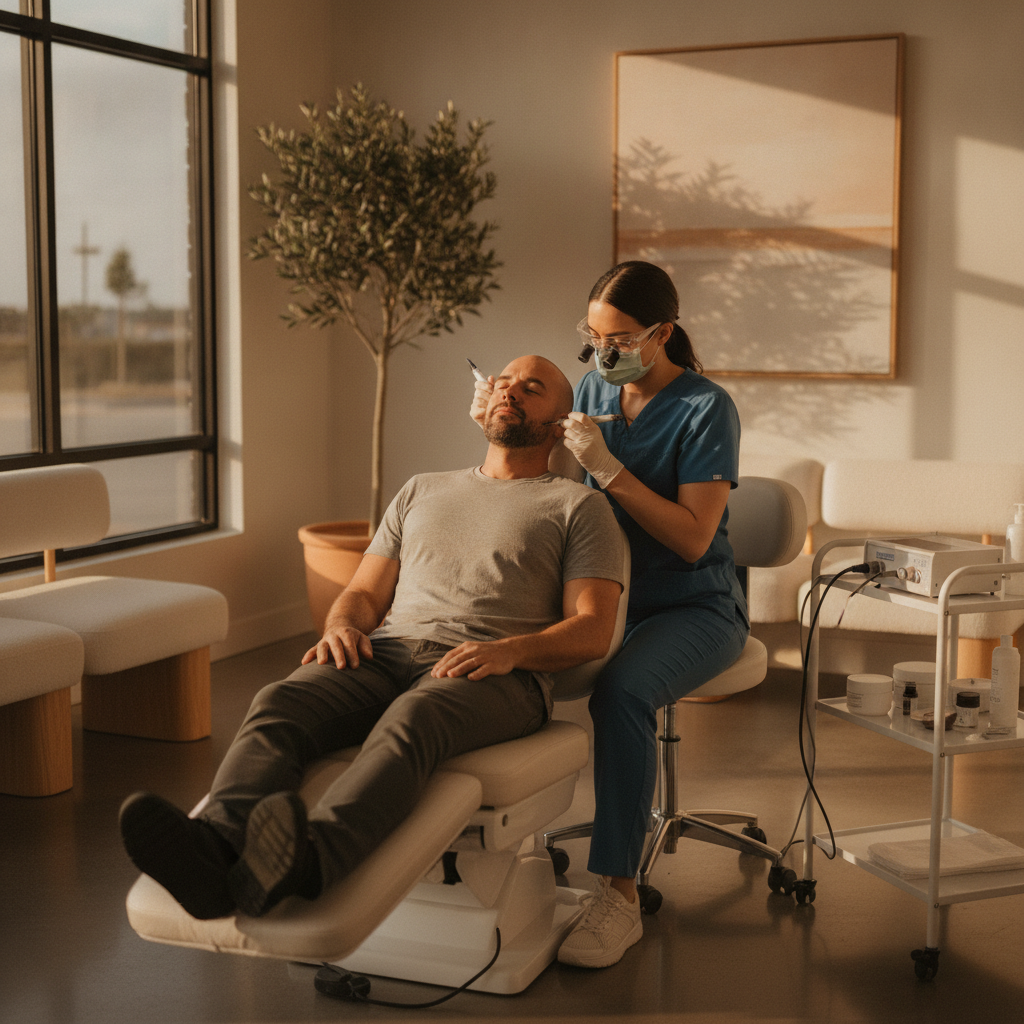

How Does SMP Work If You Have a Sunburned, Peeling, or Sun-Damaged Scalp? What Stockton and Modesto Clients Should Know Before Their Session
Uncategorized9 min read

How Does SMP Work If You Have a Sunburned, Peeling, or Sun-Damaged Scalp? What Stockton and Modesto Clients Should Know Before Their Session
If you’re bald or thinning and you live in Stockton, Modesto, or anywhere in the Central Valley, your scalp is exposed to some of the most intense sun in California. We’re talking 100-degree summers, dry heat, and relentless UV exposure for months on end — and for men especially, a bare scalp absorbs all of it. So when clients come in asking about scalp micropigmentation, one of the most important but least talked-about factors is this: the current condition of your scalp skin matters enormously. A sunburned, peeling, or chronically sun-damaged scalp isn’t just uncomfortable — it can directly affect how well your SMP session goes and how long your results last.
Here’s what you need to know before you book, so you walk in with skin that’s ready and walk out with results you’ll love.
Why Scalp Condition Matters More Than Most Studios Tell You
Most SMP providers will mention sun avoidance as part of aftercare — and that’s important. But very few talk openly about what happens when you show up to your first session with sun-damaged or actively healing scalp skin. That’s the gap we want to address directly here.
Scalp micropigmentation works by depositing pigment into the upper dermal layer of the skin using fine needles. When that skin is compromised — whether from a fresh sunburn, chronic UV damage, excessive dryness, or peeling — the results can be unpredictable. Here’s why:
- Sunburned skin is inflamed skin. When your scalp is actively burned, the skin is raised, irritated, and in a state of repair. Introducing pigment into inflamed tissue makes it harder for the dots to settle evenly, and your body may push pigment out faster than it should as part of the healing response.
- Peeling skin takes pigment with it. If the outer layer of your scalp is already flaking or shedding — which is common after a bad burn — those same cells that are peeling away are the ones holding your freshly deposited pigment. You can lose density and sharpness before the session has even had a chance to heal properly.
- Chronically sun-damaged skin can be thickened or uneven. Years of UV exposure without protection can alter skin texture over time. This doesn’t make SMP impossible — not at all — but it does mean your artist needs to know and account for it when calibrating needle depth and pigment saturation.
What the Central Valley Climate Does to Your Scalp (That Other Regions Don’t Deal With)
This is a factor that Sacramento-area or Bay Area SMP studios don’t always appreciate fully — but it’s a reality for anyone in San Joaquin County or Stanislaus County. The Central Valley doesn’t just get hot. It gets dry-hot, with low humidity and prolonged UV exposure that lasts well into October. That combination accelerates moisture loss from the scalp, speeds up cell turnover, and leaves exposed scalp skin drier and more fragile than in coastal climates.
For clients in Manteca, Tracy, Lodi, or Modesto working outdoors in agriculture, construction, or delivery — or even just commuting with the sunroof open on Highway 99 — the scalp takes a daily hit that adds up. If you’ve been outside without a hat all summer, your scalp may be more sun-damaged than you realize, even if it doesn’t feel painful anymore.
This is why we take scalp condition seriously during the consultation process at Infusion SMP. We’d rather delay your session by a few weeks than rush into treatment on skin that isn’t ready — because your results deserve to be done right.
How to Know If Your Scalp Is Ready for SMP
You don’t need to have perfect skin to get SMP. But before your first session, your scalp should meet a few basic conditions:
- No active sunburn — the redness, tenderness, and heat should be completely resolved
- No active peeling or flaking from a recent burn
- Scalp should feel comfortable to the touch — not tight, hot, or sensitive
- Skin should be reasonably moisturized, not cracked or excessively dry
If you’ve had a moderate sunburn, most practitioners recommend waiting at least two to three weeks after the skin has fully healed before proceeding. A severe burn may require more time. The good news is that once healed, most sun-damaged scalps respond well to SMP — you don’t need to have “perfect” skin, just recovered skin.
How to Prepare Your Scalp in the Weeks Before Your Appointment
A few simple steps in the weeks leading up to your session can make a real difference in how your results turn out:
- Wear a hat outdoors. This is the single most impactful thing you can do. A loose, breathable cap protects the scalp from UV damage and helps regulate moisture. Do this consistently in the two to four weeks before your session.
- Moisturize daily. Use a light, fragrance-free moisturizer on your scalp each day. Hydrated skin accepts and retains pigment more consistently than dry skin. Avoid anything with heavy perfumes or harsh exfoliants.
- Avoid harsh shampoos. Some shampoos — especially dandruff formulas with salicylic acid or selenium sulfide — can be drying. Switch to a gentle, sulfate-free option in the weeks before your session.
- Stay hydrated. Sounds simple, but it matters. In Central Valley heat, dehydration shows up in your skin. Drinking enough water helps your scalp stay supple and receptive.
- Don’t scrub or exfoliate. Leave the skin barrier intact heading into your session. No aggressive exfoliation, no harsh scrubs.
If you’re not sure whether your scalp is in good shape heading into your appointment, just ask during your consultation. That conversation is exactly what it’s there for.
After Your Session: Sun Protection Is Non-Negotiable in the Central Valley
Once your SMP is done, sun protection becomes one of the most important parts of keeping your results looking sharp for years to come. UV exposure is one of the primary causes of pigment fading — and in Stockton and Modesto, that means you’re dealing with a more aggressive fading risk than someone living on the coast.
For the first four weeks after each session, avoid direct sun exposure on your scalp as much as possible. After that, SPF 30 or higher applied to the scalp (or a hat when you’re outdoors) becomes part of a simple long-term maintenance habit. Clients who protect their scalp consistently tend to go longer between touch-ups and maintain sharper, more defined results over time. Learn more about what to expect from density and longevity on our hair density enhancement page.
Frequently Asked Questions
Can I get SMP if I have a peeling sunburn right now?
No — you should wait until the burn has fully healed, the peeling has stopped, and the scalp is no longer tender or inflamed. Rushing this risks uneven pigment retention and a less-than-ideal result. Give it at least two to three weeks after the skin has normalized, then book your consultation.
Will years of sun damage ruin my SMP results?
Not necessarily. Chronic sun damage can affect skin texture, but most clients with long-term UV exposure still achieve excellent results. Your artist needs to understand your skin’s condition to calibrate the session correctly — which is exactly what a thorough consultation addresses. Don’t assume sun damage disqualifies you without asking first.
How much does SPF matter for keeping SMP looking good long-term?
It matters a lot, especially here in the Central Valley. UV exposure breaks down pigment over time, which is what causes fading. Consistent sun protection — whether SPF or a hat — is the single easiest thing you can do to extend the sharpness and longevity of your results between touch-up sessions.
I work outside in the heat near Modesto. Is SMP still a good option for me?
Yes, and you’re actually a great candidate — SMP is one of the lowest-maintenance options available for people in physically demanding or outdoor-heavy jobs. The key is being strategic about timing your sessions around your work schedule, protecting the scalp during healing, and building in sun protection as a long-term habit. Many outdoor and agricultural workers in Stanislaus County and San Joaquin County have found SMP to be a far more practical solution than hairpieces or medication.
Does the hot, dry Central Valley climate affect how long SMP lasts?
It can. Dry heat and high UV exposure are both factors that can accelerate fading compared to more temperate climates. That said, clients who moisturize their scalp regularly, protect it from the sun, and schedule a touch-up when needed maintain strong results for many years. Your artist can give you realistic expectations based on your skin type, lifestyle, and local conditions.
Ready to Talk About Your Scalp?
If you’ve been putting off SMP because you weren’t sure whether your sun-exposed scalp was ready, or you just had a rough summer of outdoor work and want to know where things stand — the right first step is a conversation. At Infusion SMP, we take the time to assess your scalp condition honestly before we ever pick up a needle. We’d rather give you real answers upfront than promise you the moon and deliver something that doesn’t last.
Serving Stockton, Modesto, Tracy, Lodi, Manteca, and the surrounding Central Valley, we’re your local option for SMP done right — with a real understanding of what this climate does to your skin and how to work with it. Reach out to schedule your free consultation and let’s talk about what your scalp needs to get you the results you’re looking for.
Results vary. SMP is a cosmetic tattoo procedure, not a medical treatment, and does not regrow hair. Individual results depend on skin, scalp, hair and aftercare.