
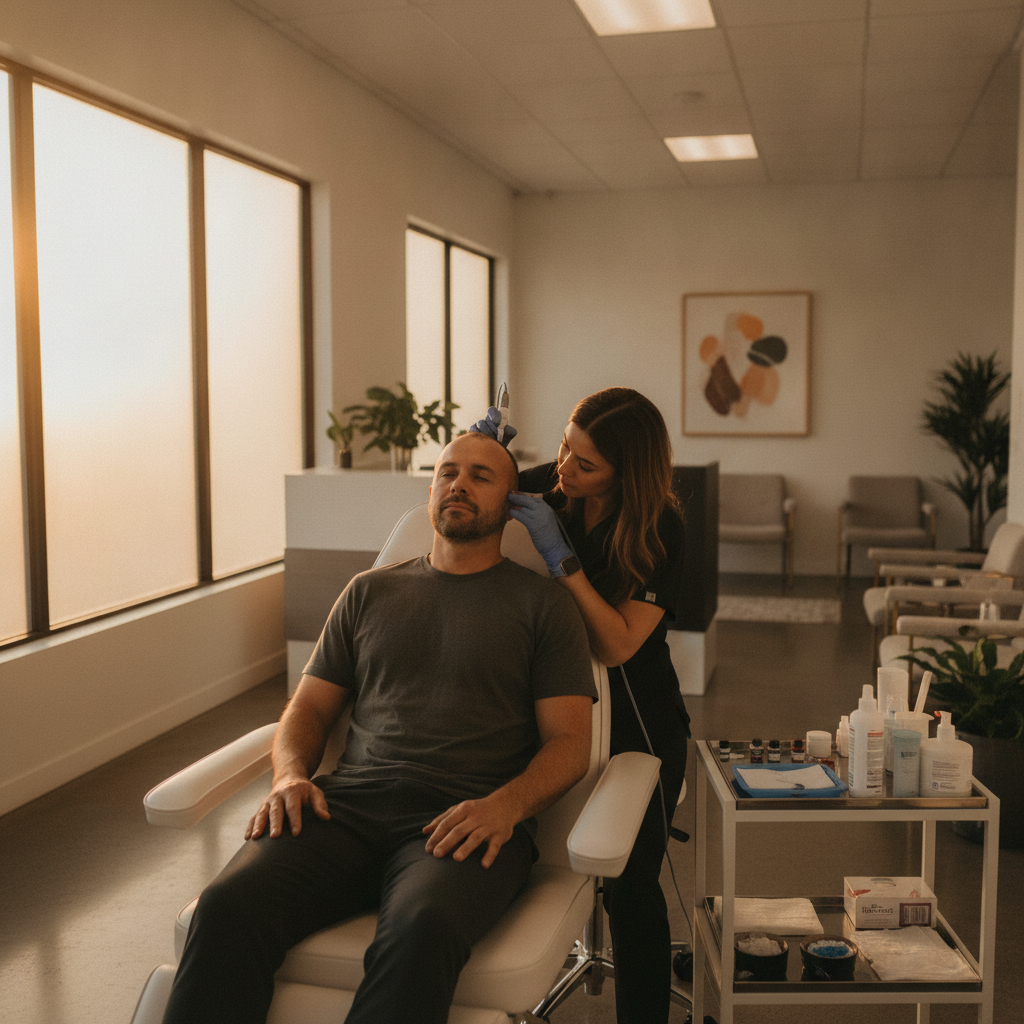

Does SMP Hurt? What Stockton and Modesto Clients Should Know About Pain, Comfort, and What to Expect in the Chair
Uncategorized9 min read

Does SMP Hurt? What Stockton and Modesto Clients Should Know About Pain, Comfort, and What to Expect in the Chair
Most people who are seriously considering scalp micropigmentation ask some version of this question before anything else: does it hurt? It’s a fair question — and honestly, it deserves a more direct answer than you’ll find on most SMP websites. The short version is this: SMP is uncomfortable for some people in certain areas of the scalp, but it is nothing like what most clients expect going in. The overwhelming majority of people who come through our studio in Stockton — including plenty who drove in from Modesto, Tracy, Manteca, and Lodi — leave their first session surprised by how manageable it was. That said, your comfort matters, and understanding what actually happens in the chair helps you walk in relaxed instead of tense.
What SMP Actually Feels Like — Honestly
Scalp micropigmentation uses a specialized needle to implant pigment into the upper layer of the dermis. It is not the same as getting a traditional tattoo. The needles used in SMP are finer, the depth is shallower, and the motion is different — more of a stippling effect than a continuous drag across the skin. What that means in practice is that the sensation is more of a repeated light prick or scratch than the sustained burning feeling some people associate with tattooing.
Most clients describe the experience somewhere in this range:
- A light scratching or tapping sensation on the top of the scalp
- Mild stinging or sensitivity along the hairline, especially at the temples and frontal edges
- More noticeable discomfort at the back of the head near the occipital bone, or around the sides above the ears
- Occasional tenderness that builds slightly toward the end of a longer session
What it almost never feels like: unbearable, shocking, or something you need to white-knuckle through. The scalp has a lot of nerve endings, so there is real sensation — but the scalp also responds well to topical numbing agents, and a skilled SMP artist works with you, not against you.
Which Areas of the Scalp Tend to Be More Sensitive
Not every part of the scalp feels the same. If you’ve had any bodywork done — a tattoo, a facial treatment, even a dental procedure — you already know that different zones have different nerve density. The same is true here.
The crown and top of the scalp are generally the most tolerable areas. Most clients zone out, put in earbuds, and get through crown work without much trouble. The temples and frontal hairline tend to be more sensitive, because the skin is thinner and the underlying bone is closer to the surface. The sides and back — especially just above and behind the ears — can have more nerve activity and feel sharper. For clients coming in for scar camouflage work along a FUT strip scar at the back of the head, the scar tissue itself is usually less sensitive than the surrounding skin, though the area around it can feel tender.
None of this means you should dread those areas. It just helps to know what’s coming so you’re not caught off guard.
What We Do to Keep You Comfortable
A good SMP artist takes your comfort seriously — not just because it’s the right thing to do, but because a relaxed client holds still better, heals more evenly, and has a better overall experience. At Infusion SMP, we use topical numbing cream applied before each session. This significantly reduces the sharpness of the sensation for most clients and makes the longer sessions far more manageable.
Beyond numbing, the pace and approach matter. Sessions are structured to give your scalp breaks when needed. You’re never rushed. If something is bothering you, you say so and we adjust. A lot of what makes the experience feel worse than it needs to be — tense muscles, held breath, white-knuckling the armrest — comes from not knowing what’s happening. When you understand the process going in, your body stays looser, and that makes a real difference.
For most clients, a full scalp session runs two to four hours. That sounds long, but with numbing and reasonable pacing, the vast majority of people make it through without significant distress. Session one is often described as the easiest, partly because the scalp hasn’t built up any cumulative sensitivity yet. Learn more about how the full SMP process works, including what each session covers and why results build progressively across two to three appointments.
The Honest Answer for Clients Who Have a Low Pain Threshold
If you know you have a low tolerance for pain — or if you’ve had experiences in the past that make you anxious about needles — you’re not automatically a bad candidate for SMP. You’re just someone who needs a provider willing to be honest with you about what to expect and how to adjust the approach.
Things that genuinely help if you’re sensitive:
- Getting a full night of sleep before your session — fatigue increases pain perception
- Eating a real meal beforehand — low blood sugar makes everything feel worse
- Avoiding alcohol the day before — it thins the blood and heightens sensitivity
- Communicating openly with your artist during the session — pauses are not a problem
- Bringing headphones and something to listen to — music or a podcast makes a meaningful difference for a lot of clients
Clients who drive in from Modesto or Lodi for longer sessions sometimes plan for a light meal stop on the way home and take the rest of the day easy. That’s a reasonable approach, especially after your first appointment when you don’t yet know exactly how your body responds.
What the Healing Period Feels Like
The session itself is one thing — the few days after are another. Most clients experience some mild tenderness or tightness on the scalp for a day or two, similar to a mild sunburn feeling. The scalp may look slightly red immediately after, and some clients notice a little dryness or minor flaking as the skin heals over the following week. This is normal and expected.
One thing worth knowing, especially if you live or work in the Central Valley heat: the dry, hot climate we have here in the summer can make the scalp feel tighter during healing. Keeping the scalp moisturized as directed — and staying out of direct sun exposure during the early healing window — makes a real difference in how comfortable the recovery feels and how well the pigment settles. This is one reason aftercare guidance from a local provider who understands our climate matters more than generic instructions you’ll find on a national franchise website. See how Infusion SMP serves the Stockton area and what that local experience means for your results and recovery.
Frequently Asked Questions About SMP Pain and Comfort
Can I use numbing cream before my session?
Topical numbing is applied as part of the session at Infusion SMP. You don’t need to source or apply anything yourself beforehand unless specifically instructed. Over-the-counter numbing products applied without guidance can sometimes affect skin texture, so it’s best to follow your artist’s direction rather than experimenting on your own.
Is SMP more painful than a regular tattoo?
Most people who have had both say SMP feels less intense. Traditional tattooing involves a longer, dragging needle stroke at greater depth. SMP uses a lighter, stippling motion at a shallower level. The sensation is different — more repetitive tapping than burning — and the scalp tends to respond well to numbing agents.
Does it hurt more if I have scar tissue on my scalp?
Scar tissue itself often has reduced sensation because nerve endings were disrupted during the original injury or surgery. The skin around the scar may actually be more sensitive than the scar itself. Your artist will work carefully around those areas and adjust pressure accordingly.
Will the second and third sessions hurt more than the first?
Some clients find the second session slightly more sensitive because the scalp has recent work in it. Others find it easier because they know what to expect and stay more relaxed. Either way, the same numbing protocol applies, and most clients handle subsequent sessions just as well as the first.
Can I take pain medication before my session?
Avoid ibuprofen and aspirin before your session — these are blood thinners and can cause more bleeding, which affects how well pigment is retained. Acetaminophen (Tylenol) is generally fine. Always ask your artist before taking anything to be sure.
You Deserve to Feel Confident — Not Anxious
Fear of pain stops a lot of people from taking a step that could genuinely change how they feel about themselves every day. If you’ve been putting off looking into SMP because you’re not sure you can handle it, the honest truth is: most people are surprised. Not every provider takes the time to walk you through what to expect, address your concerns before you sit down, or pace a session to keep you comfortable. That’s part of what makes the difference between an experience you dread and one you’d recommend to a friend.
Whether you’re in Stockton, coming up from Manteca, or making the drive from Modesto, you’re welcome to come in, ask your questions, and see the studio before you commit to anything. Reach out to Infusion SMP Scalp Micropigmentation to book a free consultation. There’s no pressure and no obligation — just a real conversation about what you’re dealing with and whether SMP is the right fit for you.
Results vary. SMP is a cosmetic tattoo procedure, not a medical treatment, and does not regrow hair. Individual results depend on skin, scalp, hair and aftercare.