

Can You Get SMP If You Have Curly, Coily, or Wavy Hair? What Stockton and Sacramento Clients Should Know About Texture Matching
Uncategorized9 min read

Can You Get SMP If You Have Curly, Coily, or Wavy Hair? What Stockton and Sacramento Clients Should Know About Texture Matching
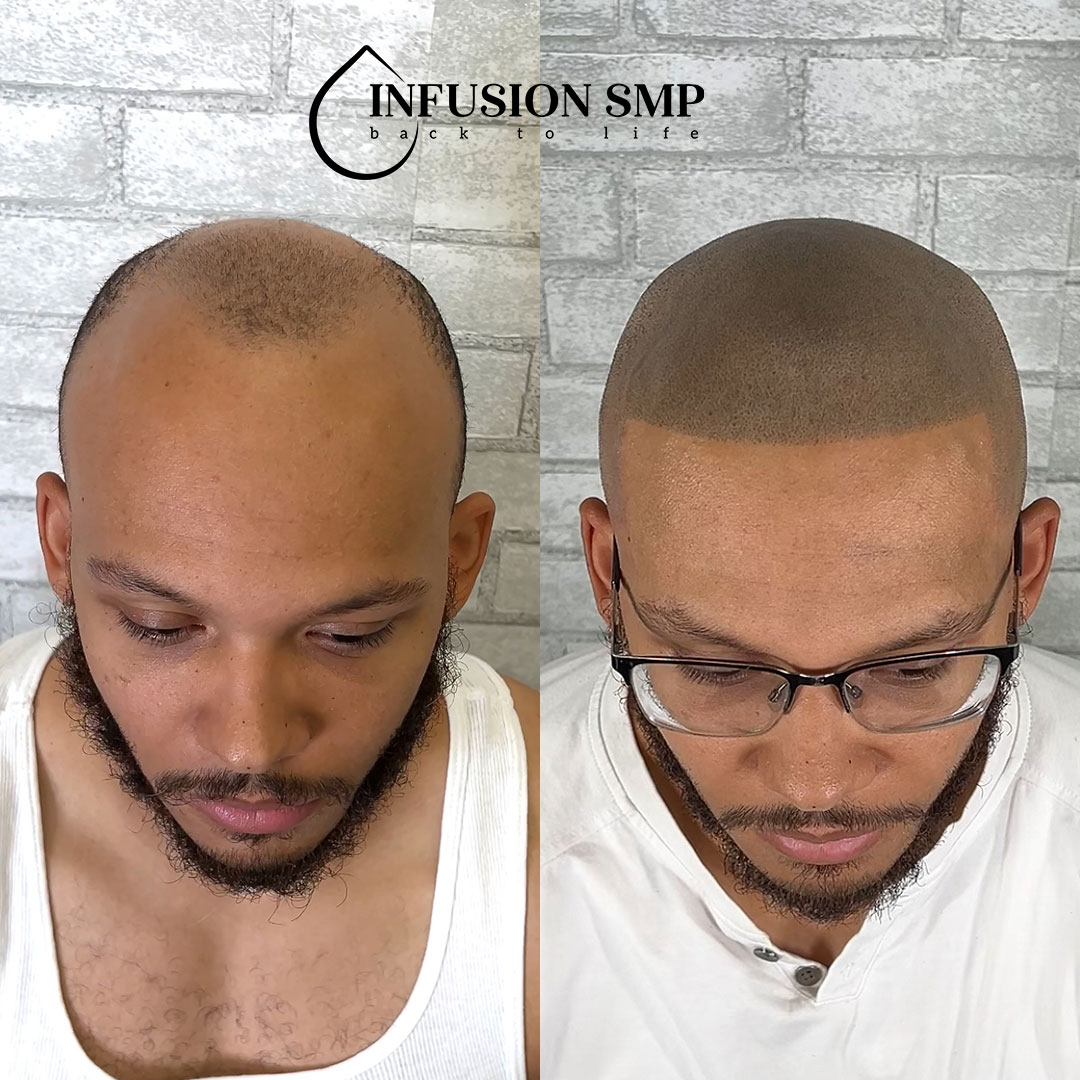
Yes — scalp micropigmentation works beautifully with curly, coily, and wavy hair, and for many clients with textured hair it produces some of the most natural-looking results possible. But there’s an important catch: the technique has to be adapted to your hair type. A practitioner who only knows how to work with straight hair follicle patterns will produce results that look off, no matter how skilled they are in other respects. If you’ve been wondering whether SMP is actually built for hair like yours, the short answer is that it absolutely can be — as long as you’re sitting in the right chair.
Stockton is one of the most ethnically and culturally diverse cities in California, and the Central Valley as a whole reflects that diversity. A meaningful portion of clients walking through the door at Infusion SMP Scalp Micropigmentation have naturally curly, coily, or wavy hair — Black men and women, Latino clients, clients of mixed heritage, and others whose hair growth patterns look nothing like the idealized straight-follicle images you still see on some SMP studio websites. This article is for them.
Why Hair Texture Actually Matters for SMP
To understand why texture matters, it helps to understand what SMP is actually doing. The procedure deposits tiny pigment dots into the upper layer of the scalp, replicating the appearance of individual hair follicles. When done well, those dots blend invisibly into your existing hair and scalp, creating the illusion of density, a restored hairline, or a full shaved-head look depending on what you’re going for.
The challenge with curly and coily hair is that the follicles themselves are shaped differently. Straight hair follicles are round in cross-section and grow perpendicular or at a slight angle. Curly and coily follicles are oval or flattened, and the hair exits the scalp at a more pronounced angle — sometimes nearly parallel to the scalp surface. This affects how hair looks at the root, how tight the curl pattern sits against the scalp, and how light hits the area between follicles.
A practitioner who doesn’t account for this will place dots that are too uniform, too round, or spaced in a way that reads as artificial next to a natural coil pattern. The result looks like a grid of dots sitting on top of your scalp rather than follicles growing out of it. That’s the “fake” look people are afraid of — and it’s almost always the result of a technique mismatch, not a limitation of SMP itself.
What a Proper Technique for Textured Hair Actually Looks Like
When an experienced practitioner works with curly or coily hair, several things change in the approach:
- Dot size and shape: Coily and tightly curled hair often benefits from slightly irregular dot placement and subtle variation in dot shape, mimicking the natural randomness of densely packed follicles. Perfect uniformity looks unnatural against a curly hair pattern.
- Pigment density: Tighter curl patterns can actually allow for slightly denser pigment work in some areas because the hair itself provides more visual coverage and the contrast between pigment and scalp is less stark.
- Hairline design: A natural hairline for someone with a tight coil pattern looks different from a hairline designed for someone with fine, straight hair. The edges, the density gradient, and the way the hairline breaks are all different — and they need to be designed that way.
- Pigment color matching: This is non-negotiable. The pigment used must match your natural hair color at the follicle level, not just your hair color as it appears several inches from the scalp. For clients with very dark, dense coily hair, this usually means working with deeper tones and ensuring the pigment doesn’t shift warm or ashy as it heals.
SMP for Density and Thinning in Natural, Curly Hair
One of the most common reasons clients with curly or wavy hair come in isn’t full baldness — it’s thinning. Maybe your part is getting wider. Maybe your crown feels sparse when you look in the mirror after washing and styling. Maybe your edges have receded and don’t hold a clean lineup the way they used to.
Hair density enhancement with SMP is especially effective for clients with natural hair because the existing hair provides visual cover. The SMP dots sit underneath and between your real hair, filling in the scalp that would otherwise show through. The result is that your hair looks fuller and thicker without anyone being able to tell you’ve had anything done — they just see more hair.
For clients in Tracy, Elk Grove, Lodi, and across San Joaquin County who are managing thinning with protective styles, extensions, or thickening products, SMP can significantly reduce how much effort goes into concealing the problem every single day. It’s a permanent change to how your scalp looks — not a product you reapply or a style you depend on to hide what’s underneath.
The Gap Most Competitor Studios Leave Open
Here’s something worth saying plainly: most SMP studios in the Sacramento area and across the Central Valley show portfolio images that skew heavily toward clients with straight or very short hair. When textured-hair clients browse those sites looking for someone who genuinely understands their hair type, they often don’t find the reassurance they need — not because SMP doesn’t work for them, but because the studios simply haven’t documented that work or spoken to that audience.
That absence leaves a real question hanging in the air: Is this actually for me? The answer is yes. But you deserve to have that question answered directly, with examples and an explanation of how the approach changes, rather than having to assume the studio will figure it out when you show up.
At Infusion SMP in Stockton, the consultation process is specifically designed to look at your actual hair, your follicle pattern, your scalp tone, and what you’re trying to achieve — before any decisions are made about technique, pigment, or hairline design. Nothing is templated. Nothing is assumed.
What to Ask Any SMP Studio Before Booking
If you’re shopping around — comparing studios in Sacramento, Modesto, or anywhere else along the Highway 99 corridor — here are the questions worth asking before you commit:
- Can you show me portfolio photos specifically of clients with curly or coily hair?
- How do you adjust your technique for tighter curl patterns?
- How do you select pigment for clients with very dark, dense hair?
- What does the hairline design process look like for someone with my hair type?
- Have you worked with clients whose hair texture is similar to mine?
If a studio can’t answer these questions confidently and specifically, that’s meaningful information. SMP is a permanent procedure. You’re not trying out a new haircut. The person doing the work needs to understand your hair, not just the procedure in the abstract.
Frequently Asked Questions
Will the SMP dots look round and obvious against my curly hair?
Not with a properly adapted technique. An experienced practitioner adjusts dot placement, sizing, and density to complement your curl pattern rather than fight it. The goal is for the dots to disappear into your hair — and with the right approach, they do.
I keep my hair longer on top with a natural style. Can SMP still help with thinning?
Yes. SMP for density enhancement works under and between existing hair. You don’t need to shave your head or change your style. The pigment fills in the visible scalp so your hair looks fuller while you keep wearing it the way you always have.
How do I know the pigment color will match my hair?
Pigment selection happens during your consultation and is based on your actual hair color at the root — not your hair color mid-shaft. For clients with very dark, rich coily hair, this is one of the most important parts of the process, and it’s something that should be discussed explicitly before your first session.
I’m in Elk Grove / Tracy / Lodi — is it worth making the drive to Stockton for this?
Many clients from across San Joaquin County and surrounding areas make that trip specifically because they want a practitioner who takes their hair type seriously. SMP is typically completed across two to three sessions spaced a few weeks apart, so the drive is manageable — and the results last for years.
Does curly or coily hair affect the healing process?
The healing process is mostly about your scalp, not your hair texture. What does matter is sun exposure during healing — and in the Central Valley, where summers run long and hot, protecting your scalp during the first few weeks is important regardless of your hair type. Your practitioner will walk you through exactly what to do and what to avoid after each session.
Ready to See What SMP Can Do for Your Hair?
If you’ve been holding off on SMP because you weren’t sure it was designed for your hair type, this is your answer: it is. Done right, SMP works with your natural texture instead of against it — and the results can be genuinely transformative, whether you’re dealing with a receding hairline, a thinning crown, sparse edges, or anything in between.
Infusion SMP Scalp Micropigmentation is based in Stockton and serves clients throughout the Central Valley and beyond. The consultation is free, there’s no pressure, and it’s the best way to get a clear picture of what’s actually possible for your specific hair and scalp. Reach out today to schedule your free consultation and start that conversation.
Results vary. SMP is a cosmetic tattoo procedure, not a medical treatment, and does not regrow hair. Individual results depend on skin, scalp, hair and aftercare.