
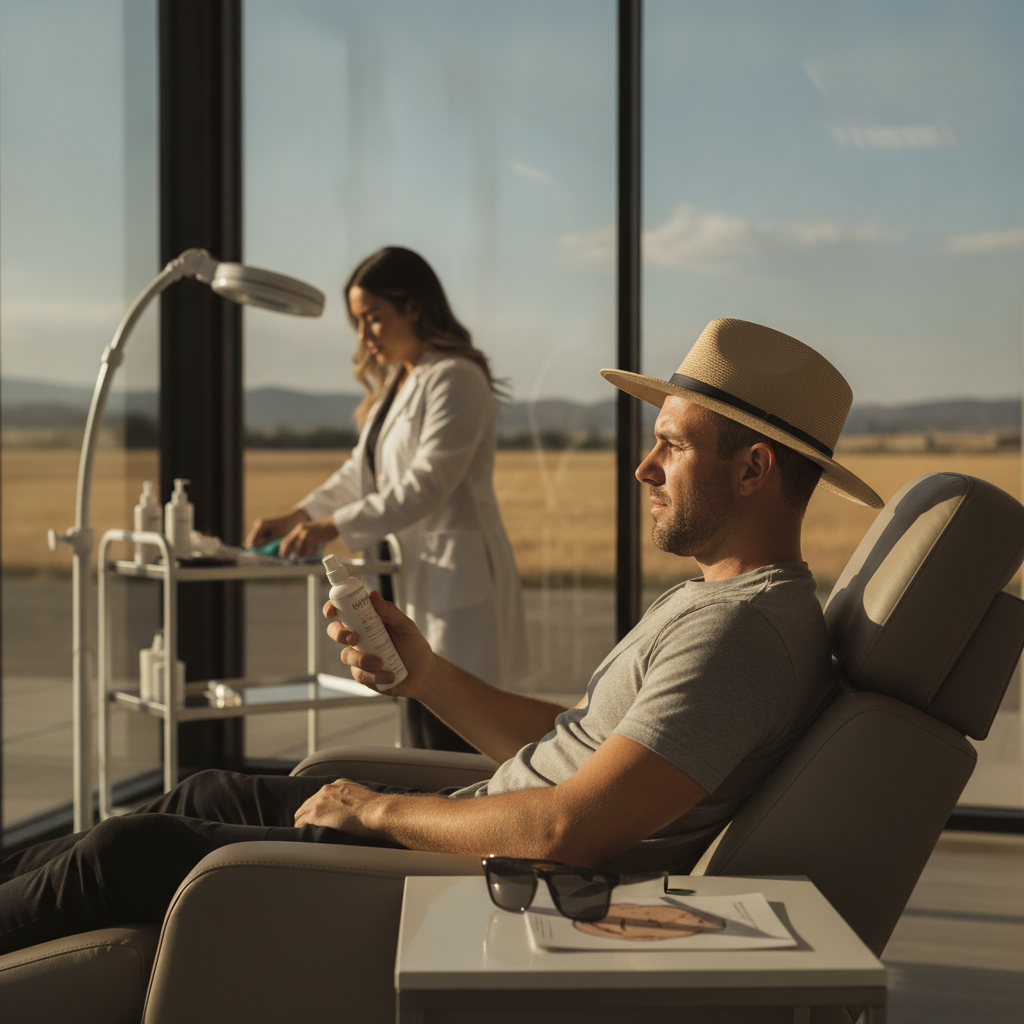
Does SMP Interact with Sun Exposure in the Central Valley? What Stockton and Modesto Clients Should Know About UV, Heat, and Pigment
Yes — and in the Central Valley, this is genuinely one of the most important things to understand before and after your SMP sessions. Stockton summers routinely push past 100°F, the sun is relentless from May through October, and if you work outdoors in agriculture, construction, or even just commute with your windows down on Highway 99, your scalp is absorbing UV radiation in a way that clients in coastal cities simply don’t experience at the same intensity. That matters because ultraviolet light is one of the primary reasons SMP pigment fades faster than it should. If nobody has walked you through exactly what that means for your day-to-day life after SMP — you deserve a straight answer.
Why Sun Exposure Is a Bigger Deal Here Than in Most Places
Most SMP studios mention sun protection in passing. A quick line in their aftercare sheet. What they don’t always address is how the Central Valley’s specific climate creates a different set of conditions than, say, getting SMP done in San Francisco or even Sacramento.
The valley runs hot and dry for months at a stretch. UV index readings in Stockton, Modesto, Tracy, and Manteca regularly hit eight, nine, or higher during summer — that’s classified as “very high” on the EPA scale. If you’re spending time outdoors without any protection on your scalp, UV radiation breaks down the pigment molecules deposited during your SMP sessions. Over time, this causes fading, color shifting (pigment can turn slightly warm or ashy depending on your original tone and skin type), and uneven results across the scalp.
It doesn’t happen overnight. But it does happen — and it happens faster here than it would for someone living in a cooler, cloudier climate. Understanding this upfront means you can take simple, practical steps that protect your investment for years.
The Healing Phase: When Sun Is Most Damaging
The first four weeks after each SMP session are when your scalp is most vulnerable to sun damage. During this period, your skin is healing around each pigment deposit. Exposing your scalp to direct sunlight during this window doesn’t just risk fading — it can cause inflammation, disrupt the healing process, and affect how the pigment settles into the skin.
Concrete steps to protect yourself during healing:
- Stay out of direct sun during peak hours (roughly 10am–4pm) for the first two to four weeks after each session
- Wear a loose, breathable hat when you do go outside — but avoid anything tight that creates friction on a freshly treated scalp
- Do not apply sunscreen to a healing scalp during the first ten to fourteen days — your skin needs to breathe and the chemicals in most sunscreens can irritate healing tissue
- Avoid sweating excessively in the sun, which means outdoor labor or exercise in Stockton’s summer heat should be limited during the early healing phase
This is genuinely harder to do in the Central Valley than in most markets. If you work in Lodi’s vineyards, on a job site in Turlock, or anywhere outdoors along the I-5 corridor, you and your SMP artist need to talk honestly about your schedule — and potentially time your sessions around your work calendar. Learn more about the full SMP process and what to expect across your sessions.
Long-Term Sun Protection: What Actually Works
Once your scalp has fully healed after your final session — typically four to six weeks out — sunscreen becomes your best tool for protecting your SMP results long-term. This is the part that most SMP aftercare guidance glosses over, and it’s a genuine gap in how competitors across the Sacramento and Central Valley market explain the long game to their clients.
Here’s what actually works for ongoing UV protection:
- SPF 30–50 mineral sunscreen applied to the scalp whenever you’ll be in the sun for more than fifteen minutes. Mineral formulas (zinc oxide or titanium dioxide) sit on top of the skin rather than being absorbed — they tend to be gentler on SMP pigment over time and less irritating for sensitive scalps.
- Daily moisturizing keeps the scalp’s skin barrier healthy, which helps pigment deposits hold their shape and color longer. Dry, cracked skin accelerates fading.
- Hats with UPF protection are practical for anyone working or spending significant time outdoors during Central Valley summers. A good hat is not a substitute for sunscreen if you’re frequently uncovered, but it reduces cumulative UV load significantly.
- Timing your touch-up appointments around sun-heavy seasons can help your artist re-saturate pigment before major fading occurs. Most clients need a touch-up every three to five years — but heavy, unprotected sun exposure can shorten that window.
Heat, Sweat, and What They Actually Do to SMP
Beyond UV, the raw heat of a Central Valley summer raises another question clients in Stockton and Modesto often ask: does sweating affect SMP?
During the healing phase, yes — excessive sweating can interfere with how the pigment settles. Salt and moisture on a fresh treatment can contribute to pigment migration or inconsistent healing. This is one reason your artist will advise you to avoid heavy workouts or outdoor labor in the first week or two after each session.
Once fully healed, normal sweating doesn’t damage SMP. Your pigment is deposited in the dermis, below the layer of skin that sweating affects. What matters long-term is UV — not perspiration. So don’t let fear of sweating stop you from living your life after you’ve healed. Just keep the sunscreen part of your routine.
For clients thinking about SMP for thinning hair rather than full baldness, this is worth noting: when you still have hair covering portions of the scalp, those areas naturally receive more protection from UV than the exposed areas along your hairline or part. Your aftercare routine can be slightly more targeted as a result.
Timing Your SMP Sessions Around the Central Valley Calendar
One practical advantage of working with a local SMP artist in Stockton — rather than driving to a Sacramento or Bay Area studio that doesn’t know your climate intimately — is getting honest, regionally specific advice about session timing.
Many clients find that scheduling their initial sessions in fall or winter makes the healing phase significantly easier to manage. From October through March, UV index readings in San Joaquin County are considerably lower, temperatures are more forgiving, and it’s easier to keep a healing scalp protected without dramatically altering your routine. By the time summer arrives, you’re fully healed and just maintaining with sunscreen and moisturizer.
That said, SMP can absolutely be done in summer — it just requires more intentional planning around your work schedule, outdoor time, and aftercare routine. If summer is your only realistic window, your artist can help you build a realistic plan around it.
Frequently Asked Questions About SMP and Sun Exposure
Can I go to the pool or lake after SMP?
Not during the healing phase — typically four to six weeks after your most recent session. Chlorinated pool water and natural bodies of water like the Delta can both irritate a healing scalp and contribute to premature pigment loss. Once fully healed, swimming is fine with appropriate sunscreen applied beforehand.
Will my SMP fade faster in Stockton’s climate than somewhere cooler?
It can — if you’re not protecting your scalp from UV. The intensity of Central Valley sun does accelerate fading compared to cloudier climates. Consistent sunscreen use and moisturizing largely offset this. Clients who are diligent about protection routinely get five or more years before needing a meaningful touch-up.
Can I wear a hat right after my SMP session?
A loose, breathable hat is fine for sun protection after the first twenty-four hours. Avoid anything tight-fitting, wool, or abrasive that could catch on the healing scalp. Baseball caps with adjustable backs are generally fine.
Does sunscreen affect the color of my SMP over time?
Mineral sunscreens (zinc or titanium-based) are the safest choice for long-term pigment integrity. Chemical sunscreens aren’t harmful to established SMP, but some clients with sensitive scalps find them irritating. When in doubt, go mineral.
What if I work outdoors and can’t avoid sun exposure during the healing phase?
Talk to your artist before you book. A good SMP practitioner will help you schedule your sessions around your work calendar, recommend the most protective headwear for your situation, and set realistic expectations for healing given your lifestyle. There’s no one-size-fits-all answer — but there’s almost always a workable plan.
You Put Real Money and Real Trust Into This — Protect It
SMP is not a trivial decision. It’s a meaningful investment — both financially and emotionally — and you deserve results that hold up for years, not months. In the Central Valley, where the sun is not optional and summers are long, building a simple sun protection routine into your life after SMP is the single most effective thing you can do to preserve your results.
At Infusion SMP Scalp Micropigmentation in Stockton, we walk every client through regionally specific aftercare guidance — not generic instructions written for a different climate. We know what a Stanislaus County summer looks like, and we know how to help you protect your SMP through it.
If you’re ready to talk through whether SMP is right for your lifestyle, or if you have questions about sun exposure and how it applies to your specific situation, reach out and schedule your free consultation. We’re here to give you honest answers — before you commit to anything.