What Does SMP Feel Like During the Sessions? What Manteca and Stockton Clients Want to Know About Comfort and Pain
Scalp micropigmentation does not feel like nothing — but it also does not feel the way most people imagine it will. If you’ve been putting off booking a consultation because you’re not sure what you’re walking into physically, here’s the honest answer: most clients from Stockton, Manteca, Tracy, and across San Joaquin County describe the sensation as manageable, often less intense than expected, and something that gets easier with each session. Understanding exactly what happens during a session — and why some areas feel different from others — can take a lot of the anxiety out of the process before you even sit down in the chair.
The Sensation: What You’re Actually Feeling
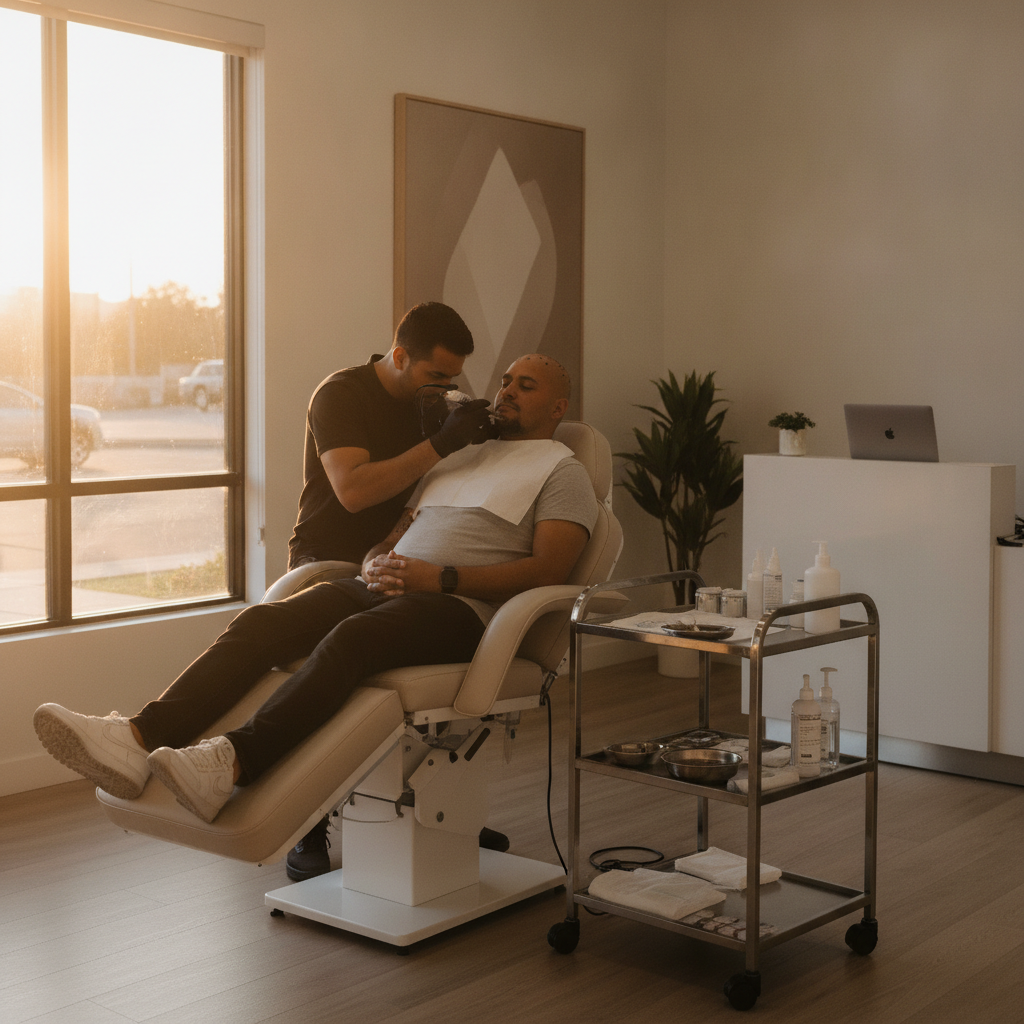
The tool used in SMP is a fine needle that deposits pigment into the upper layer of the dermis — not deep into the skin the way a traditional tattoo works. Because of this shallower depth, most people describe the sensation as a light scratching or tapping feeling rather than a sharp, sustained sting. It’s repetitive. Your practitioner is working across your scalp in passes, placing individual impressions to mimic the look of hair follicles, and after the first few minutes your brain largely adjusts to the rhythm of it.
That said, the scalp is not uniform. Different areas react differently, and knowing this ahead of time helps you pace yourself through the session without being caught off guard.
Which Areas of the Scalp Feel the Most Sensitive?
This is something most competitors’ websites gloss over entirely — and it’s one of the most practical things a client can know before their first appointment. Here’s the honest breakdown:
- The crown and mid-scalp are typically the most comfortable areas. The skin here tends to be thicker and less reactive, and most clients feel only mild pressure or a light scratching sensation.
- The hairline area can feel more sensitive, particularly along the temples and the very front edge where you want definition. This is also one of the most important areas aesthetically, so your artist will be precise and deliberate — which means spending real time there. Most clients find they need to breathe through it a little more in this zone.
- The back of the scalp near the occipital bone — the area just above the nape of your neck — can feel noticeably more tender than the top. If you’re getting scar camouflage work in this zone, such as coverage over a FUT strip scar from a hair transplant, you may feel heightened sensitivity along the scar tissue itself. Scar tissue has different nerve patterns, and the pigment needs to be worked more carefully in those areas.
- The sides above the ears vary from person to person but tend to fall somewhere in the middle — not the most intense area, not the most comfortable.
Session Length and How That Affects Your Experience
A standard SMP session runs roughly two to four hours depending on the extent of coverage you need. Full scalp treatments for complete baldness naturally take longer than targeted density work on thinning areas. The full SMP process typically spans two to three sessions spaced a few weeks apart, which is actually good news for your comfort — your scalp gets a break between appointments, and most clients report that the second and third sessions feel progressively easier, partly because they know what to expect and partly because the skin has adjusted.
Fatigue is real. Sitting still for two to three hours while someone works on your scalp takes more out of you than people anticipate — not because of pain, but because your body stays in a mild stress response throughout. After a session, most clients feel tired in the way you feel tired after something mildly intense. Plan a light rest of the day after each appointment if you can swing it, especially if you’re commuting in from Manteca, Modesto, or Lodi and have a long drive home.
What Actually Affects Your Pain Tolerance During SMP
Several factors influence how comfortable or uncomfortable a session feels, and most of them are within your control:
- Sleep. Showing up exhausted makes everything feel worse. A full night of sleep before your session genuinely changes how your body handles the sensation.
- Food and hydration. Don’t come in fasted. Eating a real meal beforehand keeps your blood sugar stable and reduces the likelihood of feeling lightheaded or unusually reactive. Hydrated skin also tends to accept pigment more evenly, which matters for your results as well as your comfort.
- Alcohol. Avoid it for at least 24 hours before your session. Alcohol thins the blood, which can increase sensitivity, cause more redness, and affect how the pigment settles into the skin.
- Caffeine. This one surprises people. Heavy caffeine intake before a session can heighten your sensitivity and make the whole experience feel more intense. If you’re a morning coffee person, keep it moderate on session days.
- Stress and anxiety. If you come in tense and wound up about the procedure, your body will amplify the sensation. This is normal human biology, not weakness. A good SMP artist will take time to talk you through what’s happening, check in with you throughout the session, and go at a pace that lets you settle in.
The Central Valley Heat Factor — and Why It Matters for Your Sessions
If you’re coming in from Manteca, Tracy, or anywhere along the Highway 99 corridor during summer, there’s a practical factor worth knowing: the dry heat of the Central Valley affects scalp skin. Dehydrated skin from being out in 100-degree weather tends to be more reactive during and after a session. If you’ve spent the morning working outdoors — as a lot of healthcare workers, contractors, and agricultural workers in San Joaquin County do — your scalp is going to be in a different state than it would be after a cool, indoor morning.
During the summer months especially, try to come in cool, hydrated, and out of direct sun for the hours before your appointment. The same care applies to aftercare — your scalp needs protection from the sun while it heals, which means hats and shade matter more in the Central Valley than they might in a cooler climate. When you book your free consultation, ask your artist about specific seasonal aftercare guidance for your sessions.
Do Most Clients Use Numbing Cream?
Topical numbing cream is available and commonly used, particularly for clients who are especially sensitive or for work in tender zones like the hairline or scar tissue. It won’t eliminate all sensation, but it significantly reduces the intensity for most people. If you’re genuinely anxious about comfort, ask about numbing options when you consult — there’s no reason to white-knuckle through something when a simple step can make the experience much more pleasant.
It’s also worth noting that numbing cream affects skin differently depending on your scalp condition, and a qualified artist will factor this into their approach. It is one more reason why the experience at a studio with skilled, experienced practitioners differs meaningfully from a cheap or discount provider who’s cutting corners on technique and client care.
Frequently Asked Questions from Manteca and Stockton Clients
Is SMP more painful than a regular tattoo?
For most people, SMP is less painful than a traditional body tattoo. The needle depth is shallower, and the scalp — while sensitive in certain zones — tends to tolerate the work better than areas like ribs or ankles. Most clients who’ve had tattoos describe SMP as noticeably less intense.
Can I take pain medication before my SMP session?
Avoid ibuprofen and aspirin before your session, as these thin the blood and can increase bleeding and affect how pigment settles. Acetaminophen (Tylenol) is generally fine if you need something, but talk to your artist beforehand so they can advise based on your specific situation.
Will the treated area be sore after the session?
Mild tenderness, tightness, or a sunburn-like feeling on the scalp is completely normal in the 24 to 48 hours after a session. It typically resolves quickly. Avoid scratching or rubbing the scalp during this time, and keep it out of direct sun — especially important if you’re heading back into the Central Valley heat.
Does it hurt more if I’m getting scar camouflage work?
Scar tissue can feel different — sometimes more sensitive, sometimes less, depending on how the scar formed and how much nerve involvement is present. Your artist will work carefully in these areas and adjust pressure and technique accordingly. It’s manageable, and the results for scar coverage are often some of the most dramatic and satisfying in all of SMP work.
What if I need to take a break during the session?
You can always ask to pause. A session is not a race, and a good artist expects that some clients will need a moment to stretch, breathe, or collect themselves. Communicating openly with your practitioner throughout the appointment makes the whole experience better for both of you.
You Deserve to Feel Good About Walking In
Anxiety about discomfort is one of the most common reasons people delay booking SMP — and it’s almost always out of proportion to the actual experience. Most clients leave their first session surprised at how manageable it was. The emotional weight of finally doing something about hair loss that has bothered you for years tends to far outweigh whatever temporary discomfort happens in the chair.
At Infusion SMP Scalp Micropigmentation, based in Stockton and serving clients across the Central Valley — including Manteca, Tracy, Lodi, Modesto, and beyond — we take the time to walk every client through what to expect before, during, and after each session. You won’t be left guessing. Reach out today to schedule your free consultation and get your questions answered honestly, without any pressure to commit before you’re ready.