
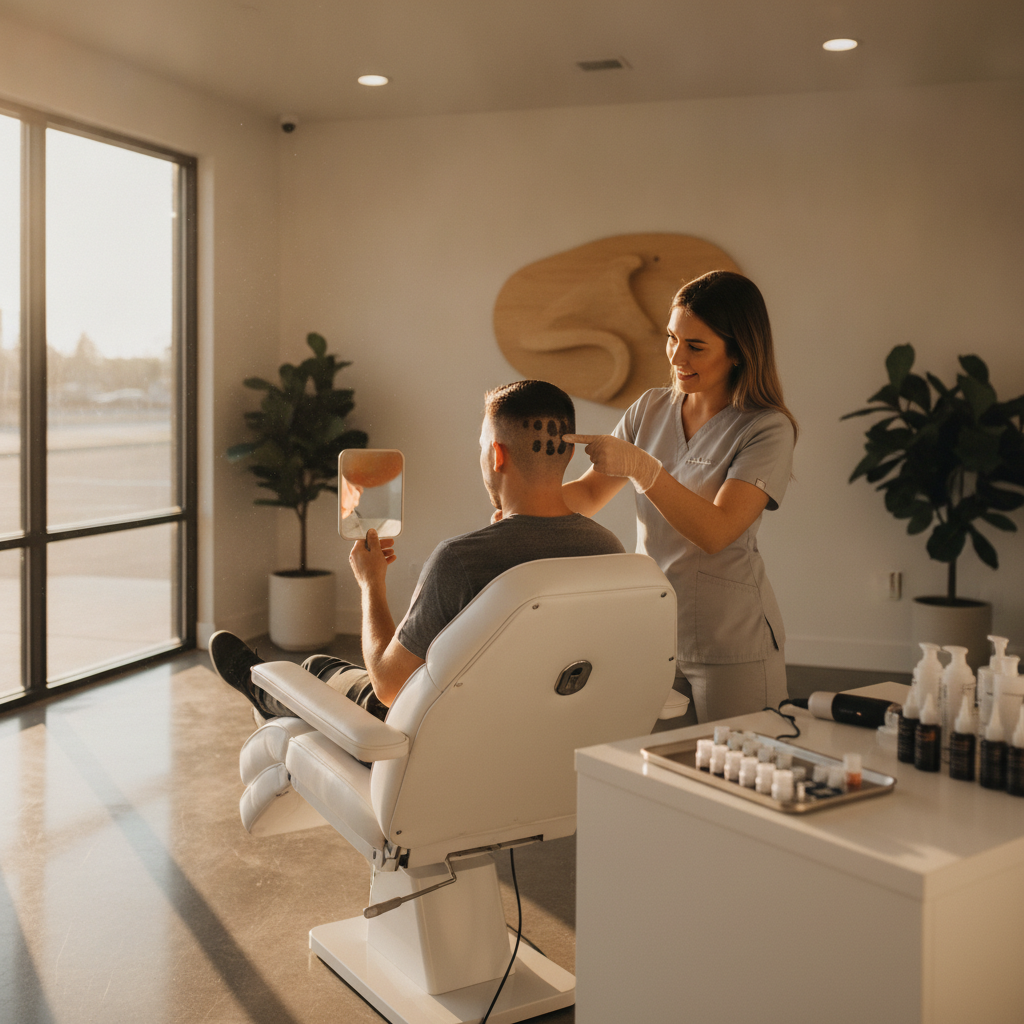
What Do You Do If Your SMP Is Fading Unevenly? What Stockton Clients Should Know About Patchiness and Pigment Loss
If you’ve completed your SMP sessions and you’re noticing that some areas look darker while others seem to have barely any pigment left, you’re not imagining it — and you’re not alone. Uneven fading is one of the most common concerns clients bring to us here in Stockton, especially in the weeks and months following treatment. The good news? In most cases, it’s completely normal, completely fixable, and something a skilled local SMP artist can address without starting over from scratch. Here’s what you need to understand about why it happens and what your next step should be.
Why Does SMP Fade Unevenly in the First Place?
Your scalp is not a perfectly uniform surface. Different zones hold pigment differently depending on skin thickness, oil production, sun exposure, and even the direction of natural hair growth in that area. The crown, hairline, and temples each have their own texture and behavior — which means pigment deposited across all three zones won’t always settle and retain at the same rate.
During the healing process, which typically spans a few weeks across your sessions, the outer layers of skin shed and some pigment comes with them. This is expected. What clients don’t always anticipate is that this shedding doesn’t happen evenly across the scalp. One patch may heal beautifully while another looks lighter than you’d like. It can feel alarming, but it’s usually just a sign that a touch-up or an additional pass in that area is needed — not that something went wrong.
The multi-session structure of SMP exists precisely for this reason. Scalp micropigmentation is typically completed across two to three sessions spaced a few weeks apart, and part of what happens in those later sessions is identifying and building up any areas where the pigment hasn’t retained as consistently as expected. If you’re still within that window, the process is working as intended.
The Central Valley Climate Factor Most Studios Won’t Talk About
Here’s something that competitors based in coastal markets don’t always address directly: the Central Valley’s heat and UV intensity genuinely affect how SMP pigment behaves over time. Stockton summers are long, dry, and brutal on exposed skin. If you’re someone who works outdoors — whether in agriculture, construction, or any of the trades that are the backbone of the San Joaquin County economy — your scalp is getting more direct sun exposure than most.
UV radiation is one of the primary drivers of SMP fading, and it doesn’t always fade a scalp evenly. The top of the head typically gets the most direct sun, which means the crown may fade faster than the sides. Areas that are naturally shaded by remaining hair may hold pigment longer. If you’ve been spending time outside without sun protection on your scalp, that asymmetric fading you’re seeing may be sun-related rather than a flaw in the original application.
The fix isn’t complicated — SPF on your scalp when you’re spending time outside, and in many cases a targeted touch-up to bring faded areas back in line with the rest. But you do need an artist who understands your lifestyle and climate, not just a studio that ran through a standard protocol and sent you home with a generic aftercare sheet.
When Is Uneven Fading a Normal Part of Healing — and When Is It a Problem?
This is where it’s worth being honest with yourself about the timeline. In the first four to six weeks after each session, some patchiness is completely normal. Pigment may look lighter than expected, and certain spots may seem to disappear almost entirely before the skin settles. If you’re in this window, the right move is to wait and let the healing complete before drawing conclusions.
However, if it’s been several months since your final session and you’re seeing significant inconsistency — areas that look noticeably lighter than the surrounding scalp, patches where the pigment appears to have dropped out entirely, or a fade pattern that looks unnatural — that warrants a conversation with your SMP artist. A few scenarios are worth distinguishing:
- Natural healing variation: Completely normal and addressed in a scheduled touch-up session.
- Sun damage: Addressable with a targeted correction and better aftercare going forward.
- Skin type factors: Oilier scalps and certain skin conditions can affect retention and may require more sessions than originally planned.
- Application depth issues: If pigment was placed too shallow, it may fade faster and unevenly. This can sometimes be a sign of a less experienced artist.
If you had your SMP done at a studio that’s since closed, or you traveled to a Sacramento-area clinic and can’t easily get back for follow-up, that’s actually one of the more practical reasons to connect with a local Stockton provider. Correction and touch-up work on someone else’s SMP is something experienced artists handle regularly — you don’t have to live with results that are bothering you.
What a Touch-Up or Correction Session Actually Looks Like
If you come in and describe uneven fading, a good SMP artist isn’t going to immediately tell you that you need a full redo. Most of the time, targeted work in the lighter zones is all it takes to bring the scalp back into balance. The artist looks at the current state of the pigment, identifies which areas have retained well and which haven’t, and works selectively to build up the spots that need attention.
For clients dealing with density work across thinning areas, this kind of refinement is especially common. The scalp’s existing hair can make it harder to assess pigment retention session by session, and it often takes an experienced eye to determine what’s fading versus what’s simply being obscured by surrounding hair.
A correction session is typically shorter and more focused than your original treatment. Depending on how much area needs to be addressed, it may take one session or two. An honest artist will give you a realistic assessment rather than overselling you on more work than you need.
What You Can Do Right Now to Slow Future Fading
Whether you’re dealing with uneven fading already or you want to protect results you’re happy with, the aftercare habits that matter most are the same:
- Apply broad-spectrum SPF to your scalp whenever you’re spending time outdoors. This is especially important during Central Valley summers — even a few hours of direct sun without protection adds up over months and years.
- Keep your scalp moisturized. Dry skin fades pigment faster. A lightweight, fragrance-free moisturizer applied regularly helps maintain skin health and pigment vibrancy.
- Avoid harsh exfoliants or medicated shampoos on the treated area unless your artist has specifically cleared them.
- Don’t pick at any flaking during the healing phase. It can pull pigment out unevenly and create exactly the patchiness you’re trying to avoid.
Frequently Asked Questions from Clients in Stockton and Surrounding Areas
Is it normal for my SMP to look patchy right after a session?
Yes, very normal. The first few weeks after any SMP session involve skin healing and natural pigment shedding. The final result isn’t visible until the skin has fully settled, which is why the multi-session structure exists. Don’t judge results prematurely.
My SMP faded more on the crown than the sides. Is that fixable?
Absolutely. The crown typically receives more direct sun and may fade faster than the sides and back. A targeted touch-up to rebuild pigment density in that area is a straightforward correction. Going forward, SPF on the crown is important.
I had my SMP done at a studio in Sacramento and I’m not happy with the uneven results. Can a Stockton artist fix it?
Yes. Experienced SMP artists routinely perform correction and refinement work on existing SMP from other providers. The key is finding someone who will assess your scalp honestly and tell you what’s actually needed rather than upselling you on a full redo.
Could my skin type be causing uneven fading?
It can be a factor. Oilier skin types, very dry or flaky scalps, and certain skin conditions can all affect how pigment retains. A qualified SMP artist factors this into the original application, but additional sessions may be needed to achieve consistent density in clients whose skin doesn’t hold pigment as predictably.
How long does a touch-up session take compared to the original treatment?
Touch-up sessions are typically shorter since the artist is working selectively on specific zones rather than treating the full scalp. Depending on the extent of the fading, a touch-up might take one to two hours rather than a full session.
You Don’t Have to Settle for Results That Bother You
Uneven fading doesn’t have to be the end of the story. Whether your SMP is a few weeks old and still healing, or it’s been a year and certain areas have faded in ways you’re not happy with, there are real options. The right local artist will look at your scalp honestly, explain exactly what they’re seeing, and give you a clear path forward — whether that’s waiting it out, scheduling a targeted correction, or building in better sun protection habits going forward.
At Infusion SMP Scalp Micropigmentation in Stockton, we work with clients at every stage — initial treatment, refinement, correction from other providers, and long-term touch-ups. We know this area, we know this climate, and we know how to get results that hold up whether you’re working outdoors in Manteca or Tracy, commuting up to Sacramento, or just living your life in the Valley heat.
If your SMP isn’t looking the way it should, don’t guess — get a professional set of eyes on it. Reach out to us to schedule a free consultation and let’s figure out exactly what your scalp needs next.