
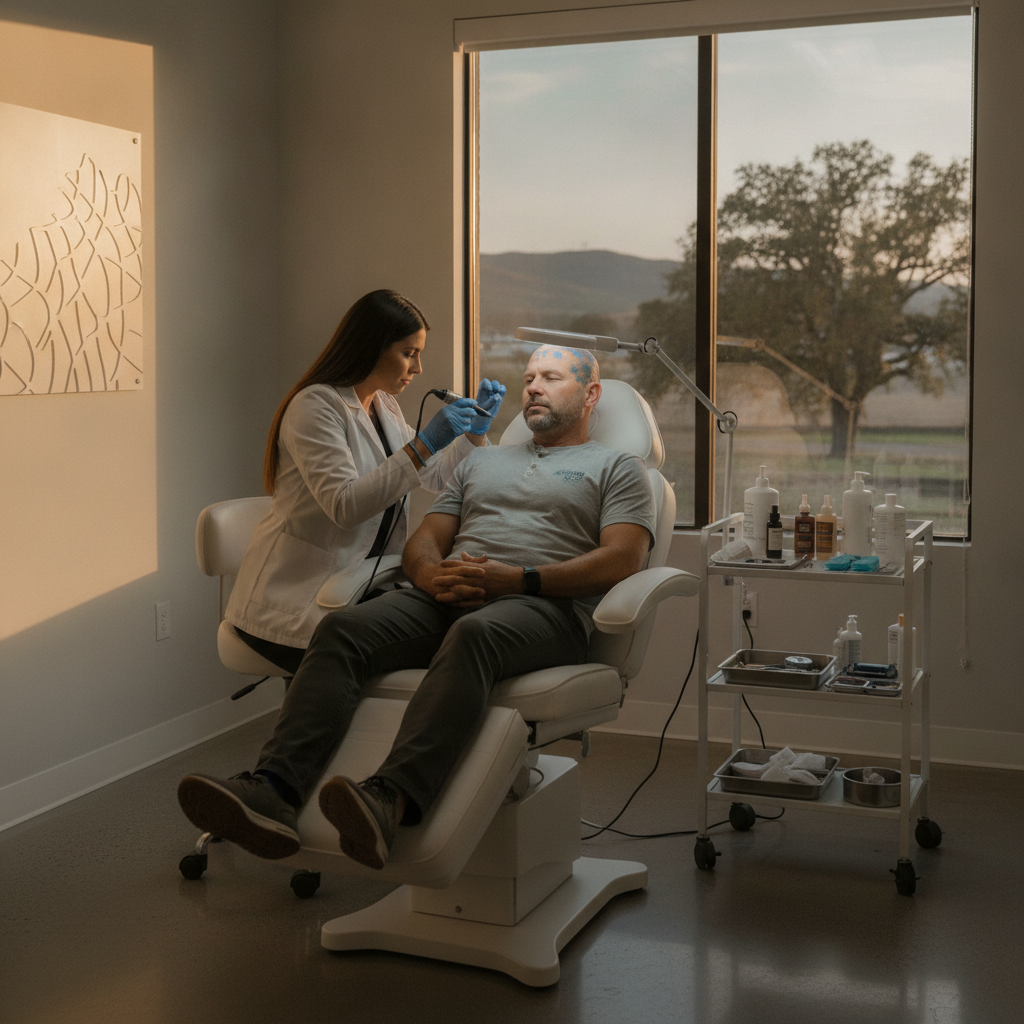
Can an SMP Artist Fix Someone Else’s Work? What Stockton Clients Should Know About SMP Correction and Cover-Up
Yes — in most cases, a skilled and experienced SMP artist can correct, blend, or significantly improve work done by someone else. If you’re in Stockton, Modesto, Tracy, or anywhere across San Joaquin County and you’re living with SMP results you regret, you deserve to know that this is not a permanent dead end. Corrective scalp micropigmentation is a real service, and it’s one that more clients are seeking out than you might expect. The key is finding an artist experienced enough to assess what was done, be honest about what’s fixable, and build a realistic path forward.
Why Corrective SMP Is More Common Than You’d Think
The SMP industry has grown quickly over the past decade — and not always at a pace that matched the growth in skill and training standards. Clients all over California, including many from the greater Sacramento area and Central Valley communities like Manteca and Lodi, have come through our doors after being treated by someone who undersold the complexity of the procedure. The problems they describe tend to fall into a few predictable categories.
Some clients had a hairline drawn on that looks theatrical — too low, too straight, or too sharp-edged to pass as natural hair follicles. Others had pigment applied that turned blue, green, or gray over time because the ink used wasn’t formulated specifically for SMP. Some had dots that were placed too large, giving the scalp a stippled or blurry look instead of the fine, follicle-like appearance that good SMP produces. And some clients went to a low-cost or inexperienced provider because SMP pricing felt overwhelming — only to find themselves paying twice when they sought corrective work.
None of this means you did something wrong. It means the person who worked on you didn’t have the skill, the training, or the right materials for the job. That’s fixable — but it takes an honest conversation first.
What a Corrective Consultation Actually Looks Like
Before any corrective work begins, a thorough consultation is non-negotiable. At Infusion SMP, this means looking at the existing pigmentation under proper lighting, assessing the depth of the ink, evaluating how the pigment has settled and faded, and having an honest conversation about what’s achievable and what isn’t.
Here’s what that assessment typically involves:
- Pigment color and tone: Has it shifted blue or green? This often happens when standard tattoo ink — not SMP-specific pigment — was used. Some color correction is possible through layering the right pigment over the existing work, but severe discoloration may require laser fading before new pigment is applied.
- Dot size and placement: Dots that are too large can sometimes be softened or blended with careful layering. However, if they’re significantly oversized, laser treatment to lighten the area is often the more honest recommendation before re-treatment.
- Hairline shape and position: A hairline that is too low or too aggressively styled can be softened around the edges and given a more gradual, natural fade. In some cases, the existing line simply needs refinement rather than removal.
- Overall density and coverage: Sometimes the issue isn’t any one dramatic mistake — it’s just that the coverage looks uneven, patchy, or inconsistent. This is often the easiest category to correct by adding additional sessions with proper technique.
When Laser Fading Is Part of the Answer
This is the section most competitor SMP studios in the Sacramento and Central Valley markets simply skip — and it’s one of the most important things for a corrective client to understand. Not every bad SMP job can be fixed by tattooing over it. Sometimes the existing pigment needs to be lightened first through laser fading before a skilled artist can rebuild clean, natural-looking results.
Laser fading for SMP correction is not the same as full tattoo removal. It’s a targeted process that reduces the density and darkness of the existing pigment enough that a fresh, accurate application can be layered on top without the old work bleeding through or compromising the color. Your corrective SMP artist should be willing to discuss this honestly — and if anyone tells you they can fix anything without assessing the existing work first, that should give you pause.
If laser fading is recommended, it typically happens in one to three sessions spaced several weeks apart before corrective SMP work begins. It adds time to the overall process, but it protects the integrity of the final result.
What Corrective SMP Actually Costs and How Long It Takes
Corrective work is almost always more complex than starting fresh. Pricing reflects that. Depending on the scope of the issue — whether it’s a minor refinement or a significant rebuild — corrective SMP can fall anywhere in the range that standard SMP treatment does, sometimes higher if laser fading is also required. Learn more about what the SMP process involves so you can ask the right questions during your consultation.
Plan for the same general session structure as new SMP: typically two to three sessions spaced a few weeks apart. The first session addresses the most urgent concerns — color correction, edge softening, or density blending. Subsequent sessions refine and layer until the result looks consistent, natural, and believable up close. The goal is never to make it look “better than bad.” It’s to make it look like it was done right the first time.
What to Look for in an Artist Who Offers Corrective Work
Not every SMP artist has the experience to take on corrective cases. This is a specialized skill that requires an eye for existing pigment behavior, a deep understanding of color theory, and the patience to work methodically rather than rushing toward a quick result. When you’re evaluating an artist for corrective work, ask them directly:
- Have you done corrective SMP before, and can you show me examples?
- Will you be honest with me if laser fading is the better first step?
- How do you approach color matching over existing pigment that has shifted?
- What’s your process for softening an unnatural hairline edge?
An experienced corrective artist will answer these questions with specific, confident detail — not vague reassurances. If you’re coming from somewhere in the Central Valley and weighing your options between a local studio and a franchise clinic in Sacramento, this kind of direct conversation tells you more than any website ever will.
Frequently Asked Questions About SMP Correction in Stockton
Can any SMP artist fix bad work, or do I need a specialist?
Corrective SMP requires more experience than starting fresh. Look for an artist who has specifically worked on correction cases and who will give you an honest assessment — including whether laser fading is needed before new pigment is applied.
My SMP turned blue or gray. Is that fixable?
Color shift is one of the most common issues from SMP done with non-specialized inks. Mild discoloration can sometimes be corrected through careful re-pigmentation with the right SMP-specific pigments. More significant color shifts usually benefit from laser fading first. A consultation will give you a clear picture of which path applies to your situation.
How long do I have to wait after my first SMP before seeking corrective work?
Your scalp should be fully healed — typically at least 8 to 12 weeks after your last session — before a corrective artist assesses the work. This ensures the pigment has settled to its final state and gives the most accurate picture of what needs to be addressed.
Can a hairline that’s too low be fixed without laser removal?
Sometimes, yes. The edges of an overly low or sharp hairline can be softened and blended to create a more gradual, natural transition. Whether full softening is possible without laser assistance depends on how aggressively the original line was placed. This is something your corrective artist needs to assess in person.
I had SMP done in Sacramento and I’m not happy. Can I come to Stockton for a correction?
Absolutely. Clients travel from across San Joaquin County, the Sacramento area, and the Highway 99 corridor for consultations. If you’re considering making that trip, a consultation is the right first step — it’s low-pressure, and it gives you real answers before you commit to anything.
You Don’t Have to Keep Living With Results You Regret
Bad SMP doesn’t have to be your story forever. Whether your hairline looks off, your pigment has shifted to an unflattering tone, or the coverage just never looked like what you were promised, corrective work is a legitimate path forward. It takes an honest assessment, a skilled hand, and realistic expectations — but it’s possible, and for many clients, the corrected result ends up being everything they hoped the original would be.
If you’re in Stockton, Tracy, Lodi, or anywhere across the Central Valley and you’re ready to talk about what corrective SMP might look like for you, reach out to Infusion SMP Scalp Micropigmentation to schedule your free consultation. We’ll look at what you’re working with, give you an honest read on the options, and help you figure out the smartest path forward — no pressure, no guesswork.