
What Should You Tell Your SMP Artist Before Your First Session? A Preparation Guide for Stockton Clients
If you are getting ready for your first scalp micropigmentation session in Stockton, the conversation you have with your artist before treatment starts matters just as much as the work done during the session itself. SMP is a precise, permanent procedure — and the more your artist knows about you going in, the better your results will be. Most studios walk you through a basic intake form, but there is a lot more to it than checking a few boxes. Here is what you should actually share, and why it changes everything about how your treatment is planned.
Your Honest Hair Loss History — Not Just What You See Today
Your artist needs to understand not just where your hair is right now, but where it has been going. Are you in the early stages of a receding hairline? Has your hair loss been stable for years, or has it been progressing slowly over the last decade? If you still have thinning hair on top, your artist needs to know how aggressively it has changed recently.
This matters for hairline design. A hairline that looks great at 35 may not look age-appropriate at 50 if your natural hair continues to recede and leaves a visible gap between your SMP hairline and your remaining hair. A skilled artist thinks about this with you at the consultation — not just what looks sharp today, but what will still look natural years down the road. Do not be shy about sharing your full timeline. Even if it is uncomfortable to admit how long you have been dealing with hair loss, that context helps your artist make better decisions for you.
Any Skin Conditions, Scalp History, or Sensitivities
Before your first session, tell your artist about anything going on with your scalp or skin — even if you think it is minor. This includes:
- Psoriasis, seborrheic dermatitis, or eczema
- A history of keloid scarring
- Active breakouts, folliculitis, or scalp irritation
- Any prior cosmetic procedures on your scalp, including prior SMP work
- Sunburn or recent sun damage — particularly relevant in the Central Valley, where summers are long and intense
None of these things automatically disqualify you from SMP, but they all affect how your artist approaches your skin, what pigment depth is appropriate, and whether your skin needs time to settle before treatment begins. An artist who skips this conversation is not doing their job. A good one will ask directly.
Medications and Supplements That Affect Your Scalp or Skin
Certain medications matter more than you might think. Blood thinners, some acne medications like isotretinoin, immunosuppressants, and even high-dose fish oil or vitamin E can affect how your skin responds to the pigment deposit and how well you heal afterward. If you are taking minoxidil or finasteride for hair loss, let your artist know — this affects the conversation about whether you still have active growth and what role SMP plays in your overall approach.
You should also mention if you have had any recent steroid injections in the scalp, which are sometimes used for alopecia. The timing of those treatments can interact with how your scalp heals after SMP. Your artist is not there to judge your medical history — they just need the full picture to take care of you properly.
Your Lifestyle, Job, and Sun Exposure
This is the section that most studios skip entirely — and it is one of the most practical conversations you can have before your first session.
If you work outdoors in San Joaquin County, spend your summers at the Delta, or drive long stretches of Highway 99 with the sun beating through the window, your artist needs to know that. Direct sun exposure is one of the main reasons SMP pigment fades faster than expected, and your aftercare plan should account for how much sun your scalp actually sees day to day. This is especially true in the Central Valley, where UV intensity during summer months is no joke.
Your job also matters for scheduling. Many clients from Tracy, Manteca, and the surrounding area work demanding shifts in healthcare, logistics, or agriculture. The healing period after each session requires some adjustments — no heavy sweating for a few days, no sun on the treated area. Knowing your schedule helps your artist help you time your sessions around your life, not the other way around.
What You Actually Want — And What You Are Afraid Of
This sounds obvious, but it is where the most valuable part of your consultation happens. Bring reference photos if you have them. Tell your artist whether you want a crisp, defined hairline or something softer and more diffused. Tell them if your top priority is covering a scar from a previous hair transplant, adding density to thinning areas, or building a full shaved-head look. Each of those goals involves different techniques and a different approach to pigment layering.
And tell them what you are nervous about. If you are worried the results will look too dark, say so. If you are concerned about how it will look under bright office lighting, bring that up. If you had a bad experience somewhere else, share it. An experienced scalp micropigmentation artist will not take that personally — they will use it to make sure your experience here is different.
A lot of clients coming from Lodi or Modesto have done their research online and arrived with misconceptions picked up from forums or outdated content. Your consultation is the right time to get those questions answered honestly. Ask about the session structure, the healing timeline, what touch-up sessions look like, and how to protect your results long-term. A studio that rushes through that conversation is one worth reconsidering.
What a Strong Pre-Session Conversation Actually Looks Like
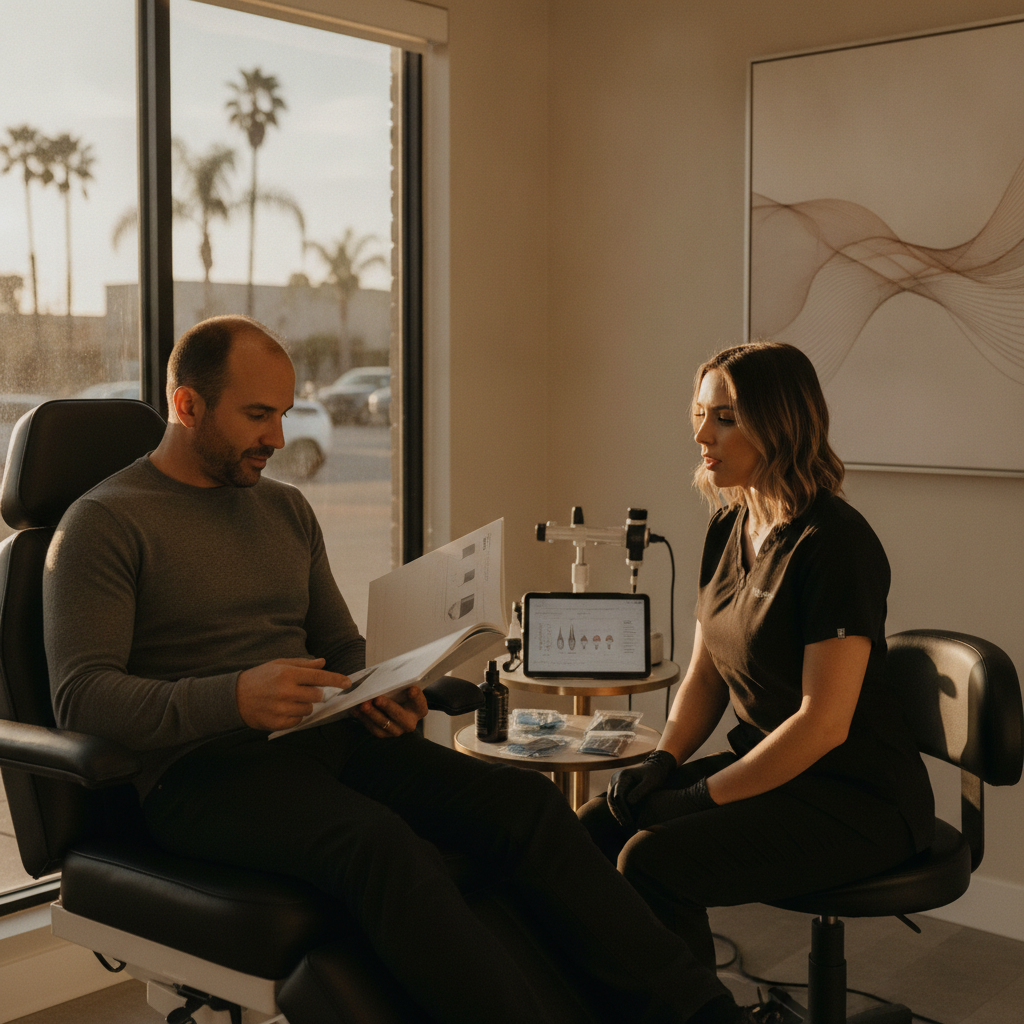
At Infusion SMP, the consultation is not a quick five-minute chat before you get started. It is a real conversation about your history, your goals, your skin, and what realistic results look like for your specific situation. The hairline design happens collaboratively — you have input, and nothing is finalized until you are comfortable. That collaborative approach is what separates work that looks natural and undetectable from work that looks like a procedure.
If you are considering SMP for hair density enhancement rather than a full hairline restoration, the pre-session conversation shifts accordingly — it becomes more about blending pigment seamlessly with your existing hair and less about hairline placement. Either way, the information you bring to that consultation shapes everything that follows.
Frequently Asked Questions
Do I need to shave my head before my first SMP session?
Not necessarily — it depends on the type of treatment. For a full shaved-head look, yes. For density work on thinning hair, your artist will advise you based on your specific situation. This is a great question to ask during your consultation so you arrive prepared.
Should I stop taking minoxidil before my SMP sessions?
Discuss this with your artist and your prescribing doctor. You do not always need to stop, but your artist needs to know you are using it to factor it into the overall plan, especially around hairline placement and long-term hair loss progression.
What if I have had a hair transplant and still have visible scarring?
Tell your artist before your session. Scar camouflage is a specialized part of SMP, and it requires a different approach than standard density work or hairline restoration. The more detail you share about the scar type, age, and texture, the better your artist can plan for it.
Can I come in for a consultation without committing to treatment?
Absolutely. Many clients in Stockton and across San Joaquin County come in just to ask questions and see the studio before making a decision. There is no pressure — the consultation exists to help you decide if SMP is right for you, not to close a sale.
How far in advance should I schedule my consultation before my first session?
Ideally at least one to two weeks before your first session. This gives you time to think through the hairline design, ask follow-up questions, and make any adjustments to your schedule or medications if needed. Clients traveling from Sacramento or further out often book both appointments on the same visit, which can also be arranged.
Ready to Start the Conversation?
Your first SMP session starts well before you sit down in the chair. The more prepared you are — and the more honest you are with your artist — the better your results will be. At Infusion SMP Scalp Micropigmentation in Stockton, every client gets a real consultation before treatment begins, because your results deserve that kind of attention. Reach out today to schedule your free consultation and start the conversation about what SMP can do for you.