
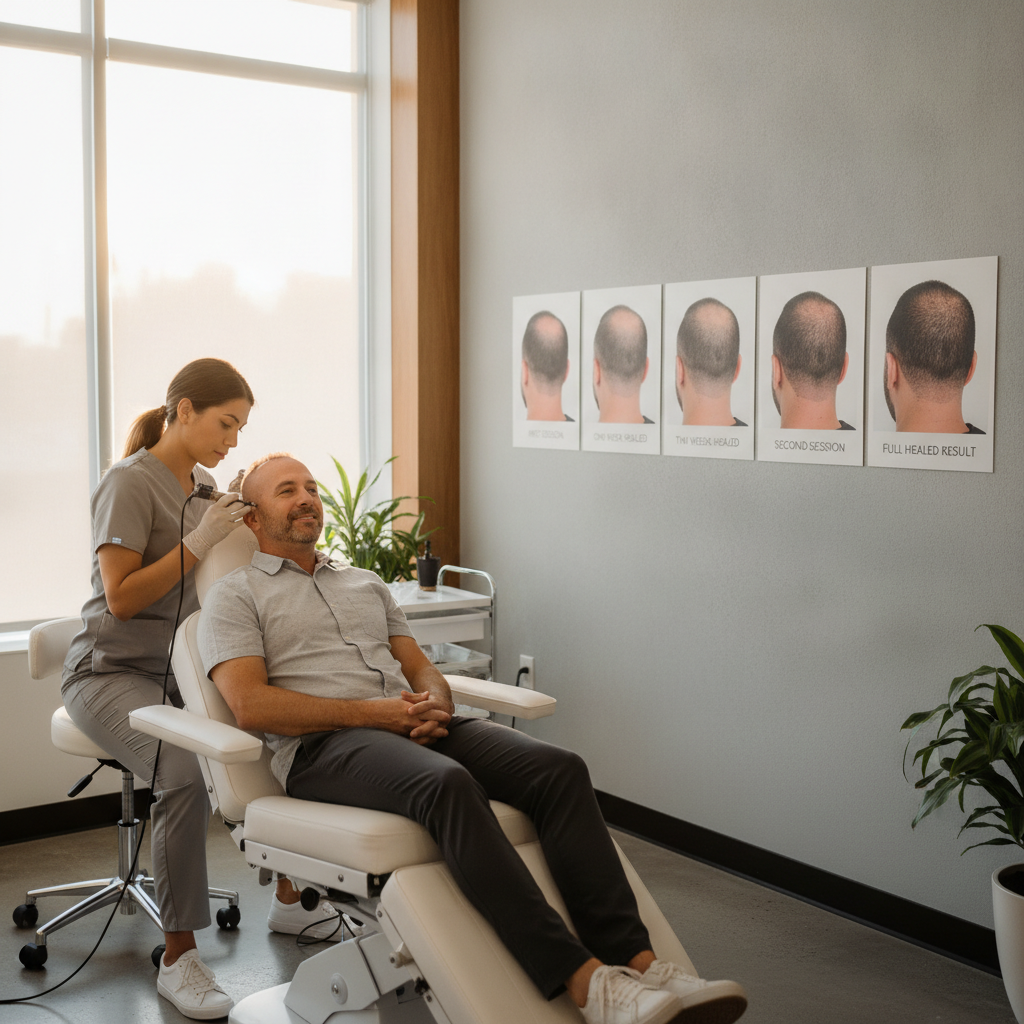
What Does SMP Actually Look Like After It Heals? A Realistic Look for Davis and Stockton Clients
If you’re considering scalp micropigmentation and find yourself staring at before-and-after photos trying to figure out what it actually looks like once the skin has settled — you’re not alone. Most people in Stockton, Davis, and across San Joaquin County who reach out to us have the same question underneath everything else they’re asking: Will it look real when it’s healed? The honest answer is yes — but understanding why requires knowing what the healing process actually looks like, week by week, and what’s normal versus what should concern you. That’s exactly what this article covers.
Why the Healing Process Confuses So Many People
Here’s something almost no competitor website talks about in depth: SMP does not look the same immediately after a session as it does after it’s fully healed. That gap between the two is where most anxiety lives — and where most misconceptions are born. Someone sees themselves in the mirror two days after their first session, the pigment looks darker or slightly different than expected, and they panic. But what they’re seeing is not their final result. It’s the beginning of one.
Understanding the full arc — from fresh pigment to fully settled, natural-looking results — is one of the most important things you can do before you sit in the chair. So let’s walk through it honestly.
Right After Your First Session: What You’ll See (and What It Means)
Immediately following your first SMP session, the dots will appear darker and slightly more defined than your final result will be. The skin is freshly worked, there may be a small amount of redness or sensitivity around the treated area, and the pigment sits closer to the surface before the skin fully heals over it. This is completely normal.
Think of it like any other work done on the skin — the initial appearance is not the finished product. The scalp needs time to settle, and the pigment will soften and integrate as the outer skin layer heals. Most clients in Stockton who work in healthcare, agriculture, or commute along the Highway 99 corridor appreciate knowing they can go back to their regular routine within a few days — the redness typically fades within 24 to 48 hours and is subtle enough that most people won’t notice anything unusual.
During the first few days, avoid touching or scratching the scalp, keep it out of direct sun, and skip the gym or anything that causes heavy sweating. The Central Valley summer heat is worth mentioning here — if it’s 100 degrees outside and you’re spending time outdoors, that’s something to be mindful of during the early healing window specifically.
Days 4 Through 10: The Lightening Phase Most People Don’t Expect
Here’s where things get counterintuitive, and it’s something most SMP websites gloss over entirely. Between days four and ten, the pigment will appear to lighten — sometimes significantly. The skin is shedding its outermost layer as part of the normal healing process, and it can look like the dots have faded or even partially disappeared. This alarms some clients who weren’t warned about it.
It’s not a failure. It’s not a sign that the SMP didn’t take. It’s the skin doing exactly what it’s supposed to do.
What you’re seeing during this phase is the skin regenerating over the pigment. Once that process is complete — usually by the end of the first two weeks — the dots will reappear softer and more natural-looking than they did immediately after the session. The contrast between the pigment and the skin starts to look less like ink on a surface and more like actual follicles sitting within the scalp.
Between Sessions: Why the Process Takes Multiple Visits
SMP is almost always completed across two to three sessions, spaced roughly one to two weeks apart. This spacing isn’t arbitrary — it’s what allows the artist to see how the skin has absorbed the initial pigment, make precise adjustments, and build density gradually without overworking the scalp.
After your first session, you’ll be able to see the framework of your hairline or coverage area taking shape. After your second session, it begins to look substantially more complete. By the third session — if one is needed — your artist is refining, adding depth, and ensuring the result will be consistent and natural-looking in all lighting conditions.
Clients who’ve traveled from Davis or Lodi for their sessions often ask whether they can compress the timeline. The short answer is that the spacing exists to protect your results. Rushing it doesn’t save time — it costs you quality.
To get a full picture of how sessions are structured and what each one accomplishes, our SMP service overview page walks through the process in detail.
What Fully Healed SMP Actually Looks Like
About four to six weeks after your final session, once the skin has fully settled, this is where the magic is. Done well, healed SMP should not look like dots on a head. It should look like a closely shaved scalp with real hair follicles — or, in the case of density work on someone who still has hair, it should look like your existing hair is simply thicker and fuller than before.
The pigment in natural light, under harsh office lighting, in sunlight, and in photographs should all read consistently. If your artist used the right pigment depth and tone for your skin, the result should not look grey, blue, or artificially dark. It should match your natural hair color at the root level — the tiny, round impression of a shaved follicle.
For clients dealing with diffuse thinning rather than full baldness, healed SMP creates the illusion of density without affecting the hair that’s still growing. Nobody looking at you should be able to identify what’s been done — they’ll just notice that your hair looks fuller. That’s the goal. Density enhancement through SMP is one of the most underappreciated applications of this procedure, and healed results in this category are especially subtle and convincing.
The Sacramento and Modesto Comparison: Does Skin Type Affect Healed Results?
One thing worth addressing directly — because clients from across the Central Valley ask about this — is whether healed SMP looks the same on every skin type. The honest answer is that the healing process and final appearance do vary somewhat by skin tone, skin texture, and how well someone follows aftercare. Someone with oilier skin may experience slightly faster pigment fading over time. Someone with very fair skin needs a more conservative pigment tone to avoid an artificial look in natural light. Someone with darker skin needs an artist who understands how pigment interacts with melanin — both fresh and healed.
These are variables that a skilled, experienced SMP artist accounts for during your consultation and across each session. When the technique is right for your skin, healed results look natural regardless of whether you’re fair-skinned, dark-skinned, or somewhere in between.
Long-Term: What Healed SMP Looks Like at One, Two, and Five Years
SMP does not last forever without any maintenance — but it holds up remarkably well. Most clients see gradual, subtle lightening of the pigment over two to five years, which actually works in your favor in some ways: the result softens naturally over time rather than looking stale or dated. When you’re ready for a touch-up, it’s a single session rather than starting from scratch.
In the Central Valley heat — especially during Stockton and Modesto summers — sun exposure is the biggest factor that accelerates fading. Wearing a hat or using SPF on the scalp when spending extended time outdoors will make a meaningful difference in how long your results hold before a touch-up is needed.
Frequently Asked Questions from Davis and Stockton Clients
Is it normal for SMP to look really dark right after the session?
Yes, completely. The pigment sits close to the surface of freshly worked skin and will always appear darker immediately after a session than it will once healed. Give it two weeks before drawing any conclusions about how it looks.
What if the dots look too big after healing?
Slightly enlarged-looking dots right after a session can be due to swelling or the skin still healing. Once fully settled, well-placed SMP dots should be small, precise, and follicle-like. If they still look oversized after full healing, that’s a conversation to have with your artist at your next session — most refinements can be addressed during the session structure.
Will healed SMP look different in photos versus real life?
Done correctly, no. A good SMP result should look consistent in all lighting — natural sunlight, indoor lighting, camera flash, and video. If results look unnatural in certain lighting, it often points to pigment tone or depth issues that should have been caught during the session.
Can I go swimming or back to the gym after it heals?
Yes — once your scalp is fully healed (typically two to four weeks after your final session), normal activity resumes without restriction. During the healing window, though, heavy sweating, chlorinated pools, and direct prolonged sun exposure should be avoided.
How do I know if my SMP has fully healed?
Your scalp should feel back to normal — no tenderness, dryness, or flaking — and the pigment should look settled, soft, and consistent. If you’re unsure, your SMP artist should be available to assess and advise between sessions.
You Deserve to Know What You’re Getting Into — Before You Commit
One of the things we hear most often from new clients at Infusion SMP in Stockton is that they wish they’d found this kind of honest, detailed information sooner. Not marketing language — just a clear picture of what the process looks like, what’s normal, and what to expect when you walk out the door after each session.
If you’re in Stockton, Davis, Lodi, Sacramento, or anywhere across San Joaquin County and you’re seriously thinking about SMP, the best next step is a real conversation — not more Googling. We’ll walk through your specific situation, your goals, what your healed result will realistically look like, and what the process will involve for you personally.
Reach out to schedule your free consultation with Infusion SMP Scalp Micropigmentation. There’s no pressure and no obligation — just an honest conversation about what’s possible and whether SMP is the right fit for where you are right now.