Can You Get SMP If You Have a Sensitive Scalp or Skin Condition? What Stockton Clients Should Know
If your scalp has always been reactive — prone to redness, flaking, irritation, or diagnosed conditions like psoriasis or eczema — it makes complete sense that you’d pause before committing to any kind of scalp procedure. You’ve probably already had bad experiences with certain shampoos, styling products, or even sunscreen. The last thing you want is to invest in a hair loss solution that makes things worse. The good news is that scalp micropigmentation is a safe option for many people with sensitive skin or scalp conditions — but it does require some upfront honesty and the right artist asking the right questions. Here’s what you need to know if you’re in Stockton or anywhere in the Central Valley and considering SMP with a complicated scalp history.
Why This Question Doesn’t Get Answered Enough
One thing that stands out when you look at the SMP studios serving the Sacramento and Central Valley area is how rarely this topic comes up. Most competitor websites focus on showcasing results, walking through the general process, and explaining what SMP is at a surface level. Very few address what happens when a client walks in with scalp psoriasis, seborrheic dermatitis, or a history of eczema flare-ups. That leaves a real gap for people who have been quietly wondering whether they even qualify — and sometimes giving up on the idea without ever asking.
If that’s you, you deserve a real answer. Not a disclaimer buried in the fine print, but an honest conversation about what’s possible and what precautions actually matter.
The Most Common Scalp Conditions SMP Artists Encounter
Before getting into specifics, it helps to understand what kinds of scalp conditions are most relevant to the SMP process. The ones that come up most often in consultations include:
- Psoriasis: An autoimmune condition that causes raised, scaly plaques on the scalp. It can flare unpredictably and is often linked to stress or environmental triggers.
- Seborrheic dermatitis: The more common cousin of psoriasis — it causes oily, flaky skin and is aggravated by heat, humidity, and certain hair products. This one is especially relevant in the Central Valley, where hot summers can trigger flare-ups.
- Eczema (atopic dermatitis): Causes dry, itchy, inflamed skin and can affect the scalp. People with eczema often have sensitive skin elsewhere on the body as well.
- Folliculitis: Inflammation or infection of the hair follicles, sometimes caused by ingrown hairs, bacteria, or fungal issues.
- Contact dermatitis: A reaction triggered by something that touches the scalp — could be a dye, product ingredient, or allergen.
Each of these conditions behaves differently, and each requires a slightly different approach when it comes to SMP timing and aftercare. What they all have in common is this: active flare-ups and SMP do not mix.
The Golden Rule: You Need to Be in Remission First
This is the most important thing to understand. If your scalp condition is currently active — if you have open irritation, scaling, inflammation, or raw patches — that is not the right time to receive SMP. Working on compromised skin increases the risk of inconsistent pigment retention, infection, and discomfort that goes beyond what most clients experience in a normal session.
A trustworthy SMP artist in Stockton will ask about your scalp history during the consultation. If they don’t, that’s a red flag. The right approach is to wait until your skin is stable and calm before proceeding — and in many cases, that just means coordinating with your dermatologist to get your condition managed before scheduling your first session.
Once you’re in a clear, stable period, SMP becomes a much more viable option for most clients with chronic scalp conditions. Many people with well-managed psoriasis or seborrheic dermatitis have had excellent results.
How Central Valley Climate Adds to the Equation
Here in Stockton and across the broader San Joaquin County area, summer heat is relentless. If you’re someone whose seborrheic dermatitis flares up when you’re hot and sweaty — which is most of the summer — timing your SMP sessions strategically matters more than it might for someone in a cooler climate. This applies both to when you schedule your sessions and how you approach aftercare once your sessions are complete.
Sun exposure is already a key aftercare concern for all SMP clients. For clients with sensitive or reactive skin, protecting your scalp from the Central Valley sun during the healing period is even more critical. Your artist should walk you through exactly what that looks like — including when it’s safe to resume outdoor activity, what SPF products work well on a healing scalp, and how to keep your scalp moisturized without triggering irritation. If you’re curious about the broader picture of what the SMP process involves from start to finish, that’s a good place to get oriented before your consultation.
What About Alopecia Areata and Scalp Sensitivity?
Alopecia areata — the autoimmune condition that causes patchy hair loss — is often mentioned alongside scalp sensitivity because many clients with alopecia also deal with reactive skin. SMP can be a meaningful option for covering patchy areas or creating the appearance of a fuller, more uniform scalp. The same principle applies here: active inflammation in the affected patches should be addressed before SMP begins. When the scalp is stable, a skilled artist can blend pigment into patchy areas in a way that looks remarkably natural.
Clients in Manteca, Tracy, and the surrounding communities who have been living with alopecia patches often feel like there’s no real visual solution available to them short of wearing a hat every day. SMP, when timed and executed correctly, can change that.
Questions to Ask During Your SMP Consultation
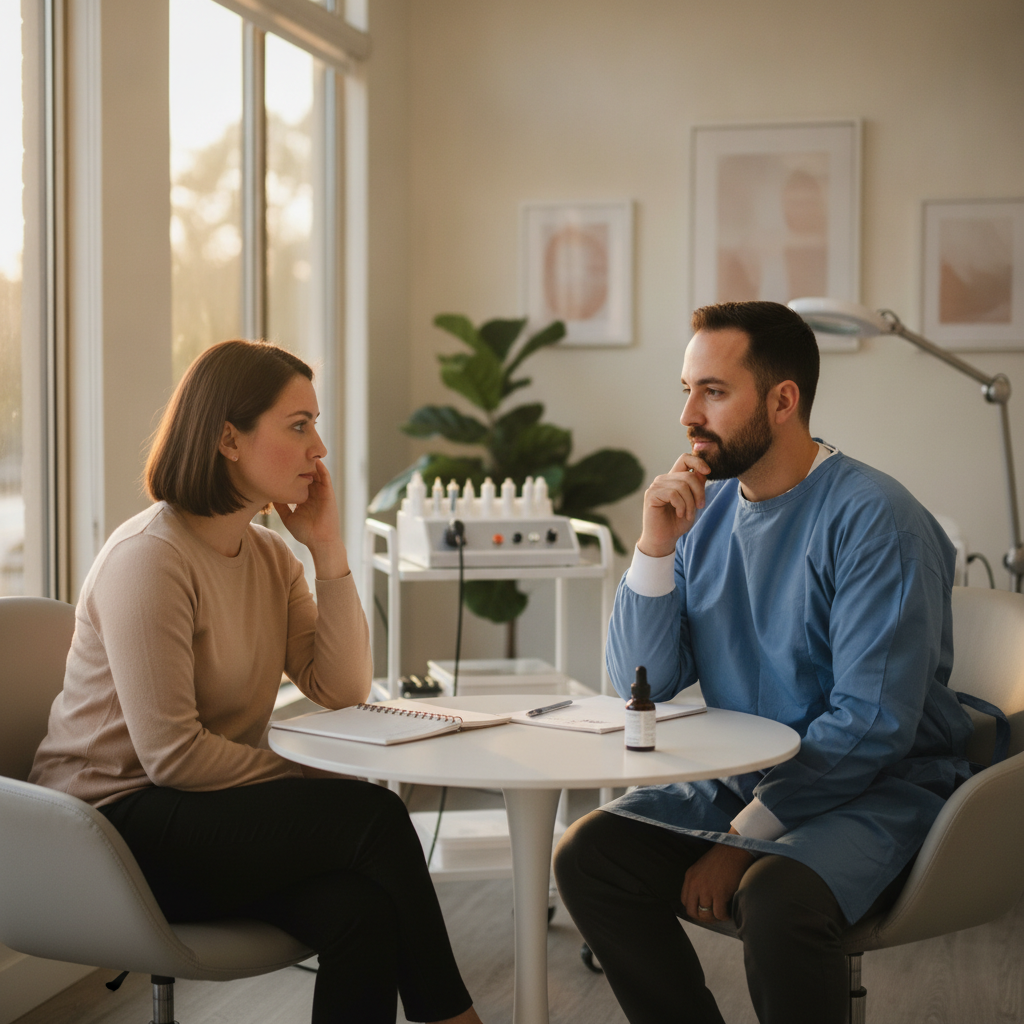
If you have a skin condition or sensitive scalp, come to your consultation prepared to have a real conversation. Here are a few things worth bringing up:
- How long have you worked with clients who have psoriasis or seborrheic dermatitis?
- What do you look for on the scalp before proceeding with a session?
- What would cause you to postpone or stop a session?
- What aftercare modifications do you recommend for sensitive skin?
- Should I coordinate with my dermatologist before scheduling?
A confident, experienced SMP artist will welcome these questions. If the consultation feels rushed or these concerns get dismissed, trust that instinct and keep looking.
Pigment Sensitivity and Patch Testing
Some clients with reactive skin are concerned not just about the needling process but about the pigments themselves. This is a reasonable concern, especially if you have a history of contact dermatitis or known product sensitivities. A qualified SMP artist can perform a small patch test prior to your full session to assess how your skin responds. This isn’t always standard practice everywhere, so it’s worth asking about specifically if you have a history of skin reactions. It’s a simple step that adds a meaningful layer of confidence before committing to a full treatment area.
Frequently Asked Questions
Can I get SMP if I have active psoriasis on my scalp right now?
Not ideally. Active psoriasis plaques mean the skin is inflamed and compromised. SMP on inflamed skin risks inconsistent pigment absorption and could aggravate the condition. The better approach is to wait until your scalp is in a calm, stable phase — often coordinated with your dermatologist — and then proceed with SMP.
Will SMP trigger a psoriasis or eczema flare-up?
It’s possible but not common when the scalp is properly assessed beforehand. Some clients with psoriasis have experienced what’s called the Koebner phenomenon, where new skin trauma triggers plaques to appear. This is worth discussing openly during your consultation so your artist can factor it into the session plan.
Is seborrheic dermatitis a dealbreaker for SMP?
No. Seborrheic dermatitis is one of the more manageable conditions when it comes to SMP timing. As long as your scalp is not actively flaring, most clients with well-controlled seborrheic dermatitis can proceed without issue. Your aftercare routine may need to be slightly adjusted to keep the scalp balanced during the healing period.
How does the Central Valley heat affect sensitive scalp healing after SMP?
Heat and sweat can slow the healing process and increase irritation risk, especially in the first week after a session. For clients in Stockton, Modesto, and Lodi dealing with summer temperatures, scheduling sessions in cooler months or planning indoor recovery time can make a real difference. Your artist should give you specific guidance based on the time of year.
Do I need to see a dermatologist before getting SMP?
Not always — but if your scalp condition is active, poorly controlled, or undiagnosed, it’s worth getting a dermatologist’s input first. A good SMP artist will tell you the same thing. Getting medical clearance protects your results and your scalp health.
You Deserve a Solution That Works With Your Skin, Not Against It
Living with both hair loss and a sensitive scalp can feel like a double burden. You’re already managing something that affects how you look and feel every day — you don’t need a procedure that adds to that stress. The right SMP artist approaches your situation with patience, asks the questions that matter, and gives you a realistic picture of what’s possible based on your specific scalp history.
At Infusion SMP Scalp Micropigmentation in Stockton, that kind of individualized attention is exactly how every consultation starts. Whether you’re dealing with psoriasis, seborrheic dermatitis, eczema, or just a scalp that’s always been reactive to everything, we want to hear about it — and we’ll tell you honestly what we can and can’t do, and when the timing is right to move forward.
If you’re ready to have that conversation, reach out and request your free consultation. There’s no pressure, no commitment — just a real conversation about your scalp, your goals, and what’s actually possible for you.