

What Happens During an SMP Session? A Step-by-Step Look at the Process for Stockton Clients
Uncategorized9 min read
What Happens During an SMP Session? A Step-by-Step Look at the Process for Stockton Clients
If you’ve been researching scalp micropigmentation in Stockton, you’ve probably seen plenty of before-and-after photos. What’s harder to find is a straight answer about what actually happens between those two photos — what does a session feel like, how long does it take, and what’s going on with your scalp in the days afterward? Most studios online skip right over the process and go straight to the results. That gap leaves a lot of people anxious about something that’s genuinely a comfortable, low-drama experience when you know what to expect.
Here’s an honest, detailed walkthrough of what SMP actually looks like from start to finish — written for people in Stockton, Tracy, Manteca, and across San Joaquin County who want to make an informed decision before booking anything.
It Starts Before You Ever Sit Down: The Consultation
The first step isn’t a needle — it’s a conversation. A good consultation is where the artist gets to understand your specific situation: How much hair have you lost? Is your hairline still receding or has it stabilized? Are you dealing with thinning on top, a completely smooth scalp, alopecia, or a scar from a previous hair transplant? The answers shape everything that follows.
During the consultation at Infusion SMP in Stockton, you’ll talk through your goals, look at examples of work that’s similar to your hair type and skin tone, and start to get a sense of what your result could look like. This is also your chance to ask the questions you’ve been sitting on — there are no bad ones. Many clients who come in from Modesto or Elk Grove have done a lot of their own research online and arrive with a list. That’s a good thing.
Hairline design is a big part of this early stage. A skilled SMP artist doesn’t just replicate whatever hairline you had at 22. They design something that looks natural for your face shape, age, and the way you want to carry yourself. A hairline that’s too sharp or too low can look exactly as unnatural as a bad toupee — and a good artist knows this.
Session One: Laying the Foundation
Most SMP treatments involve two to three sessions, spaced roughly seven to ten days apart. The first session is intentionally lighter than you might expect. The artist isn’t trying to finish the look in one sitting — they’re building a base layer and watching how your scalp responds.
Here’s what happens during session one:
- The scalp is cleaned and prepped. You’ll lie back or sit in a reclined chair while the artist cleanses the treatment area. No shaving required before you arrive — the artist will handle anything that needs to be done.
- The hairline is mapped and approved. Before any pigment touches your skin, the artist will draw or sketch the proposed hairline so you can see and approve it. Nothing is permanent until you say yes.
- Pigment is applied in fine, layered dots. Using a specialized needle and carefully matched pigment, the artist deposits tiny impressions that mimic the look of hair follicles. The sensation is similar to a light scratching — most clients describe it as mildly uncomfortable at worst, particularly at the temples or the very top of the scalp. It’s not a tattoo gun experience.
- Session length varies by coverage area. A partial hairline session might run two to three hours. A full scalp treatment for someone with complete baldness can take three to five hours. You’re not rushed.
When you leave after session one, the results will look slightly darker and sharper than the finished look. That’s normal and expected. The pigment softens as it heals.
The Healing Window: What’s Actually Happening to Your Scalp
This is the part that competitors rarely explain well — and it matters, especially if you’re living in the Central Valley where summer heat is a real factor.
In the four to seven days after each session, your scalp goes through a natural healing process. The treated area may look slightly red or feel tight. Some clients notice mild flaking as the skin sheds the top layer. This is not the pigment coming out — it’s the outer skin healing over the treatment area. The dots will appear to fade slightly during this phase, which can feel alarming if you weren’t warned about it. You haven’t lost your results. You’re just healing.
Aftercare during this window is simple but important:
- Keep the scalp dry for four days — no sweating, no swimming, no long showers with direct water on the treated area.
- Avoid direct sun exposure on the scalp. In a Stockton summer, this means hats when you’re outdoors and keeping sessions scheduled with enough recovery time before outdoor activities.
- Don’t pick, scratch, or rub the treated area, even if it flakes or itches.
- After the initial healing window, keep the scalp moisturized. A well-hydrated scalp holds pigment better over time.
Clients who work outdoors — in agriculture, construction, or field-based healthcare roles common throughout San Joaquin County — should plan their session timing around work schedules, particularly in peak summer months. This is something worth discussing during your consultation so your aftercare window doesn’t conflict with unavoidable sun exposure.
Session Two and Three: Refining and Completing the Result
Session two is where the work starts to come together. The artist adds density, builds depth in areas where the base layer has settled, and refines any edges. By the end of session two, most clients already feel a significant shift — not just in how their scalp looks, but in how they feel walking out the door.
Session three is often lighter still. It’s a final refinement — checking pigment consistency across different lighting conditions, smoothing any subtle variations in density, and making sure the result looks natural from every angle. For some clients with less surface area to cover, two sessions is all that’s needed. Your artist will tell you honestly where you stand after each appointment.
Learn more about how scalp micropigmentation works and what it can address, whether you’re dealing with pattern baldness, thinning hair, or something more specific.
What the Final Result Actually Looks Like
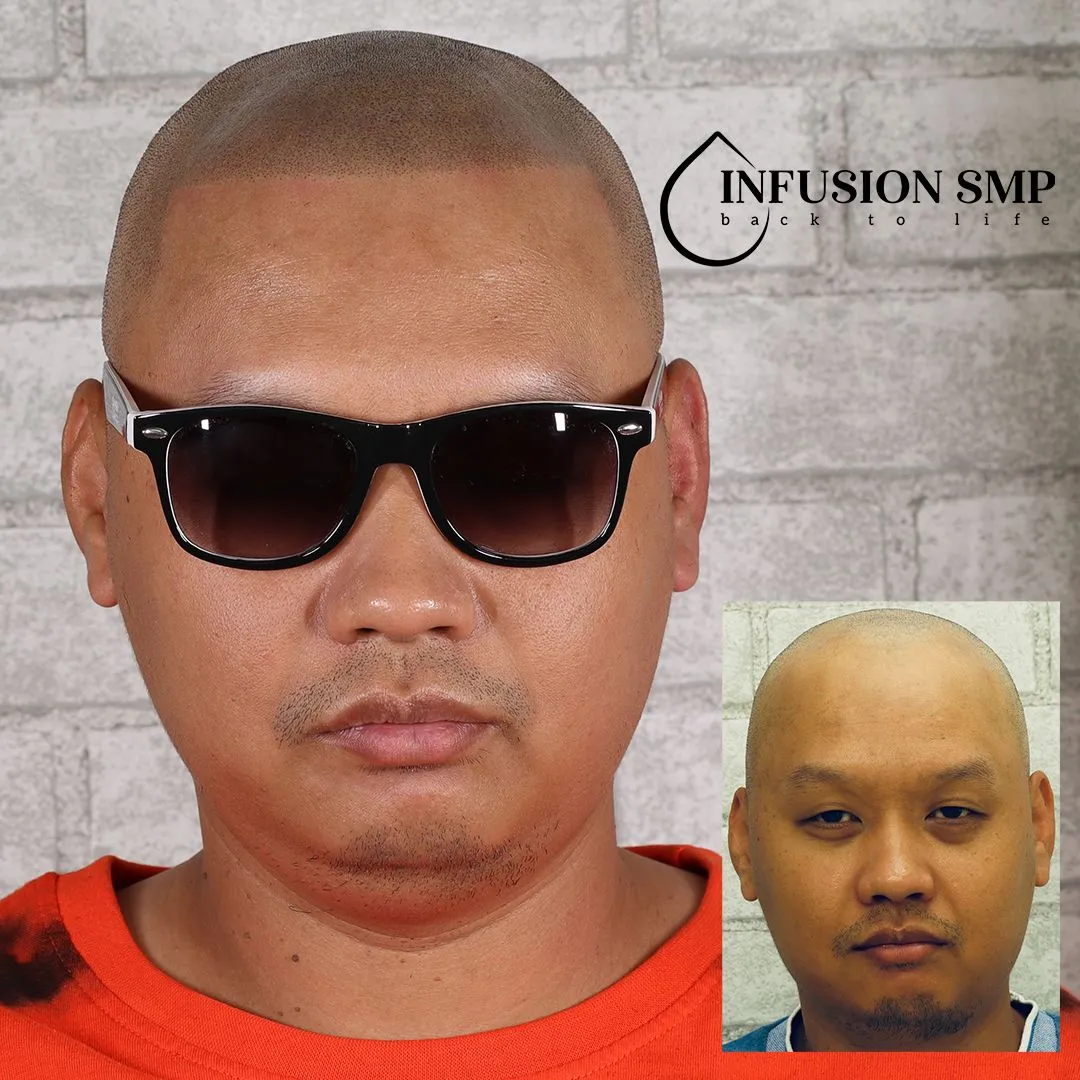
A well-done SMP result looks like a freshly shaved head with a natural, defined hairline. Not a tattoo. Not a painted scalp. The dots are layered at slightly varying depths and angles to catch light the way real follicles do. Up close, in any lighting — even harsh overhead fluorescents — it holds up. That’s the standard you should expect, and it’s the standard worth asking about when evaluating any SMP studio, whether in Stockton, Turlock, or Lodi.
For clients dealing with thinning hair rather than complete baldness, the effect is different but equally convincing. Pigment is added between existing hairs to create the appearance of density — the scalp stops looking exposed, and the overall impression is of fuller, thicker hair. If this is your situation, it’s worth reading more about hair density enhancement with SMP and how that specific process differs from a full shaved-head treatment.
Frequently Asked Questions from Central Valley Clients
How much time do I need to take off work after an SMP session?
Most clients return to desk work or light duty the next day. If your job involves heavy outdoor sun exposure or physical labor that causes significant sweating, plan for at least four days of modified activity after each session. Many clients in Tracy and Manteca who work commuter schedules have sessions on Thursdays or Fridays and are back to normal by the following week.
Will SMP look different on darker or olive skin tones?
SMP works across all skin tones — the key is proper pigment matching and artist experience with your specific tone. Pigment that looks natural on fair skin can read differently on medium or deeper complexions if the artist doesn’t adjust the blend. Always ask to see portfolio examples with clients whose skin tone is similar to yours.
Does the process hurt?
Most clients rate the sensation as a three or four out of ten. The temples and hairline edges tend to be the most sensitive. The crown and top of the scalp are generally more comfortable. Topical numbing can be used if needed, though many clients find it unnecessary after the first session when they know what to expect.
Can I go to the gym between sessions?
Hold off on heavy cardio and anything that causes significant sweating for the first four to five days after each session. After that, normal activity is fine. Swimming in chlorinated pools should be avoided for the full healing period between sessions.
How do I know if the pigment color is right before it’s permanent?
A skilled artist matches pigment to your natural stubble color and skin undertone before beginning. The pigment also shifts slightly as it heals, which is why a conservative approach in session one is intentional — it gives you and the artist a chance to confirm the color and density are tracking correctly before committing to the full result.
Ready to See What the Process Looks Like for Your Specific Situation?
The best way to stop wondering and start knowing is to have a real conversation with someone who’s done this work for clients with your exact type of hair loss. At Infusion SMP Scalp Micropigmentation in Stockton, the consultation is free and there’s no pressure to book anything on the spot. You’ll leave with a clear picture of what your sessions would look like, what the result could realistically be, and what it would cost — so you can make a decision you feel genuinely confident about.
Schedule your free consultation today and take the first step toward a result that holds up in every mirror, every light, and every situation that matters to you.
Results vary. SMP is a cosmetic tattoo procedure, not a medical treatment, and does not regrow hair. Individual results depend on skin, scalp, hair and aftercare.