

Can You Get SMP If You Have a Scalp Scar from a Hair Transplant? What Stockton and Tracy Clients Should Know About FUE and FUT Scar Camouflage
Uncategorized9 min read
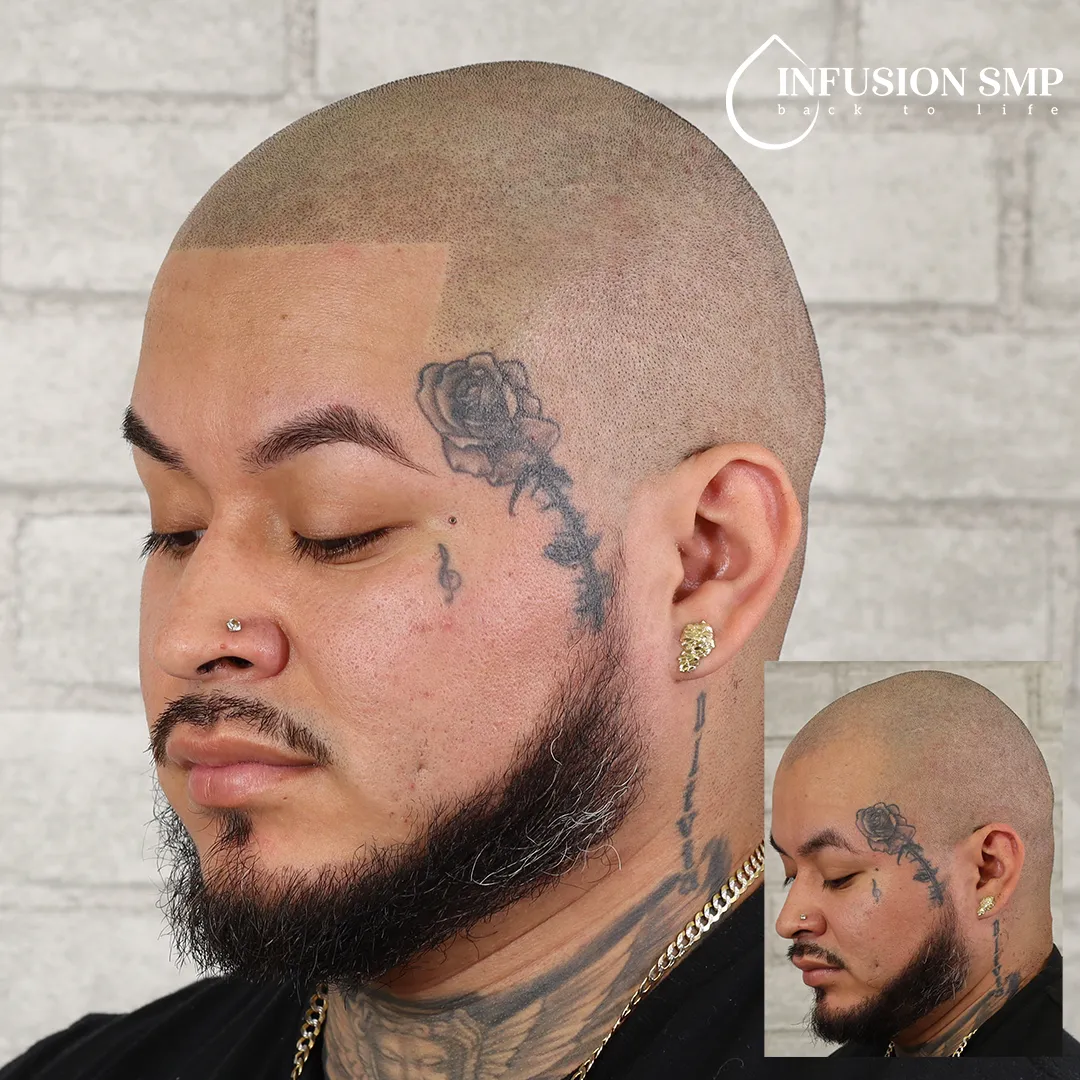
Can You Get SMP If You Have a Scalp Scar from a Hair Transplant? What Stockton and Tracy Clients Should Know About FUE and FUT Scar Camouflage
Yes — and for many people, scar camouflage is actually one of the most powerful things scalp micropigmentation can do. If you’ve had a hair transplant in the past and you’re left with a visible linear scar across the back of your head, or a field of small white extraction dots, SMP can blend those marks into the surrounding scalp so well that you can wear your hair shaved short without anyone knowing they’re there. For clients in Stockton, Tracy, Manteca, and throughout San Joaquin County, this is one of the most common — and most meaningful — reasons people come through our door.
Why Hair Transplant Scars Are Such a Common Problem
Hair transplants have been around for decades, and while the technology has improved significantly, scarring is still a real and unavoidable part of the process. If you had an older FUT (follicular unit transplantation) procedure — sometimes called a strip surgery — you likely have a horizontal linear scar running across the back of your scalp. Depending on how your skin healed, that scar might be thin and subtle, or it might be wide, discolored, and impossible to hide unless your hair is long enough to cover it.
FUE (follicular unit extraction) is considered a more modern approach that avoids the long linear scar, but it creates its own visible marks: dozens or even hundreds of small round extraction sites scattered across the donor area. When the hair in that zone is short or shaved, those pale dots can be clearly visible — especially in bright light or against a darker scalp. For men who want to wear a shaved or cropped style, these marks can be just as frustrating as the original hair loss.
The transplant solved one problem but created another. SMP is often what finally resolves it.
How SMP Scar Camouflage Actually Works
The idea is straightforward: your SMP artist deposits pigment directly into and around the scar tissue, replicating the look of natural hair follicles so the scar blends visually into the surrounding scalp. The goal isn’t to make the scar disappear — it’s to make it undetectable from a normal viewing distance and, importantly, when you look in the mirror every morning.
For a FUT strip scar, the artist works pigment along the length of the scar, layering dots that mimic the stubble texture on either side. Done correctly, the scar becomes just another part of the scalp rather than a stark pale line cutting across the back of your head.
For FUE dots, the process involves filling in each extraction site individually, matching the pigment tone to the surrounding skin and hair follicles. This requires precision and experience — the dots need to match in size, spacing, and color — but when it’s done well, the result is a uniformly consistent scalp that holds up even under close inspection.
What Makes Scar Tissue Different — and Why Artist Experience Matters
Here’s something most people don’t realize until they start researching this: scar tissue behaves differently from normal scalp skin. It’s less porous, sometimes more fibrous, and pigment doesn’t always settle into it the same way it does in healthy skin. An inexperienced artist who hasn’t worked extensively with scar tissue may find that the pigment blows out, fades unevenly, or doesn’t take at all in certain spots.
This is where the skill and experience of your SMP artist becomes critical. Scar camouflage isn’t a beginner technique. It requires adjusting needle depth, pigment saturation, and application pressure based on how the tissue responds in real time. Some areas of a scar will absorb pigment readily; others may need to be approached from a different angle or revisited in a follow-up session.
It’s also worth knowing that not every scar responds identically. Raised or keloidal scar tissue presents additional challenges. Highly textured FUT scars may require more sessions than a thin, flat scar. A raised scar needs to be assessed carefully before any pigment is placed — which is exactly why an in-person consultation matters so much for this type of work.
What to Expect Across Your Sessions
Scar camouflage with SMP typically follows the same general framework as standard SMP — two to three sessions spaced several weeks apart — but the number of sessions and the amount of work involved depends on the size and complexity of the scar. A thin, well-healed FUT scar might blend beautifully after two sessions. A wide or heavily textured scar, or a large FUE donor area with extensive extraction marks, may take more time.
After your first session, the scar won’t look finished. Pigment settles and softens as the scalp heals, and what can look bold or slightly mismatched immediately after placement will look much more natural within a few weeks. This is normal — and it’s why patience between sessions is part of the process, not a sign that something went wrong.
During healing, especially in the summer months, protecting your scalp from direct sun exposure is important. Central Valley clients in Stockton, Modesto, and Tracy know how intense that summer heat can be. UV exposure during the healing period can cause pigment to fade faster and uneven healing can affect how well the scar blends. Your artist will walk you through exactly what to do and what to avoid.
The Gap Competitors Aren’t Filling: Combining Scar Camouflage with Full Scalp SMP
Most competitor sites in the Sacramento area mention scar camouflage as a bullet point under their services list — but very few explain what happens when a client needs both scar coverage and broader scalp density work at the same time. This is actually an extremely common situation.
Many men who had transplants years ago are still experiencing ongoing hair loss in areas the transplant didn’t cover. They may need their FUT or FUE scar addressed, but they also want the appearance of a fuller hairline or more density across the top. SMP handles both in the same treatment plan. Your artist can blend scar tissue on the back and sides while also building out density or refining your hairline in the same set of sessions — creating a cohesive, natural result across the whole scalp rather than treating the scar in isolation.
If you’re also dealing with thinning in areas the transplant didn’t address, read about how SMP handles density enhancement for thinning hair as part of a comprehensive treatment plan.
Is SMP for Transplant Scars Worth It? The Honest Answer
If you’ve been growing your hair longer just to hide a scar — and you’ve wanted to go short or shaved for years — then yes, it’s absolutely worth it for most people. The procedure is far less invasive and far more affordable than revision surgery, and the results are typically excellent when performed by an experienced artist.
You’re not looking at hair transplant pricing here. SMP scar camouflage generally falls within the broader SMP cost range, which is significantly less than surgical options and doesn’t come with surgical recovery. For clients throughout San Joaquin County who’ve already spent significant money on a transplant, this often feels like the resolution they’ve been waiting for.
The one thing to keep in mind: this isn’t a procedure to rush. Take your time choosing the right artist, ask to see actual scar camouflage work (not just standard SMP), and make sure your consultation includes an honest assessment of what your specific scar can realistically achieve.
Frequently Asked Questions About SMP for Hair Transplant Scars
How long does a hair transplant scar need to heal before SMP can be applied?
Most artists recommend waiting at least 12 months after your transplant surgery before pursuing SMP scar camouflage. The tissue needs to be fully healed and stable. If the scar is still changing — still red, raised, or fluctuating in texture — it’s too early. Your consultation will include an assessment of scar maturity.
Will the pigment match my scalp color exactly?
Your artist will custom-blend pigment to match your natural scalp tone and existing stubble or hair color. It’s not a one-size-fits-all shade. For clients in Stockton and the surrounding area with a wide range of skin tones and complexions, this customization is a core part of the process.
Can SMP fix a bad or stretched FUT scar?
SMP can significantly improve the appearance of a wide or stretched strip scar, but results depend on the scar’s texture and how the skin healed. A very raised or keloidal scar may require a different approach. An honest consultation will tell you exactly what’s achievable in your specific case.
Does it hurt more to get SMP on scar tissue?
Some clients find that scar tissue is actually less sensitive than normal scalp skin because scar tissue has fewer nerve endings. Others report that the area around a scar can be more sensitive. It varies by person. Most clients describe the discomfort as mild and manageable throughout the session.
I’m in Tracy — do I need to travel far to get this done properly?
Not at all. Infusion SMP is based in Stockton, just a short drive up I-205 from Tracy, and serves clients from throughout the region including Manteca and Modesto. You don’t need to travel to Sacramento or the Bay Area for quality scar camouflage work.
Ready to Finally Address That Scar?
If you’ve been living with a hair transplant scar — whether it’s a strip scar running across the back of your head or scattered FUE extraction marks — you don’t have to keep hiding it. Scalp micropigmentation can give you back the freedom to wear your hair however you want, without the scar defining how you carry yourself.
Infusion SMP Scalp Micropigmentation works with clients from Stockton, Tracy, Manteca, Modesto, and across San Joaquin County. We’d love to see your scar in person, give you an honest assessment of what’s achievable, and walk you through exactly what the process would look like for you — no pressure, no obligation.
Request your free consultation today and take the first step toward a scalp you’re proud of.
Results vary. SMP is a cosmetic tattoo procedure, not a medical treatment, and does not regrow hair. Individual results depend on skin, scalp, hair and aftercare.