
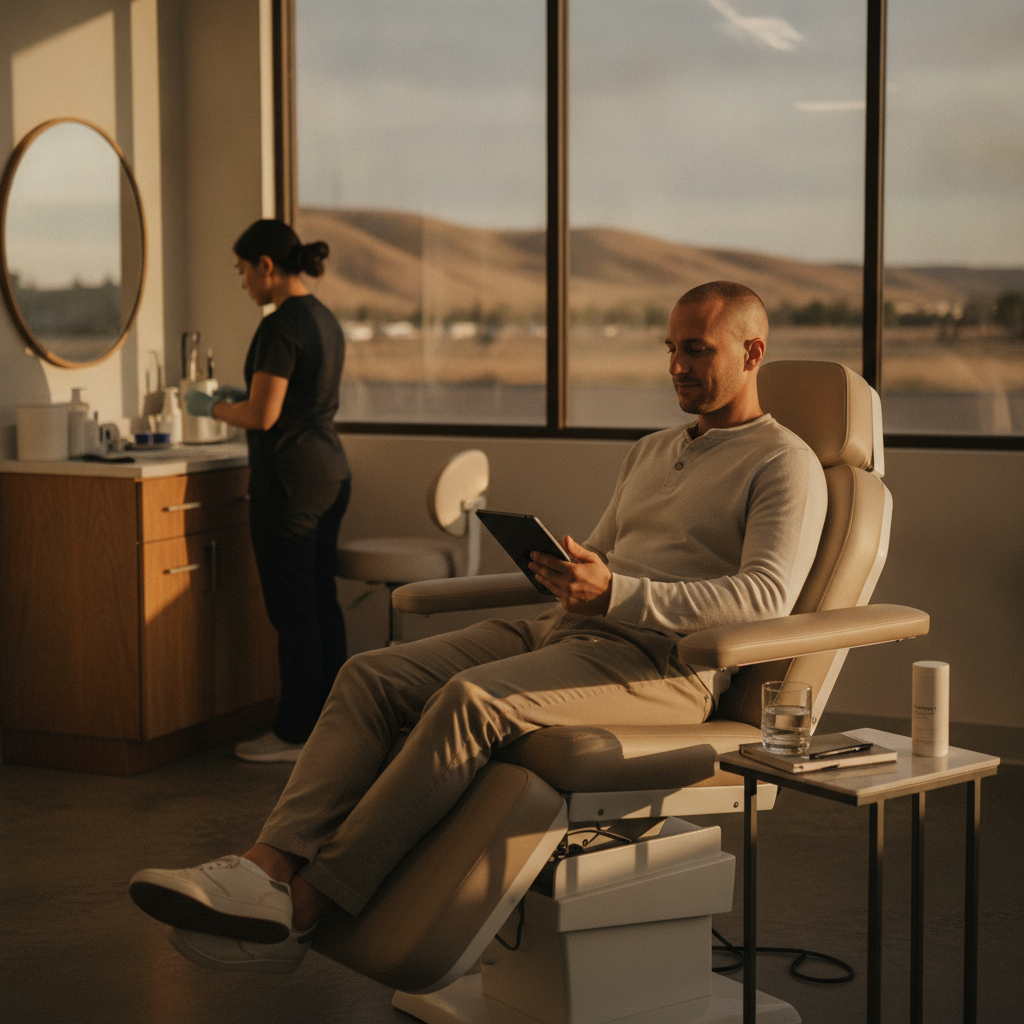

How Do You Prepare for Your First SMP Session? What Stockton and Lathrop Clients Should Know Before Sitting Down in the Chair
Uncategorized9 min read
How Do You Prepare for Your First SMP Session? What Stockton and Lathrop Clients Should Know Before Sitting Down in the Chair
The answer is simpler than most people expect — but the details matter more than you’d think. If you’re coming in for your first scalp micropigmentation session in Stockton, a little preparation in the days before your appointment can make a real difference in your comfort level, how well the pigment settles, and how clean your results look right from the start. Most SMP studios — locally and across the Central Valley — don’t spell this out clearly enough, so clients show up unsure of what to do, what to bring, or what to avoid. This article fills that gap.
Why Pre-Session Preparation Actually Matters
SMP isn’t tattooing in the traditional sense, but your scalp’s condition on the day of your session absolutely affects how the pigment implants and holds. Skin that’s sunburned, freshly shaved too aggressively, dehydrated, or coated in product doesn’t accept pigment the same way healthy, prepped scalp skin does. Coming in without thinking about any of this isn’t a disaster — your artist can work with most situations — but giving your scalp the right starting conditions helps produce cleaner dots, better retention, and less irritation during the process.
If you’re driving in from Lathrop, Manteca, or Tracy for your appointment, you’re also spending time and money to get there. A few simple steps beforehand means you’re walking in ready to get the most out of that session.
What to Do in the Week Before Your First Session
Hydrate Your Skin — From the Inside Out
This one gets skipped constantly, and it shouldn’t. Well-hydrated skin holds pigment more consistently and heals faster. In the Central Valley, especially during warmer months, dehydration is a real factor — long days outside, commutes, and dry air all take a toll. Start drinking more water in the three to five days before your session. This isn’t about chugging water the morning of your appointment; it’s about building up your skin’s baseline hydration gradually so your scalp is in good shape when you sit down.
Moisturize the Scalp Daily
If your scalp is dry, flaky, or tight, use a gentle, fragrance-free moisturizer on the scalp every day in the week leading up to your session. Nothing medicated, nothing with heavy oils or fragrance. Just basic hydration. Come in with healthy, supple skin — not a dry, irritated surface that’s going to make placement harder and healing slower.
Avoid Sun Exposure on Your Scalp
San Joaquin County summers are relentless, and if you’ve spent time outdoors without a hat, your scalp may already be dealing with some sun stress. In the week before your appointment, protect your scalp from direct sun exposure. Even mild sunburn can compromise how pigment settles and increase sensitivity during the session. If you work outside in Tracy or spend time in the fields or on job sites, wear a hat or a lightweight sun-protective cap.
Don’t Use Harsh Scalp Treatments
Hold off on any chemical treatments, medicated shampoos, Minoxidil application directly on the scalp, or strong exfoliants in the few days before your session. If you use Minoxidil regularly, check with your SMP artist about timing — applying it right before a session can interfere with the process. Scalp scrubs and harsh dandruff treatments should also be paused for at least three to four days prior.
What to Do the Day Before
Wash Your Hair — But Gently
Wash your scalp the evening before or the morning of your appointment with a mild, sulfate-free shampoo. Your scalp should be clean but not stripped. Avoid applying any products — serums, oils, styling products — after washing. Come in with a clean scalp and nothing sitting on top of it. This makes it easier for your artist to work precisely and keeps the area free from anything that might interfere with pigment placement.
Shave to Your Preferred Length — If You’re Going for the Shaved Look
If you’re getting full-head SMP for a shaved or close-cropped appearance, shave down to the length you plan to maintain — typically a zero or one guard, or a razor-shaved look. Do this the night before, not the morning of, so any minor irritation from shaving has time to calm down before your session. Freshly razor-burned scalp is not ideal for pigment work. If you’re getting density work to blend with existing hair you plan to keep, just come in with your hair at its natural, clean length.
The Morning of Your Session
Eat a real meal before you come in. This isn’t optional. A full session can run two to four hours, and going in on an empty stomach makes you more sensitive to sensation and more likely to feel lightheaded. A solid breakfast or lunch before your appointment genuinely changes your experience in the chair — especially for clients who are already a little anxious about their first time.
Wear comfortable, dark clothing that you don’t mind getting small amounts of pigment or product on. A button-down or zip-up top is ideal so you don’t have to pull anything over your head at the end of your session and disturb the freshly worked area. Skip the baseball cap or tight beanie — your scalp needs to breathe right after your session, and the friction isn’t great for the fresh work.
If you’re commuting in from Lathrop, Manteca, or elsewhere in the I-5 corridor, plan your route in advance and give yourself buffer time. Arriving stressed and rushed affects your comfort in the chair. You want to be relaxed going in — this is your time, and a calm mindset genuinely makes the session easier.
What to Tell Your Artist Before the Session Starts
Before the needle touches your scalp, your artist should walk through your goals, your hairline design, and what the session will cover. This is your chance to speak up. If you have any scalp conditions — even minor ones — mention them. If your skin is reactive, if you’ve had any unusual responses to topical products recently, or if you’re on any medications that affect bleeding or skin sensitivity, say so. At Infusion SMP, the pre-session conversation isn’t a formality — it’s part of how results are customized.
Also tell your artist honestly what you’re hoping for. Not just “I want it to look natural” — be specific. Do you want a hairline that’s softer and more receded, or one that pushes the boundary a bit more? Do you want to see a design drawn on before anything starts? The clearest communication before Session 1 sets the foundation for everything that follows across your 2–3 sessions.
What Happens Across Your Sessions — A Quick Overview
Most SMP treatments are completed across two to three sessions, spaced roughly one to two weeks apart. Your first session lays the base — initial pigment placement, hairline establishment, and overall coverage. It often looks lighter or less complete than the final result, which is intentional. The second session builds density and depth. If a third session is needed, it’s typically used for fine-tuning, adjusting tone, or adding detail to specific areas.
Understanding this progression before you start helps manage expectations. Some clients see their first session and feel underwhelmed — that’s normal. The full result reveals itself after healing and after subsequent sessions. Learn more about how the full SMP process works and what each stage is designed to accomplish.
Frequently Asked Questions from Stockton-Area Clients
Can I work out the day before my SMP session?
Yes — light to moderate exercise the day before is fine. Avoid anything intense the morning of your session. Heavy sweating right before your appointment can affect the scalp environment, and you want to walk in clean and settled, not fresh from a workout.
Should I take anything for pain before my session?
Talk to your SMP artist about this beforehand. Some over-the-counter pain relievers, particularly blood-thinning ones like aspirin or ibuprofen, can increase bleeding at the scalp. Tylenol (acetaminophen) is generally safer if you’re concerned about sensitivity, but always check with your artist first. Many clients find they don’t need anything at all once they’re in the chair.
Can I bring someone with me to my appointment?
Absolutely. If having a friend or family member in the room helps you relax, most SMP studios — including Infusion SMP in Stockton — are comfortable accommodating that. Just check in advance so the studio can plan the space accordingly.
What if I have product in my hair when I arrive?
Your artist can work with you to clean the area, but it’s better to arrive with a clean, product-free scalp. Heavy oils, waxes, or styling sprays sitting on the scalp can create a barrier that affects pigment placement. Save yourself the extra step and come in clean.
How long will my first session take?
First sessions are often the longest — typically two to four hours depending on the area being treated. Hairline-only work may be on the shorter end. Full-scalp coverage sessions for advanced hair loss take longer. Your artist will give you a realistic time estimate during your consultation so you can plan your day accordingly — especially useful if you’re making the drive from somewhere like Lathrop or Tracy.
You’ve Done the Research — Now Get Ready to Actually Do It
Most people who struggle in their first SMP session just weren’t prepared — not because the procedure is difficult, but because nobody told them what to expect or what to do beforehand. Now you know. Hydrate, protect your scalp from the sun, come in clean, eat something, and have an honest conversation with your artist before the session starts. That’s it. The rest is in the hands of someone who does this every day.
If you’re in Stockton, Lathrop, Manteca, Tracy, or anywhere across San Joaquin County and you’re ready to take that first step, reach out to Infusion SMP to schedule your free consultation. We’ll walk through your goals, answer every question you have, and make sure you’re set up for results you’ll actually be proud of — right from Session 1.
Results vary. SMP is a cosmetic tattoo procedure, not a medical treatment, and does not regrow hair. Individual results depend on skin, scalp, hair and aftercare.