

Can You Get SMP If You Have Alopecia Areata (Patchy Hair Loss)? What Stockton and Modesto Clients Should Know
Uncategorized8 min read

Can You Get SMP If You Have Alopecia Areata (Patchy Hair Loss)? What Stockton and Modesto Clients Should Know
Yes — scalp micropigmentation can be an effective option for people dealing with alopecia areata, but it requires a more thoughtful, case-by-case approach than standard SMP for pattern baldness. If you’re living with patchy hair loss in Stockton, Modesto, or anywhere across the Central Valley, you’ve probably already discovered that most conventional hair loss solutions weren’t built with your specific situation in mind. Hair fibers look obvious over bare skin. Topical treatments may not work when the follicles themselves are under immune attack. And a hair transplant can’t move hair into an area where the body may simply reject it again. SMP doesn’t grow hair — but what it can do is blend those bare patches visually so they stop commanding every mirror check and every anxious morning.
What Alopecia Areata Actually Looks Like (and Why It Makes Coverage Complicated)
Alopecia areata is an autoimmune condition where the body’s immune system attacks hair follicles, causing hair to fall out in round or irregular patches. It can affect one small area, multiple scattered spots, or — in more advanced cases — progress to total scalp loss (alopecia totalis) or full body hair loss (alopecia universalis). What makes it uniquely challenging is the unpredictability. Some people lose a coin-sized patch and never lose more. Others cycle through regrowth and new loss for years.
That unpredictability is the core reason why talking to an experienced SMP artist — not just any provider — matters so much when alopecia is involved. The strategy for someone with two stable, defined patches on the back of the scalp looks completely different from someone whose patches are actively changing in size and location.
How SMP Can Help with Patchy Hair Loss
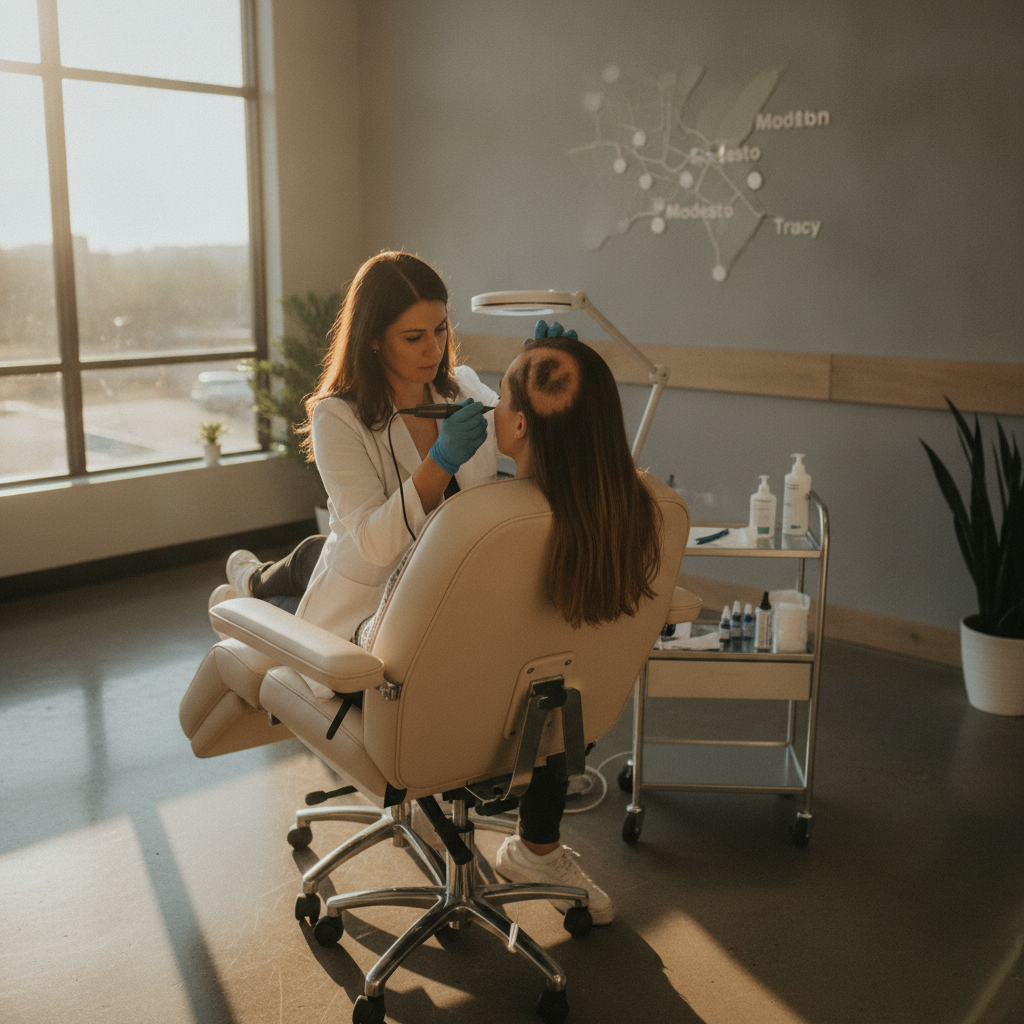
When applied skillfully, SMP can deposit pigment into the smooth, hairless skin of an alopecia areata patch in a way that replicates the appearance of closely cropped hair follicles. To someone a few feet away — or even closer — those patches can disappear into what looks like normal, slightly shaved scalp.
The technique used in patch coverage is similar to what’s used for full scalp SMP, but the context demands more precision. A skilled artist has to match pigment color and dot density to the surrounding hair and skin tone, factor in how the skin in the affected area differs from normal scalp tissue (alopecia patches are often smoother and can respond to pigment slightly differently), and design coverage that looks plausible whether the surrounding hair is worn short or blended.
The Stability Question: Why Timing Matters More for Alopecia Clients
This is the section most competitor websites skip entirely — and it’s arguably the most important factor for anyone with alopecia areata considering SMP.
If your patches are still actively changing — growing, shrinking, or appearing in new areas — it’s worth having an honest conversation about timing before you sit down for a session. SMP pigment placed in a patch that later regrows hair can result in areas where existing pigment dots are surrounded by new hair growth, which may look uneven or inconsistent. That’s not a disaster — it can often be blended or adjusted — but it’s something you deserve to know upfront rather than discover after the fact.
On the other hand, if your alopecia has been stable for a year or more, or if you’ve reached a point where the affected areas are unlikely to change significantly, SMP becomes a much more straightforward conversation. Many clients in this situation find it’s the first thing that’s actually given them consistent, worry-free coverage — not a temporary fix they have to reapply every morning.
A good consultation will walk through your personal hair loss history before any decisions are made. That kind of individualized approach is something you should expect and insist on.
What the Process Actually Looks Like for Alopecia Clients
SMP is typically completed across two to three sessions, spaced a few weeks apart. For alopecia coverage specifically, the first session lays down a base layer of pigment across the affected patches. The second session refines density, adjusts tone, and ensures the pigment integrates naturally with the surrounding scalp. By the end of the process, most clients are genuinely surprised by how seamlessly the treated areas blend in.
Central Valley summers do add a layer of consideration. Stockton and Modesto heat is real, and the sun here is not gentle. During the healing period between sessions — typically one to two weeks — you’ll need to keep the treated scalp out of direct sun exposure and resist the urge to sweat heavily outdoors. For clients who work in agriculture, construction, or other outdoor fields throughout San Joaquin or Stanislaus County, that means planning your sessions around your schedule and being honest with your artist about your lifestyle so they can guide your aftercare appropriately.
What About SMP for Women with Alopecia Areata?
Alopecia areata affects women just as commonly as men, and yet the conversation around SMP solutions tends to default to male clients. Women with patchy loss face a specific challenge: the patches often occur in areas where surrounding hair is worn longer, making blending more nuanced. SMP for women with alopecia works best when the hair is worn at a length where the pigmented areas can settle naturally into the part line, temples, or crown without creating a visible border between treated and untreated skin.
If you’re a woman in Modesto, Tracy, Manteca, or the surrounding area dealing with patchy loss that’s affecting your confidence, it’s worth asking specifically about experience with female alopecia clients during any consultation. This is a specialized application of SMP that requires a different eye than standard density enhancement.
SMP vs. Other Alopecia Coverage Options
Wigs, hairpieces, and topical concealers are the most common alternatives people reach for. Each has its place — but each also has real limitations. Hairpieces require daily maintenance and can shift or feel uncomfortable, particularly in the Central Valley’s summer heat. Concealers wash off, sweat off, and require a level of daily effort that adds up. Medication and steroid injections address the underlying immune response but offer no guarantee of regrowth, and they don’t help the coverage problem you’re dealing with today.
SMP is permanent in a way those options aren’t. The pigment doesn’t wash off. It doesn’t require a morning routine. And when it’s done well, it doesn’t require an explanation to anyone — because no one notices it. For clients comparing SMP costs to the cumulative expense of ongoing concealers, hairpieces, or treatments, the numbers often make a stronger case for SMP than people initially expect. You can get a clearer picture of what that looks like for your specific situation during a free consultation.
For clients who are also dealing with diffuse thinning in addition to patchy areas, hair density enhancement with SMP can be combined with patch coverage in the same treatment plan — something worth discussing if your hair loss involves more than one pattern.
Frequently Asked Questions About SMP and Alopecia Areata
Will SMP work on completely smooth skin inside an alopecia patch?
Yes. SMP pigment can be deposited into smooth scalp skin. The key is matching the dot size, density, and color accurately to the surrounding area so the transition looks natural rather than stamped on.
What if my alopecia patches come back after I’ve had SMP done?
If existing patches regrow and new ones appear, touch-up sessions can be used to address new areas as needed. This is part of why an ongoing relationship with a trusted local artist — rather than a one-and-done national franchise — makes a real difference for alopecia clients specifically.
Is the skin in an alopecia patch safe to work on?
In most cases, yes. Alopecia areata does not damage the surface of the skin. Your artist will evaluate the affected areas during consultation to confirm there are no contraindications specific to your situation.
Does SMP affect hair regrowth in treated patches?
No. SMP is a surface-level cosmetic procedure that does not penetrate deep enough to affect follicle function. If regrowth occurs, it will grow through the pigmented area normally.
I’m in Turlock — do I have to travel far to get this done?
Turlock and Modesto clients are well within reach of Infusion SMP in Stockton, and the drive along Highway 99 is straightforward. Many Central Valley clients from Manteca, Tracy, and Stanislaus County make the trip regularly for consultations and sessions — it’s a manageable commitment for results that last.
Ready to Talk Through Your Options?
Alopecia areata is personal, unpredictable, and — for a lot of people — quietly exhausting to manage. If you’ve been covering patches with hats, adjusting hairstyles around bare spots, or just avoiding mirrors at certain angles, you deserve to know what’s actually possible with the right approach. Infusion SMP Scalp Micropigmentation serves clients throughout Stockton, Modesto, Turlock, and the greater Central Valley, and we take the time to understand your specific hair loss history before recommending any treatment path. Reach out to schedule your free consultation and get honest answers about whether SMP makes sense for where you are right now.
Results vary. SMP is a cosmetic tattoo procedure, not a medical treatment, and does not regrow hair. Individual results depend on skin, scalp, hair and aftercare.