Can SMP Conceal a Birthmark or Scar on the Scalp? What Stockton Clients Should Know About Specialized Pigment Work
Yes — scalp micropigmentation can be used to camouflage much more than hair loss. Whether you’re dealing with a birthmark that’s been a source of self-consciousness your entire life, a scar from an old accident, a surgery, or even a burn, SMP pigment work can significantly reduce how visible that mark is against your scalp and surrounding hair. If you’re in Stockton or anywhere across San Joaquin County and this is something you’ve quietly wondered about, you’re not alone — and this is one of the most underserved conversations in the SMP world.
Most SMP studios focus their marketing on hair loss: receding hairlines, full baldness, thinning crowns. That makes sense — it’s the most common reason people come through the door. But the same technique that blends pigment deposits to mimic hair follicles can also be adapted to blend discoloration, flatten the visual appearance of raised or indented tissue, and match surrounding scalp tone with remarkable precision. For clients who’ve spent years wearing hats or strategically styling their hair to hide something on their scalp, that’s a meaningful possibility.
What Types of Scalp Marks Can SMP Actually Address?
Not every scalp irregularity responds to SMP the same way, and an honest artist will tell you that upfront. Here’s a general breakdown of what tends to work well and where expectations need to be calibrated:
- Flat or slightly raised birthmarks (port wine stains, café-au-lait spots): When the mark is a different color from the surrounding scalp — often darker or reddish — pigment can be layered strategically to reduce the visual contrast. The goal isn’t to erase the mark entirely, but to blend it so it no longer draws the eye.
- Injury or accident scars: Scars from falls, sports injuries, or accidents often appear as pale, shiny patches where hair no longer grows. SMP can deposit pigment into that scar tissue to mimic the look of follicles and match the color of the surrounding scalp, making the area far less visible — especially on a closely cropped or shaved head.
- Surgical scars: Whether from a past procedure, a mole removal, or a cranial surgery, scars on the scalp can be camouflaged effectively when the tissue has fully healed. The key is that the scar must be mature — typically at least 12 months old — before SMP work begins.
- Burn scars: These are more complex because burn tissue varies significantly in texture and pigment absorption. Some burn scars respond well to SMP; others require more sessions and a more conservative approach. A consultation is essential before any commitments are made.
What SMP cannot do is physically alter scar texture or change the surface structure of your skin. If a scar is significantly raised or deeply indented, SMP reduces its visual impact — but you’re not getting dermabrasion or surgery. That said, for most clients, the visual result is dramatic enough to change how they feel about their scalp entirely.
Why This Conversation Is Missing From Most SMP Studios
Here’s something worth knowing: if you’ve looked at SMP studios in Sacramento, Elk Grove, or even browsed national SMP chains, you’ve probably noticed that almost none of them talk specifically about birthmark camouflage or non-hair-loss scar work on their websites. It’s a genuine content gap in this industry — and it reflects a broader gap in who gets told that SMP might help them.
The truth is, the technique overlaps significantly with standard SMP work. An experienced artist who understands pigment matching, skin tone variation, and how ink settles into scar tissue can adapt their approach for camouflage work. It’s not a completely different service — it’s an extension of the same skill set. But it requires a practitioner who’s worked with diverse skin types, varied scalp conditions, and cases that don’t fit the standard template.
In the Central Valley, where clients range from agricultural workers who’ve had outdoor injuries to healthcare workers, veterans, and longtime Stockton and Modesto residents with all kinds of scalp histories, there’s real demand for this kind of work. It just doesn’t always get talked about openly.
What the Process Looks Like for Scar and Birthmark Camouflage
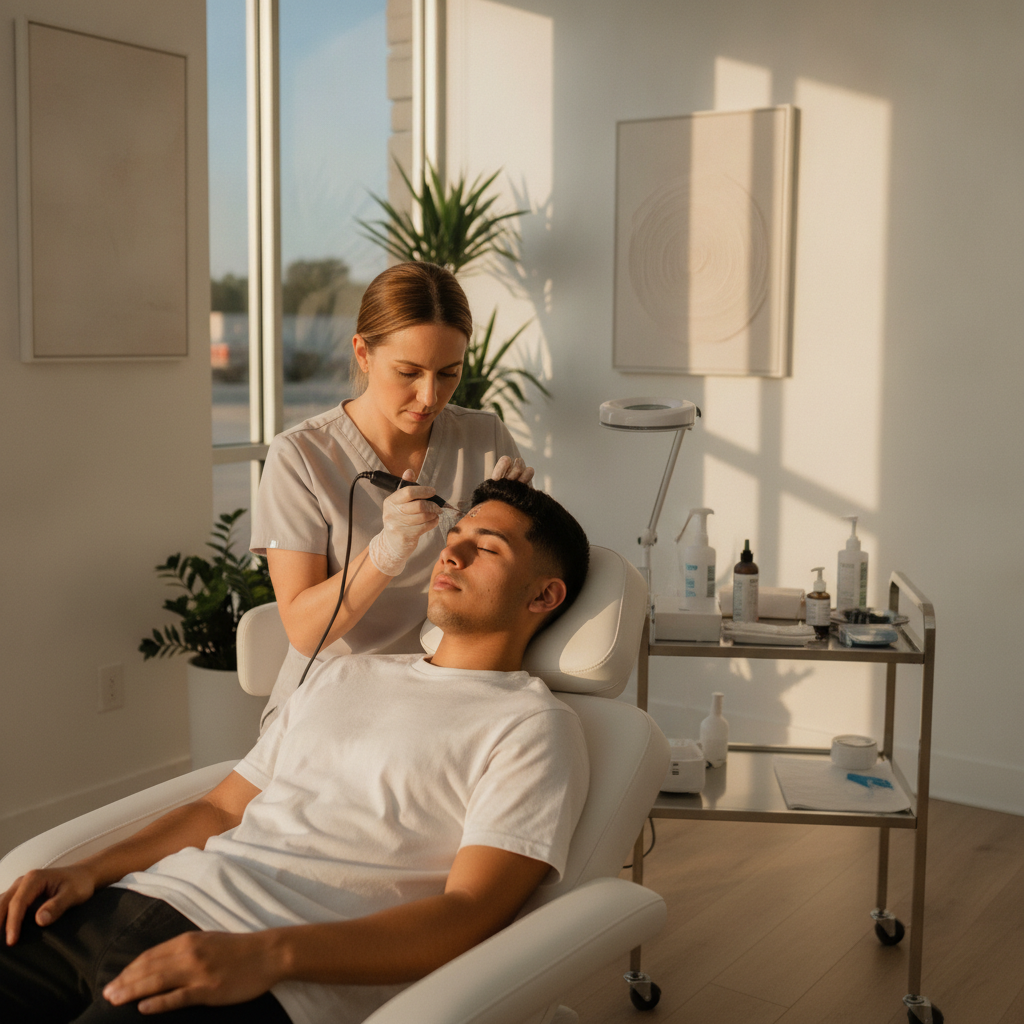
If you’re coming in specifically for scar or birthmark camouflage rather than hair loss, the consultation process is even more important than usual. A skilled artist needs to assess the mark itself — its edges, color, depth, texture, and how it relates to the surrounding scalp — before recommending an approach.
From there, the general structure follows a similar multi-session model to standard SMP. Most scar camouflage cases require two to three sessions, spaced roughly four to six weeks apart, to allow the pigment to settle and reveal how the work is blending. In early sessions, the artist lays a base tone; subsequent sessions refine the edges and deepen or lighten as needed to achieve a natural match. Healing between sessions is what allows the artist to see how your skin is actually holding the pigment — and to adjust.
One thing worth noting for clients in the Central Valley: the hot, dry summers here affect healing after any scalp procedure. You’ll want to protect the treated area from direct sun exposure during the healing window, keep the scalp moisturized, and avoid anything that causes heavy sweating in the first week or two post-session. If you work outdoors in Stanislaus County or San Joaquin County and your job keeps you in the sun, plan your sessions accordingly and talk to your artist about timing.
What to Ask at Your Consultation
If you’re considering SMP for a birthmark, scar, or other scalp mark, here are the questions that matter most:
- Has the artist worked specifically on scar tissue or birthmarks before — not just hairlines and density work?
- Can they show you healed examples of camouflage work, ideally on skin tones similar to yours?
- What is their honest assessment of what’s achievable for your specific mark — and what won’t change?
- How do they approach pigment matching for discolored or irregular scalp areas?
- What does the session and healing timeline look like for your particular case?
Any artist worth trusting will answer these questions directly and honestly — including telling you if your specific situation isn’t a strong candidate for SMP. That kind of transparency is a sign you’re in the right place.
For clients comparing options across Turlock, Elk Grove, or even driving in from Sacramento for a trusted provider, the difference in outcome often comes down to the artist’s experience with non-standard cases. Generic studios that only do cookie-cutter hairlines may not have the depth of experience that specialized camouflage work requires.
SMP for Scalp Scars: A Gap Worth Knowing About
Hair transplant scar camouflage gets mentioned occasionally in the SMP world — the long linear scars from FUT strip procedures or the dot-pattern scarring from FUE extractions are well-known among SMP artists. But birthmarks, accident scars, burn tissue, and surgical marks from non-hair-related procedures? That conversation barely exists in most studios’ public-facing content.
If you’ve been carrying a scar or mark on your scalp and quietly wondering whether anything could be done about it, the answer is: possibly quite a lot. A consultation costs you nothing. What it might give you is a clear picture of what’s possible — and maybe the first real reason to feel hopeful about something you’ve been managing around for years. You deserve to feel that way about your own scalp, and that applies whether your concern is hair loss, a visible scar, or something else entirely.
Learn more about the full range of what’s possible with scalp micropigmentation at Infusion SMP, or read about how density work can address thinning alongside other scalp concerns.
Frequently Asked Questions
Can SMP completely erase a birthmark on the scalp?
Not entirely — the goal is camouflage, not erasure. SMP reduces the visual contrast between the mark and the surrounding scalp so it no longer draws attention. For many clients, the difference is dramatic even if the mark isn’t 100% invisible under close inspection.
How old does a scar need to be before I can get SMP on it?
Most experienced SMP artists recommend waiting at least 12 months after the injury or surgery to ensure the scar tissue has fully matured. Working on fresh or actively healing scar tissue increases the risk of poor pigment retention and unpredictable results.
Will SMP pigment hold differently in scar tissue than in normal scalp skin?
Yes — scar tissue can be more fibrous and less porous than healthy skin, which sometimes means it absorbs pigment differently. This is why multiple sessions are important: the artist can assess how your specific tissue is holding the ink and adjust the approach between sessions.
Is scar camouflage SMP more expensive than standard hairline work?
It depends on the size and complexity of the area being treated. Small, localized scar camouflage may actually be less involved than full scalp SMP. Larger or more complex marks involving burn tissue or unusual pigmentation can require more sessions. The best way to get an accurate sense of cost is through a consultation — there’s no one-size-fits-all answer here.
I’m in Modesto — do I need to travel to Stockton for this kind of specialized work?
Infusion SMP is based in Stockton and serves clients from throughout the Central Valley, including Modesto, Turlock, and beyond. The drive along Highway 99 is short, and many clients find it worth the trip to work with an artist they trust for something as personal as scalp camouflage. You can find more about the Modesto service area here.
Ready to Talk About What SMP Could Do for You?
Whether you’ve been living with a birthmark, carrying a scar, or dealing with something on your scalp that you’ve never quite found a solution for, a free consultation is the right first step. At Infusion SMP Scalp Micropigmentation in Stockton, we take the time to actually look at your situation, give you an honest assessment, and explain exactly what we can and can’t do — before you commit to anything.
You’ve probably spent a long time wondering. Let’s get you some real answers. Reach out to schedule your free consultation today.