


Can You Get SMP If You Have a Beard or Facial Hair? What Stockton and Modesto Men Should Know About Blending Your Scalp with Your Face
Uncategorized9 min read
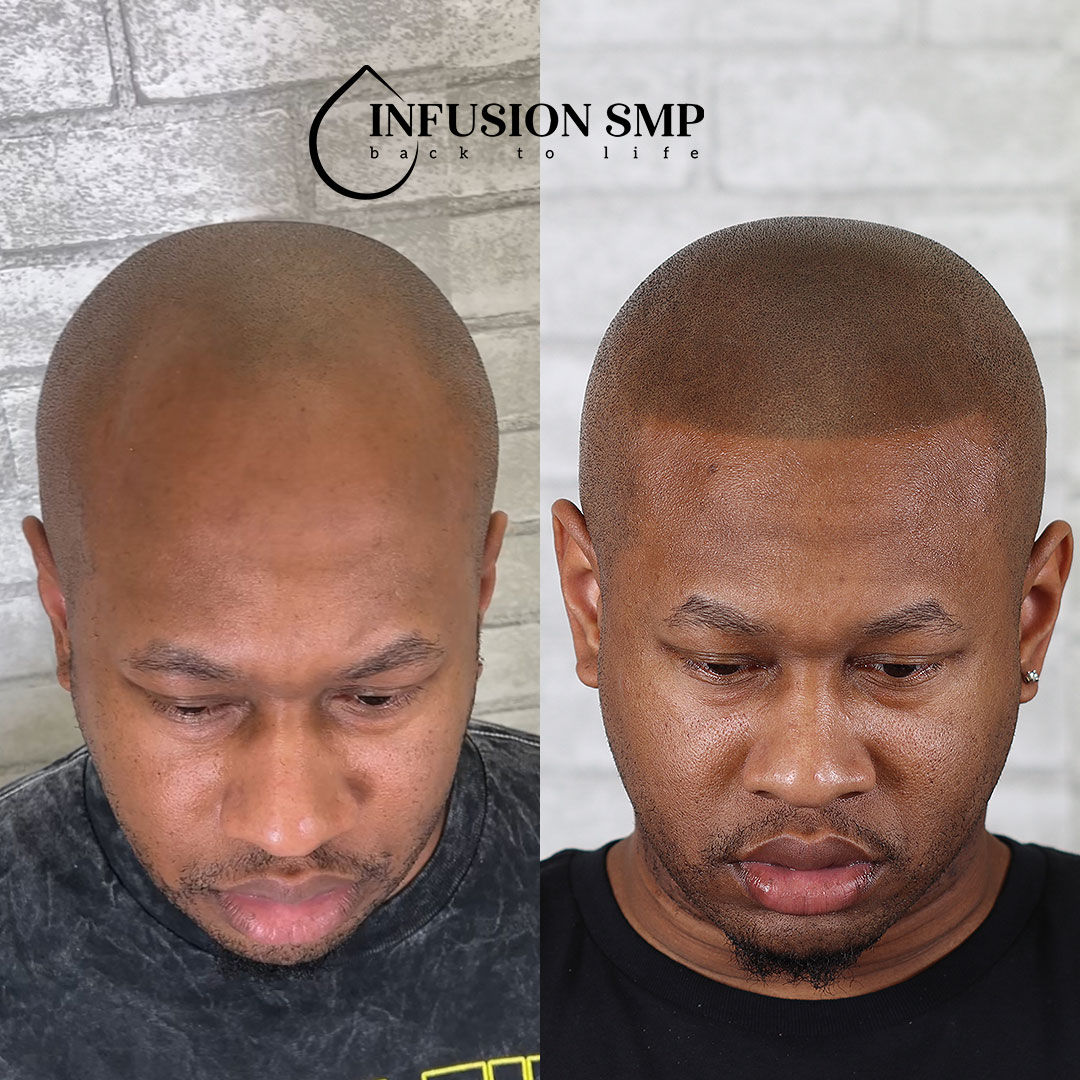
Can You Get SMP If You Have a Beard or Facial Hair? What Stockton and Modesto Men Should Know About Blending Your Scalp with Your Face
Yes — and honestly, having a beard or stubble can work strongly in your favor when it comes to SMP. For men in Stockton and throughout the Central Valley who keep facial hair, scalp micropigmentation doesn’t just coexist with your beard. Done right, it connects to it. The shaved-stubble aesthetic that SMP creates on the scalp is the same look you’re already maintaining on your face, which makes the whole picture read as intentional, masculine, and completely natural. The key is finding an artist who understands how to match pigment to your specific hair color, skin tone, and the texture of your facial hair — not just drop a generic dark shade on your scalp and call it done.
Why Bearded Men Are Actually Great Candidates for SMP
Think about the look for a second. A well-groomed beard paired with a clean shaved head is one of the most recognizable and respected styles for men dealing with hair loss. Guys have been rocking it for decades because it works — it frames the face, looks deliberate, and doesn’t try to hide anything. SMP takes that aesthetic one step further by filling in the scalp with tiny, hair-follicle-shaped impressions that replicate the appearance of a freshly shaved head, even on areas that have thinned or gone completely bald.
When your scalp pigmentation matches your beard, the connection between the two reads as seamless. Your eyes fill in the rest. It doesn’t look like a procedure — it looks like your head. That’s the goal every time.
Men who wear beards also tend to have a clearer visual reference point. Your artist can look at your facial hair during the consultation and use it as a direct guide for pigment tone, density impression, and how to handle the transition zone between your scalp and your face. That’s a genuine advantage that men without facial hair don’t always have.
The Part Most SMP Sites Don’t Talk About: The Transition Zone
Here’s something you won’t find spelled out clearly on most competitor sites, and it matters more than people realize: the area where your scalp meets your face — the temples, the sideburns, the area above the ears — is one of the most technically demanding parts of an SMP treatment.
If you have a beard that blends up into your sideburns or connects to a fade, that transition has to be handled with care. A heavy-handed artist who places pigment too densely or too far down into that zone can create a look that appears hard-edged or disconnected from your natural beard growth. Done well, the opposite happens — your scalp pigmentation flows naturally into the stubble of your sideburns and beard, and the whole face reads as one cohesive, well-maintained look.
This is precisely why the skill of your artist matters as much as the technique itself. At Infusion SMP, the transition zone gets deliberate attention during every hairline consultation — because getting that area right is often what separates an SMP result that looks like a procedure from one that just looks like you.
What About Pigment Matching When You Have a Beard?
Pigment matching is one of the most important conversations to have during your consultation, and your beard gives your artist a lot to work with. A few things to understand going in:
- Facial hair and scalp hair are often slightly different tones. Your beard may carry more red, ash, or warm brown than the hair on your head. A skilled artist accounts for this and doesn’t simply match the two in an identical way — they blend toward each other so the transition feels natural.
- Skin tone affects how pigment reads. The same ink shade looks different on lighter skin than it does on olive or deeper complexions. Your artist needs to understand how pigment settles and shifts after healing on your specific skin — not just what it looks like going in.
- Salt-and-pepper beards require nuance. If your beard has gone gray or is a mix of dark and light, the scalp pigmentation needs to soften accordingly. Placing deep black dots on a scalp next to a mostly gray beard looks jarring and reads as artificial. A skilled practitioner will mix and layer pigment to reflect the same salt-and-pepper quality your beard already has.
These are real conversations worth having before you commit to a session — not questions that should be answered for the first time while you’re already in the chair.
What If You Grow Your Beard Out Sometimes and Keep It Short Other Times?
This is a practical question a lot of men in the Central Valley have, especially guys working in trades, healthcare, or agriculture where beard policies vary by employer. The short answer: SMP is designed around the shaved-or-short-stubble look on the scalp, so it works best when your beard is at a similar length — typically a few days of growth.
If you occasionally grow a full beard, the scalp pigmentation still functions as a natural-looking base. It won’t look mismatched with a longer beard, though the contrast between the two will be more noticeable than when both are kept short. Most men find they naturally gravitate toward keeping things consistent once they see how sharp the overall look is when scalp and beard lengths are close.
What SMP doesn’t do is create actual hair growth — so if you let your beard grow out for a few weeks, your scalp will stay at the shaved look it was designed for. For the vast majority of men, that’s completely fine. For those who want longer hair on top, density enhancement SMP may be a better conversation to have. Learn more about how SMP can add the appearance of thickness without committing to a fully shaved aesthetic.
Local Consideration: Sun Exposure and Keeping Your Look Sharp in the Central Valley
If you’re in Stockton, Modesto, Manteca, or anywhere along the Highway 99 corridor, you already know what Central Valley summers feel like. The combination of intense sun, heat, and outdoor exposure that’s part of daily life here — whether you’re working outdoors, commuting, or just spending time outside — has a real impact on scalp pigmentation over time.
UV exposure is the primary cause of pigment fading between touch-up sessions. Men with beards often forget to apply SPF to their scalp because they’re used to their face being their sun-care priority. Once you have SMP, your scalp deserves the same attention. A broad-spectrum SPF applied daily — especially during summer months when you’re outdoors in Tracy, Lodi, or anywhere in San Joaquin County — will keep your pigmentation looking crisp and consistent far longer between refresh appointments.
Frequently Asked Questions
Will my SMP match my beard if my beard is lighter than my natural hair color?
Your artist will use your beard as a visual guide during the consultation and select pigment that harmonizes with both your scalp and facial hair. The goal is never an exact match to either — it’s a blend that reads as natural across the whole face. Be upfront about the variation you’ve noticed, and a skilled artist will account for it.
Can SMP connect to my existing sideburns or beard fade?
Yes. This is actually one of the more artistically satisfying parts of the treatment for many clients. When your sideburns and beard fade are factored into the hairline design, the result is a cohesive look that connects the scalp to the face in a way that feels completely intentional.
What if I want to shave my beard later — will my SMP still look right?
SMP on the scalp is designed to replicate the shaved-stubble look regardless of what you’re doing with your beard. If you decide to go clean-shaven on the face later, your scalp will still look natural. The artist will design your hairline and density to work on its own merits, not just in relation to your current beard.
How many sessions will I need if I have a beard and want the full shaved-head look?
Most clients complete their SMP across two to three sessions spaced a few weeks apart. The number of sessions depends on the coverage area and complexity — a full scalp treatment for significant baldness typically takes three sessions. Your artist will walk through the expected timeline during your consultation.
I live in Modesto and I’m worried about finding an artist who understands this level of detail. What should I ask?
Ask to see portfolio photos of clients with similar facial hair and skin tone — not just the cleanest before-and-after shots they have on file. Ask specifically how they handle the temple and sideburn transition zone. And ask about their pigment selection process for clients with salt-and-pepper or multi-tone beards. The answers will tell you quickly whether they’re thinking at that level of detail or not.
Ready to See How This Could Look on You?
If you’ve been holding off on SMP because you weren’t sure how it would work with your beard, it’s worth having a real conversation with someone who can look at your specific face, your hair color, and your skin tone together. The right artist will show you exactly how the two connect — before you ever commit to a session.
Infusion SMP Scalp Micropigmentation is based in Stockton and serves men and women across San Joaquin County, Stanislaus County, and the broader Central Valley, including clients who make the drive from Modesto, Manteca, Lodi, and Tracy. If you’re ready to explore what SMP could look like for you, reach out and schedule your free consultation. No pressure, no hard sell — just an honest conversation about what’s possible.
Results vary. SMP is a cosmetic tattoo procedure, not a medical treatment, and does not regrow hair. Individual results depend on skin, scalp, hair and aftercare.