
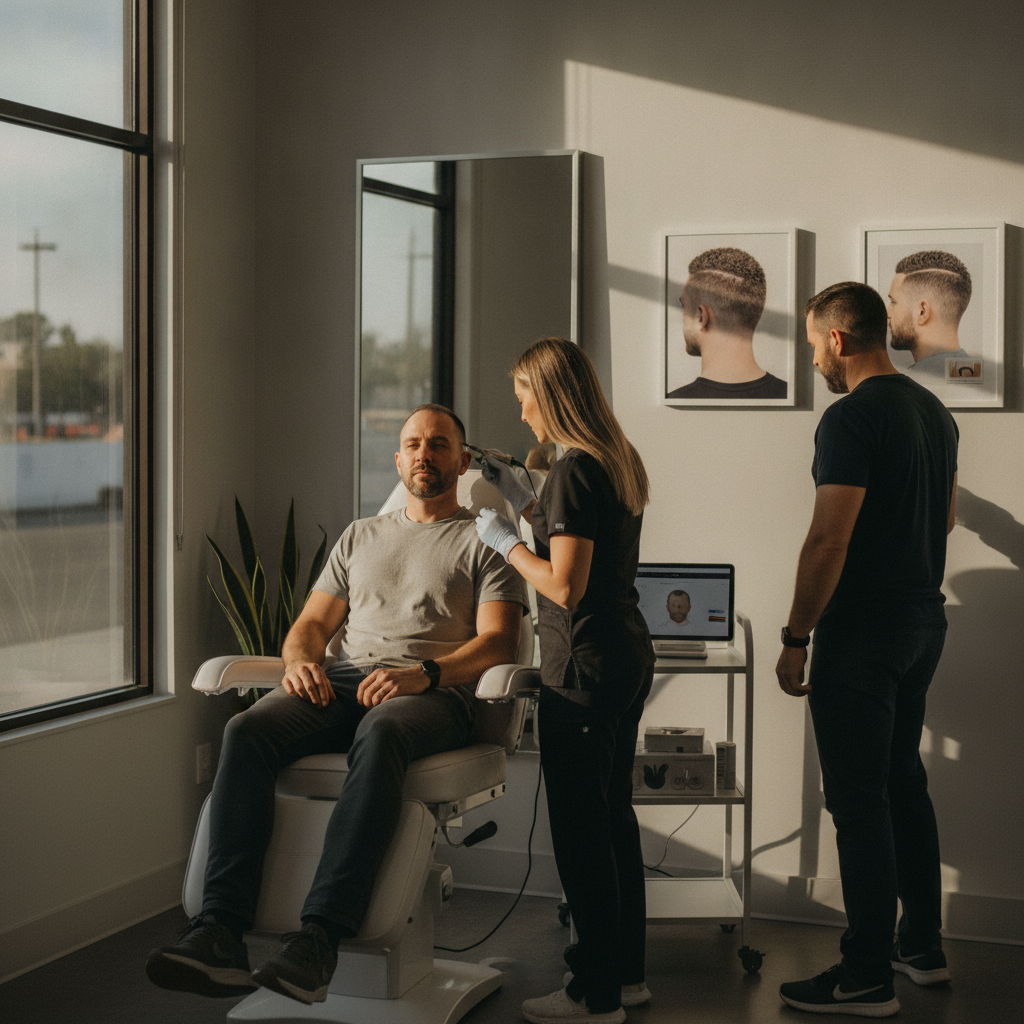

Is SMP a Good Option If You’re Still Deciding Whether to Get a Hair Transplant? What Stockton and Modesto Men Should Know Before Committing
Uncategorized8 min read
Is SMP a Good Option If You’re Still Deciding Whether to Get a Hair Transplant? What Stockton and Modesto Men Should Know Before Committing
If you’re sitting somewhere between “I want to do something about my hair” and “but I’m not ready to commit to surgery,” that’s actually a really reasonable place to be. Men across Stockton, Modesto, and the broader Central Valley reach this exact crossroads every day — and most of them aren’t finding clear, honest answers online. What you typically get are transplant clinics selling you on surgery and SMP studios selling you on pigment, with very little guidance on how to actually think through the decision. This article is different. We’re going to give you a straight look at both options, who each one is genuinely right for, and what most providers won’t tell you before you open your wallet.
The Real Difference Between SMP and a Hair Transplant
At the most basic level, a hair transplant moves living hair follicles from one part of your scalp to another. It’s surgery — real surgery, with anesthesia, incisions, healing time, and meaningful risk. When it works well, you can grow real hair in areas that were thinning. That’s the upside. The downside is that it’s expensive (typically $10,000 or more, and often significantly higher depending on the degree of loss and the clinic), requires weeks of visible recovery, and the results depend heavily on how much donor hair you actually have available — which not every man has in sufficient quantity.
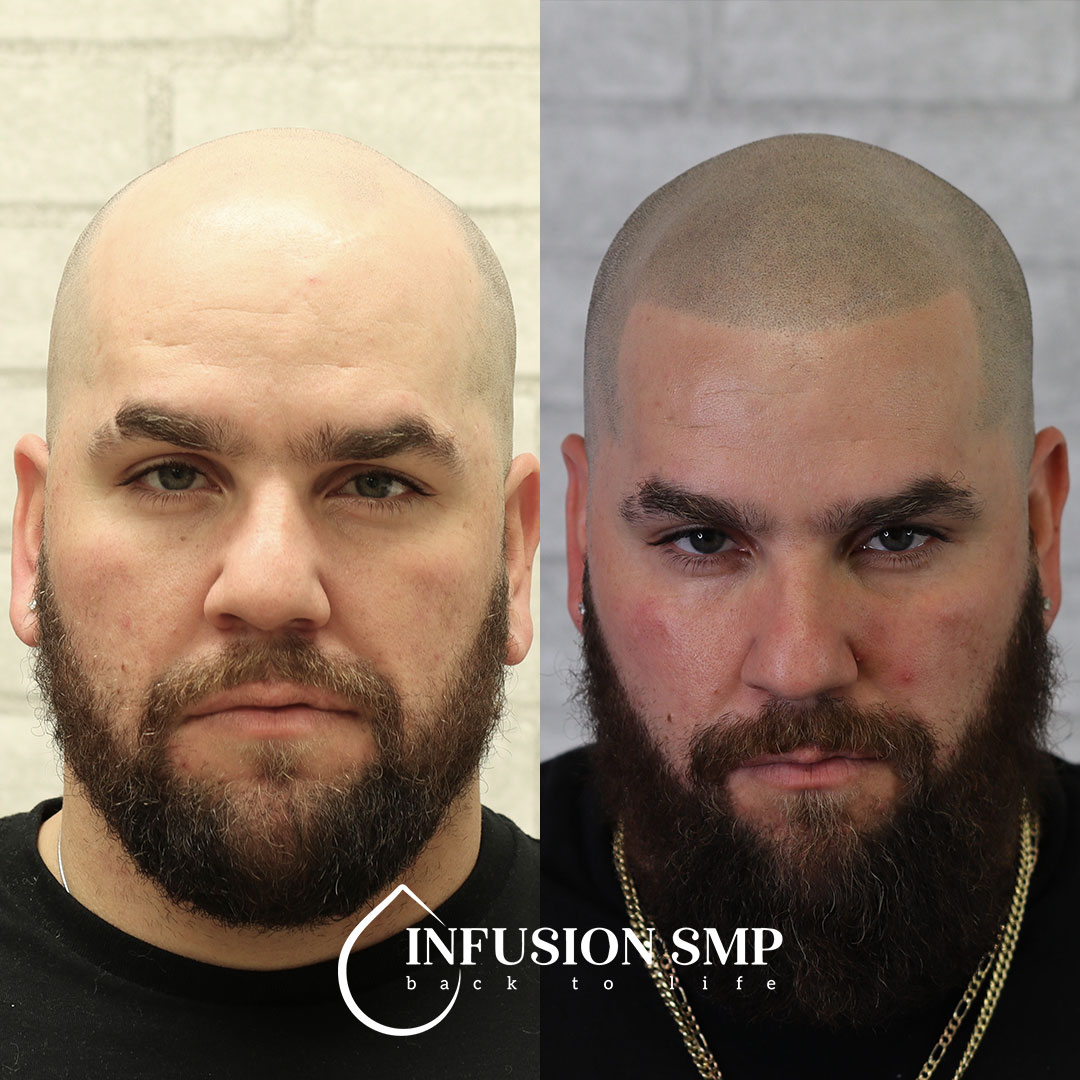
Scalp micropigmentation, by contrast, doesn’t grow hair. What it does is replicate the look of a closely shaved head or add the visual impression of density to thinning areas — using precisely placed pigment deposits that mimic hair follicles at the skin level. No surgery. No scalpels. No waiting months to see whether grafts survived. You walk out after your sessions looking like you have a clean, full, well-defined head of hair — and you can go back to your normal life within days. For the full picture of what the procedure involves, here’s a detailed overview of SMP and how it works.
Why So Many Central Valley Men Are Choosing SMP Over Surgery
If you’re working in agriculture, healthcare, logistics, or any other field where you can’t afford to disappear for weeks of recovery, a hair transplant timeline is genuinely disruptive. Men in San Joaquin County and Stanislaus County often tell us the same thing: they don’t have the luxury of hiding at home while grafts heal and the transplanted area goes through its awkward growth phases. The shedding period alone — when transplanted hair falls out before it regrows — can last months, and during that window you often look worse than before you started.
SMP doesn’t put you through that. Most clients in Stockton complete their sessions over two to three visits spaced a few weeks apart, with minimal visible downtime between each. You’ll want to avoid direct sun exposure during healing — especially relevant during Central Valley summers when UV intensity is relentless — and there are some simple aftercare steps to follow, but nothing that keeps you off the job or out of your life.
Cost matters here too. SMP typically runs in the range of $1,500 to $4,000 depending on the degree of hair loss and the scope of treatment. That’s a fraction of what a transplant costs, and it doesn’t come with the uncertainty of surgical outcomes. For men in Tracy, Manteca, and throughout the region who are comparing their options carefully, that financial reality is a significant factor.
What Hair Transplant Clinics Won’t Always Tell You Upfront
This is the section most competitor studios skip entirely — and it’s one of the most important things to understand before making a decision.
Hair transplants have real limitations that are rarely front-and-center in the marketing. First, the results depend entirely on donor hair density. If you don’t have enough healthy follicles in your donor zone (typically the back and sides of your scalp), the surgeon has nothing to work with. Men with advanced hair loss — Norwood 5, 6, or 7 patterns — often don’t have sufficient donor supply to achieve the coverage they’re hoping for. Second, transplanted hair continues to follow your genetic pattern. If you’re prone to progressive loss, the hair around your transplanted grafts can keep thinning, leaving the restored area looking like an island. Many men end up needing additional procedures — or they turn to SMP anyway to blend the borders and address ongoing thinning.
Third, transplants leave scars. FUT procedures leave a linear scar across the back of the scalp. FUE procedures leave small circular punch scars. If you ever want to wear your hair very short, those scars become visible — which is exactly why scar camouflage is one of the most common reasons men who’ve already had transplants come to us. SMP is frequently used to blend and conceal transplant scarring so you can keep your hair cropped without the surgery being obvious.
When a Hair Transplant Might Actually Be the Right Call
Honest guidance means acknowledging when surgery makes sense. If you have early-stage hair loss, strong donor density, realistic expectations, the financial resources, and you genuinely want the ability to grow and style real hair — a transplant may be worth exploring with a qualified surgeon. SMP doesn’t grow hair, and if that distinction matters deeply to you, it’s worth naming.
But even in those cases, many men choose to do SMP before a transplant to preview the look of a defined hairline, or alongside a transplant to add density to areas where graft coverage is sparse. SMP and hair transplants aren’t always competing choices — sometimes they work together. For men dealing with thinning rather than full baldness, SMP for hair density enhancement is worth understanding as a standalone option that doesn’t require any hair loss to have progressed to a particular stage.
How to Know Which Option Is Right for You Right Now
The honest answer is that a good consultation — with someone who isn’t just trying to sell you one thing — is the most valuable step you can take. At Infusion SMP in Stockton, we don’t push anyone toward SMP if it’s genuinely not the right fit. We look at your degree of hair loss, your lifestyle, your budget, your goals, and your timeline, and we give you a straight read on what SMP can and cannot do for you specifically.
What we can tell you is that if you’re on the fence, the low-risk, low-downtime, lower-cost path is SMP — and it’s reversible with laser treatment if you ever change your mind. A hair transplant is permanent in a different way: once follicles are moved, they’re moved. That asymmetry of commitment is worth factoring into your thinking.
Frequently Asked Questions
Can I get SMP and then still get a hair transplant later?
Yes. SMP doesn’t prevent you from pursuing a transplant down the road if you choose to. Some men get SMP first to restore confidence immediately, then explore surgical options later with more clarity about what they actually want.
Will SMP look natural if I still have some of my own hair?
Absolutely — in fact, blending SMP with existing hair to add the appearance of density is one of the most common and natural-looking applications. The pigment is matched to your existing hair color and placed to complement what’s already there, not compete with it.
Is SMP available locally, or do I have to travel to Sacramento or the Bay Area for it?
You don’t have to leave the Central Valley. Infusion SMP is based in Stockton and serves clients from Modesto, Tracy, Manteca, and throughout San Joaquin and Stanislaus counties — so you’re not driving hours each way for every session.
What if I’ve already had a hair transplant but I’m unhappy with the results or the scarring?
SMP is widely used to address exactly this situation — blending sparse graft areas, filling in hairline irregularities, and concealing FUE or FUT scars so they’re no longer visible at short hair lengths. It’s one of the most effective tools for improving outcomes after surgery.
How long does SMP last compared to a hair transplant?
Transplanted hair, when it takes successfully, is permanent in terms of follicle placement. SMP pigment typically lasts four to six years before a refresh session is needed, as it fades gradually and naturally over time rather than shifting dramatically. Many clients appreciate that this allows them to make small adjustments as their look or preferences evolve.
Ready to Stop Sitting on the Fence?
You don’t have to make a final decision today — but you do deserve accurate information from someone who will actually look at your scalp, listen to your situation, and give you an honest answer. If you’re in Stockton, Modesto, or anywhere along the Highway 99 corridor and you’ve been going back and forth on this, a free consultation with Infusion SMP is the lowest-commitment, highest-value step you can take right now. Reach out here to book your consultation — no pressure, no sales pitch, just a real conversation about what’s possible for you.
Results vary. SMP is a cosmetic tattoo procedure, not a medical treatment, and does not regrow hair. Individual results depend on skin, scalp, hair and aftercare.