

How Soon Can You Go Back to Work After SMP? What Stockton and Sacramento Professionals Should Know About Downtime and Recovery
Uncategorized8 min read
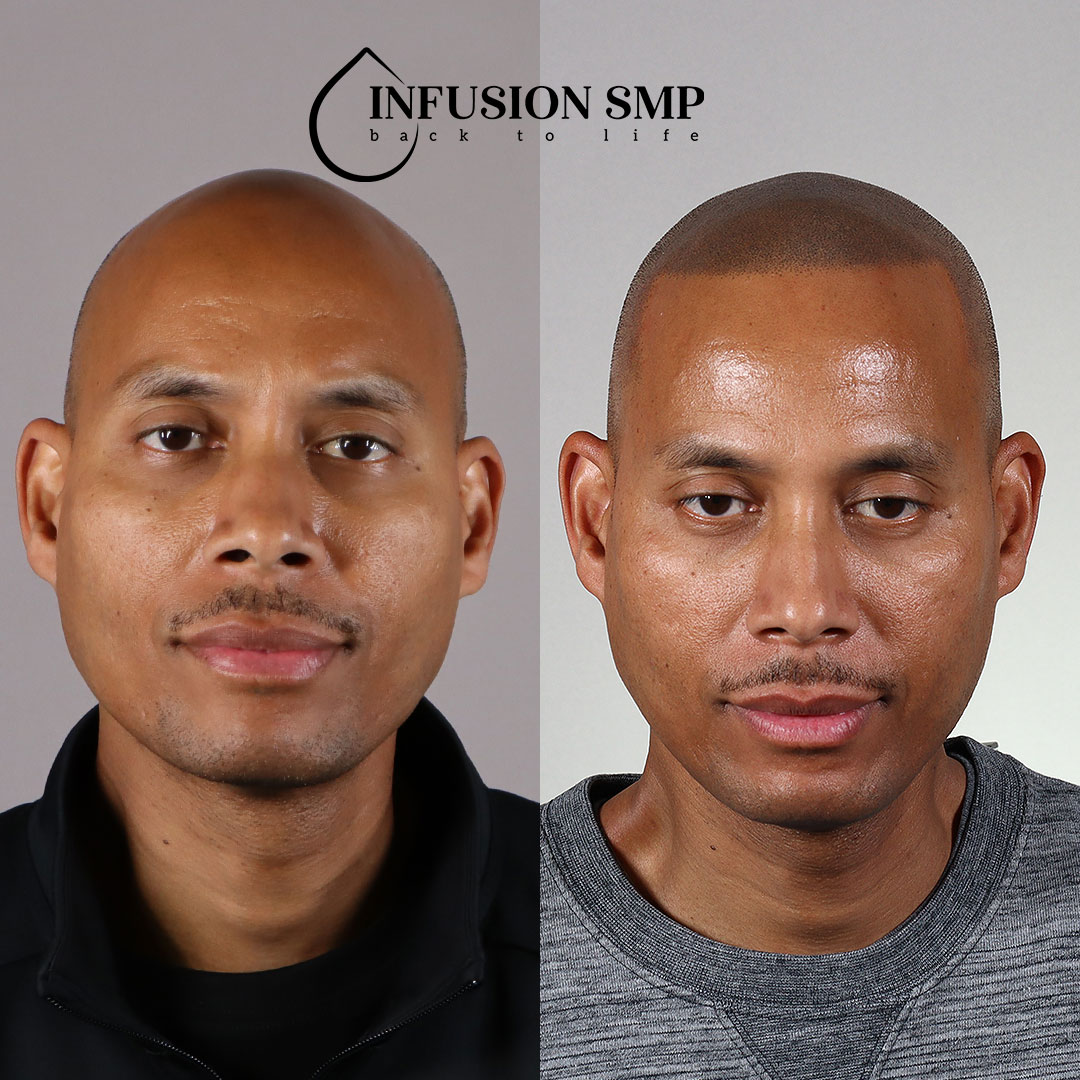
How Soon Can You Go Back to Work After SMP? What Stockton and Sacramento Professionals Should Know About Downtime and Recovery
If you’re considering scalp micropigmentation and your first question is “how much time off do I actually need?” — you’re not alone. It’s one of the most practical concerns we hear from clients in Stockton, and it’s a fair one. The short answer is that most people go back to work the next day, or even the same day after their session. But the full picture depends on what kind of work you do, how your scalp heals, and what conditions you’re walking into when you step outside.
SMP is not a surgical procedure. There are no incisions, no stitches, and no recovery room. Your scalp will look slightly red or feel mildly tender in the hours after a session — similar to a mild sunburn sensation — but that typically settles within 24 hours. What most people don’t realize is that the bigger concern isn’t pain or visible swelling. It’s protecting your fresh pigment from the things that can disrupt the healing process: sweat, sun exposure, and environmental irritants.
What Your Scalp Actually Goes Through After a Session
During the first four to five days after each SMP session, your scalp is in an active healing phase. The pigment has been deposited into the upper layers of the dermis, and your skin is working to lock it in. During this window, your scalp may look slightly darker or more intense than your final result — that’s completely normal and expected. The dots will soften and settle as the skin heals, which is one reason most SMP plans involve two to three sessions spaced a few weeks apart. Each session allows the artist to refine and layer the work based on how your skin responded.
The key aftercare rules during this healing window are straightforward: keep the scalp dry for four to five days (no sweating heavily, no washing), avoid direct sun exposure, don’t pick or scratch, and moisturize gently once the initial phase passes. For most office workers, remote employees, or people in low-exposure environments, none of this significantly disrupts a normal work schedule.
But in Stockton and across the Central Valley, a significant portion of the workforce doesn’t sit at a desk. And that’s where the conversation gets more specific.
What Outdoor and Physical Workers Need to Know Before Booking
The Central Valley has a large agricultural, construction, and trades workforce. If you’re working in the fields near Lodi, on a job site in Tracy, or doing physical labor anywhere in San Joaquin County, you’re dealing with two things that directly conflict with SMP aftercare: intense sun and sweat.
Sweating heavily in the first few days after a session can push pigment out of the skin before it has a chance to fully settle. That doesn’t mean your results will be ruined — but it can contribute to uneven fading that requires more correction work in later sessions. And sun exposure to a freshly treated scalp isn’t just an aftercare issue. The Central Valley’s dry, high-UV summers mean that a bare scalp baking in the sun post-session is a real risk, not a theoretical one.
If you work outdoors, the smart move is to schedule your sessions around your work calendar rather than trying to work around your sessions. Book a Friday appointment if you can take a lighter weekend. Wear a loose, breathable hat when you’re back on the job — a hat is actually fine to wear after the first few days once the initial sensitivity has passed, as long as it’s clean and not rubbing aggressively against the scalp.
The same logic applies to healthcare workers and first responders in Stockton, Modesto, and Elk Grove who wear fitted headgear or work long physical shifts. You don’t need to call in sick, but it’s worth thinking through your schedule so your sessions fall before a day or two of less intense activity when possible.
What Client-Facing Professionals Ask Most Often
A question that comes up often — and one that competitor studios rarely address directly — is this: will people notice I had something done?
The redness from an SMP session typically fades within 24 to 48 hours. For most people, there’s nothing visibly unusual about how your scalp looks by the time you’re back in a meeting, behind a counter, or in a classroom. The dots themselves are deliberately subtle — they’re designed to mimic the natural look of hair follicles, not to announce themselves. In fact, most clients report that coworkers don’t notice anything strange at all. What they do eventually notice, over subsequent sessions, is that the client looks more rested, more confident, or somehow sharper — they just can’t place why.
If you’re in a highly visible client-facing role and you’re worried about appearing during the peak intensity phase (days one through three), scheduling a Thursday or Friday session gives you the weekend to let the initial look settle before you’re back in front of people on Monday.
To learn more about what scalp micropigmentation involves from session to session, including what the healing progression looks like across the full process, the service overview page walks through what you can expect at each stage.
How the Multi-Session Structure Actually Works in Your Favor
One thing that surprises people is how forgiving the session structure is from a scheduling standpoint. Most SMP plans involve two to three sessions, each spaced roughly two to four weeks apart. That means you’re not committing to a single extended recovery period. Each session involves the same short, manageable healing window — and each one builds on the last.
By the time you’re in your second session, you already know exactly how your scalp responds, what the redness looks like on you, and how quickly it fades. That makes planning around work much easier. Many clients in Sacramento and the surrounding areas schedule their first session on a whim once they realize how minimal the commitment is compared to a surgical procedure, which can require weeks of genuine medical recovery.
Compare that to a hair transplant — which can run $10,000 or more, requires actual surgical downtime, involves visible scabbing and swelling that lasts weeks, and still takes up to a year to show full results. For someone commuting along the Highway 99 corridor who can’t afford to disappear from the job for two weeks, SMP’s low-impact recovery is one of its most underappreciated advantages.
If you’re dealing with thinning hair rather than complete baldness, the recovery experience for density enhancement SMP is nearly identical — the same short healing window, the same aftercare guidelines, and the same return-to-work timeline.
Frequently Asked Questions: SMP Downtime for Stockton-Area Workers
Can I go back to work the same day as my SMP session?
In most cases, yes. Your scalp may be slightly red or tender immediately after, but there’s no bandaging, no open wounds, and nothing that would prevent you from returning to a low-exertion environment the same day. If you work in an office or remote setting, you’ll likely feel fine.
What if I have to wear a hard hat or helmet for work?
It’s best to avoid tight headwear pressing directly on the scalp for the first three to five days. If your job requires it without exception, talk to your SMP artist about timing your sessions around a short leave or lighter-duty stretch if possible. After the initial healing window, fitted headgear is generally fine.
Can I drive or commute after my session?
Yes, there’s no sedation involved in SMP, so driving yourself home is completely fine. Many clients drive in from Manteca, Lodi, or Sacramento for their appointment and drive themselves back the same afternoon.
What about working out or physical activity?
Heavy exercise that causes significant sweating should be avoided for the first four to five days after each session. Light walking is fine. If your job involves heavy physical labor, try to schedule sessions before a rest day or a lighter shift when you can.
Will my coworkers notice I had something done?
Most people won’t be able to identify what changed. By day two or three, any visible redness has typically faded. What people notice over time is that you look more confident and more put-together — not that you had a procedure done.
Ready to See What Your Schedule Could Look Like?
If you’ve been holding off on SMP because you weren’t sure you could fit it into a busy work life, the reality is probably more manageable than you think. Whether you’re commuting from Tracy, working in healthcare in Elk Grove, or running your own business in downtown Stockton, the recovery timeline for SMP is designed to work around real life — not the other way around.
At Infusion SMP Scalp Micropigmentation in Stockton, we take the time to understand your schedule, your work environment, and your specific concerns before your first session — so you can plan confidently and walk in knowing exactly what to expect. Reach out to schedule a free consultation and we’ll answer any questions you have before you ever commit to a thing.
Results vary. SMP is a cosmetic tattoo procedure, not a medical treatment, and does not regrow hair. Individual results depend on skin, scalp, hair and aftercare.