

Can You Get SMP If You’re a Person of Color with a Darker Skin Tone? What Stockton and Sacramento Clients Should Know About Pigment Matching
Uncategorized9 min read
Can You Get SMP If You’re a Person of Color with a Darker Skin Tone? What Stockton and Sacramento Clients Should Know About Pigment Matching
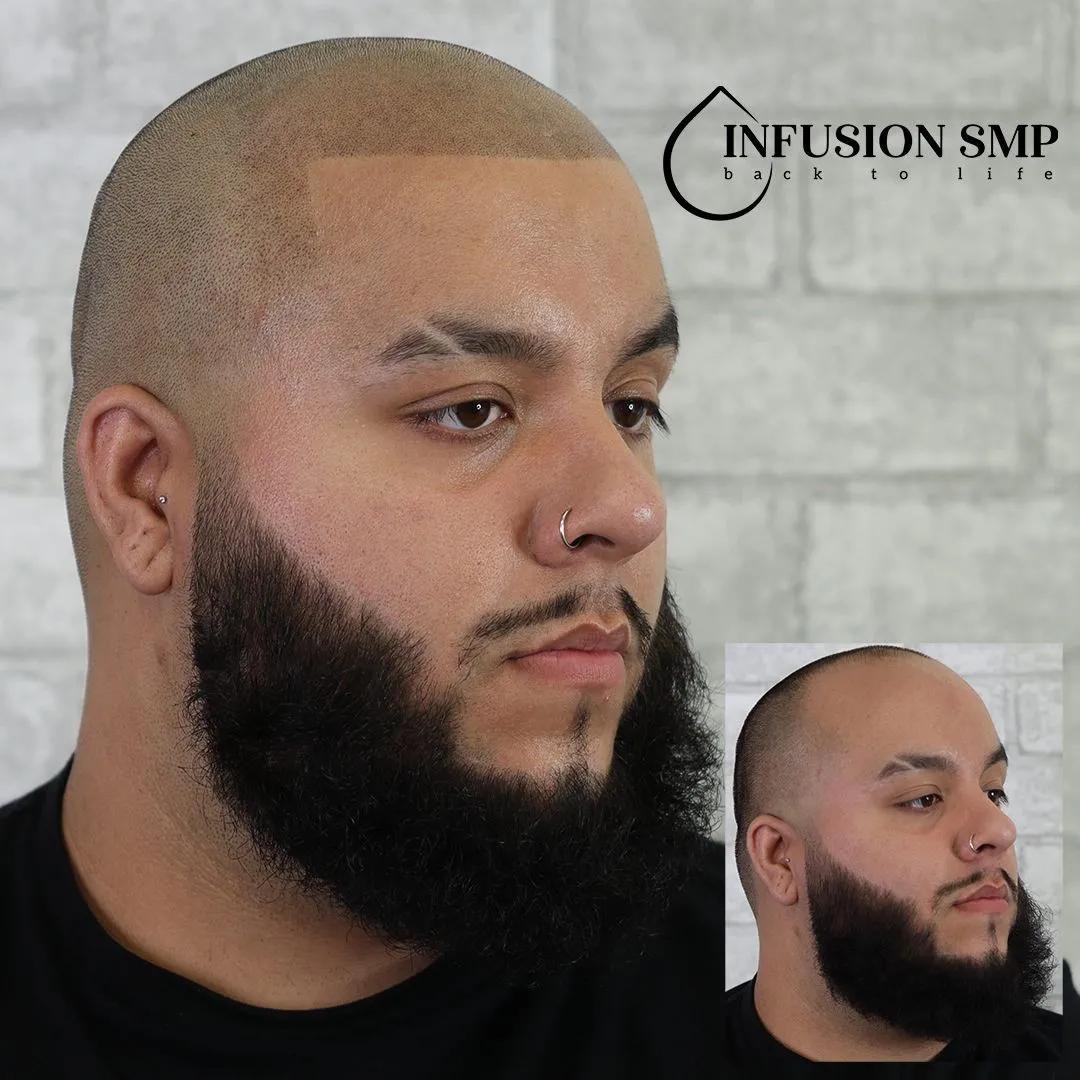
Yes — scalp micropigmentation works exceptionally well on darker skin tones. In fact, many of the most striking, natural-looking SMP results you’ll ever see are on Black, Latino, South Asian, and mixed-heritage clients. But here’s what most studios won’t tell you upfront: the technique, pigment selection, and the artist’s experience with melanin-rich skin matters enormously. Getting those things right is the difference between results that look completely undetectable and results that look off — either too light, too flat, or muddy as the pigment ages. If you’re in Stockton, Sacramento, or anywhere across the Central Valley, this is exactly what you need to understand before booking with anyone.
Why Darker Skin Tones Require a Different Approach to SMP
Scalp micropigmentation isn’t one-size-fits-all. The same pigment that looks perfect on someone with a fair complexion can appear ashy, greenish, or completely invisible on someone with a deeper skin tone — and vice versa. Melanin-rich skin absorbs and reflects light differently, and the layers beneath the surface behave differently during healing and long-term pigment retention.
A few things that change with darker skin:
- Pigment depth and saturation: Darker complexions often require deeper, richer pigment blends to show through and match surrounding follicles. Using an underpowered pigment creates a result that looks washed out or grey once healed.
- Dot size and density: On a shaved scalp with naturally dark, coarse follicles, the replicated dots need to match the size and density of real hair follicles — which on many clients of African or South Asian descent are naturally more prominent. An artist who isn’t experienced in this will either over-stipple or undershoot.
- Hyperpigmentation and scarring risk: Darker skin tones can be more prone to hyperpigmentation after any kind of skin procedure if aftercare isn’t managed correctly. This isn’t a reason to avoid SMP — it’s a reason to work with an artist who understands it.
- Keloid awareness: While keloid scarring is a separate topic, clients with darker skin who have a personal or family history of keloids should discuss this with their SMP artist before starting. Most people with that history do perfectly fine, but it’s worth the conversation.
The Gap Most Studios Leave Open — and Why It Matters to You
If you search the websites of SMP studios across Sacramento, Elk Grove, or even larger national franchise clinics, you’ll notice something: almost none of them have dedicated content explaining how they approach SMP specifically for clients with darker skin tones. You’ll see before-and-after photos occasionally, but no real explanation of how their technique or pigment selection accounts for melanin-rich scalp tissue, deeper follicle tones, or the way darker skin heals differently after sessions.
That silence leaves a lot of Black, Latino, South Asian, and mixed-heritage men and women wondering: Is SMP actually right for me, or is this designed for someone who looks different than I do?
The honest answer is that SMP is absolutely right for you — it’s one of the few hair loss solutions that genuinely works across every skin tone and hair type. But you deserve an artist who can prove they’ve done it well, not just one who says they can.
What to Look for in an SMP Artist When You Have a Darker Skin Tone
Before you book a consultation anywhere — whether it’s a local studio in Stockton, someone in Modesto, or a Sacramento clinic you found online — here’s what to ask and look for:
- Ask to see a portfolio specific to your skin tone. Any experienced SMP artist working in the Central Valley — where the population is deeply diverse — should have healed results on clients with similar complexions to yours. Healed, not just freshly finished. Pigment looks different after it settles.
- Ask how they approach pigment matching for deeper skin tones. A good artist will talk about layering pigments, customizing blends, and how they account for how the color will shift during healing. A vague answer is a red flag.
- Ask about their hairline design philosophy. For many Black and Latino clients, hair texture and natural hairline shape are culturally important — a tightly defined edge, a more squared or rounded hairline depending on preference. An artist who defaults to one generic template regardless of client background isn’t listening to what you actually want.
- Don’t choose based on price alone. The Central Valley is a price-sensitive market, and it’s tempting to compare quotes and pick the lowest number. But on deeper skin tones specifically, inexperienced work shows more obviously — corrections and removal are costly, stressful, and not always fully reversible. Doing it right the first time is always the better investment.
At Infusion SMP in Stockton, working with clients across San Joaquin County’s diverse population isn’t an afterthought — it’s the everyday reality. If you want to learn more about what the process looks like from start to finish, the core SMP service overview is a good place to start.
How Hairline Design Looks Different for Clients of Color — and Why That’s a Good Thing
One of the most meaningful parts of the SMP process for men of color is the hairline conversation. For Black men especially, the hairline is a defining feature — it shapes how your face is framed, how you carry yourself, and how your overall look is perceived. A rounded, soft hairline may suit some clients; a sharper, more defined edge suits others. Some clients want a low hairline that mirrors what they had in their twenties; others prefer something slightly higher and more age-appropriate.
None of these decisions should be made for you. A skilled SMP artist will sit down with you before the first session, look at your face shape, discuss your preferences, and map out a design that feels like you — not a default template. This is especially important for clients whose natural hair texture or follicle pattern looks noticeably different from the light-skinned reference photos that dominate most SMP marketing.
For Latino and South Asian clients dealing with diffuse thinning rather than complete baldness, the conversation is slightly different. In those cases, SMP density work — adding the appearance of thickness between existing hair — is often the right approach. Here’s a closer look at how that process works for clients who want to keep their existing hair but fill in the gaps.
The Central Valley Context — Why This Matters Here Specifically
Stockton and the broader Central Valley have one of the most ethnically diverse populations in California. Black, Latino, Hmong, South Asian, Filipino, and mixed-heritage communities are well-represented across San Joaquin County, Tracy, Modesto, and Elk Grove. Yet most SMP marketing — even from local studios — defaults to imagery and language that speaks primarily to one demographic.
If you’ve looked at SMP before and quietly wondered whether the results you’re seeing in portfolios would actually translate to your skin tone, your hair texture, or your cultural idea of what a natural hairline looks like — that hesitation is valid, and you deserve a direct answer. The answer is yes, it translates. But only when it’s done by someone who’s actually put in the work to understand how.
Frequently Asked Questions
Does SMP look natural on Black men?
Yes — when done by an experienced artist using the right pigment depth and dot technique, SMP on Black men produces some of the most natural-looking results in the industry. The key is matching the replicated follicle dots to the actual size, tone, and density of your natural hair. An artist who understands how to work with coarser hair types and deeper skin tones will get this right.
Will the pigment turn green or blue on darker skin?
This is a real concern, but it’s caused by poor pigment selection or inexperienced application — not by the procedure itself. Quality SMP pigments formulated for this purpose, applied at the correct depth by a trained artist, do not turn green or blue. This is exactly why choosing an experienced artist matters more than saving a few hundred dollars.
Can SMP work on a tightly coiled or shaved-down natural look?
Absolutely. Many Black men wear a close-shaved or faded look, and SMP is specifically designed to replicate a stubble-to-shaved aesthetic. The replicated follicle dots integrate seamlessly with that look when the hairline design and pigment tone are matched correctly.
I’m Latino and have thinning hair on top but still have hair I want to keep. Is SMP an option?
Yes — this is called density enhancement, and it’s one of the most popular SMP applications for clients with diffuse thinning. The pigment is placed between existing hair strands to reduce the contrast between hair and scalp, making the hair look fuller and thicker. It works beautifully across a wide range of skin tones and hair colors common in Latino communities.
How do I find an SMP artist in Stockton or Sacramento who has real experience with darker skin tones?
Ask to see a healed portfolio — not just freshly completed work. Healed results show how the pigment actually settles in the skin, which is the most accurate representation of what you’ll live with long-term. Ask directly about their experience with your specific skin tone and hair texture, and trust your instincts in the consultation. If an artist can’t clearly explain their approach, that’s information.
Ready to See What SMP Can Do for You?
If you’ve been holding back on exploring SMP because you weren’t sure it would work for your skin tone, your hair texture, or your vision of what a natural result looks like — this is your sign to have that conversation. You deserve to feel confident about how you look, and you deserve an artist who takes your specific needs seriously from the first consultation.
Infusion SMP Scalp Micropigmentation is based in Stockton and serves clients across the Central Valley and beyond. Reach out today to schedule a free consultation, ask your questions in person, and see real healed work before you commit to anything. Contact us here to get started.
Results vary. SMP is a cosmetic tattoo procedure, not a medical treatment, and does not regrow hair. Individual results depend on skin, scalp, hair and aftercare.