
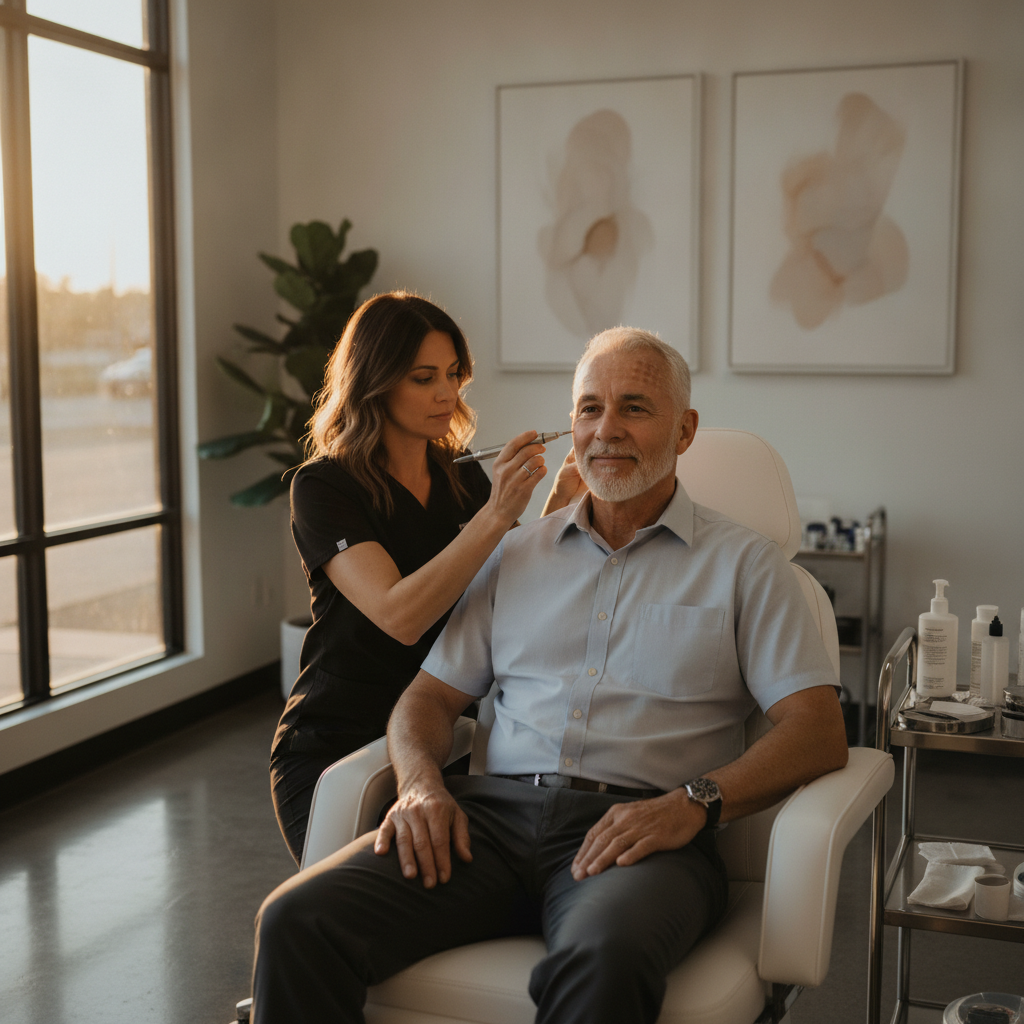
Does SMP Look Different as You Age? What Stockton Clients in Their 40s, 50s, and Beyond Should Know
If you’re in your 40s or 50s and seriously considering scalp micropigmentation, one of the first questions that crosses your mind is probably some version of: what is this going to look like in ten years? It’s one of the most honest, practical questions anyone can ask — and it’s also one that most SMP studios, including several well-known names in the Sacramento area, barely touch on their websites. You deserve a real answer, not just before-and-after photos of clients who just finished their third session.
Here in Stockton and across the Central Valley, a significant portion of our clients are working professionals in their 40s, 50s, and even 60s. Many of them are nurses, agricultural supervisors, or tradespeople who spend long hours in the sun and need a solution that holds up — not just for their consultation photo, but for the next decade of their lives. So let’s talk honestly about how SMP ages, what actually changes over time, and what a skilled artist does upfront to make sure your results still look right fifteen years from now.
What Actually Changes in Your SMP Over Time
SMP pigment does fade gradually over the years — that’s not a flaw, it’s simply how pigment deposited in the upper dermis behaves. Unlike a traditional tattoo that sits deeper in the skin and can spread or blur over time, SMP is placed more superficially, which means it tends to soften and lighten rather than bleed into a distorted shape. Most clients see noticeable fading beginning somewhere between three and six years after their initial sessions, though sun exposure — and Central Valley summers are no joke — can accelerate that timeline.
The other thing that changes over time isn’t the pigment itself, but you. Your skin loosens slightly, your face changes shape, and if you have any natural hair remaining, that hair may continue to thin or recede. None of these changes are problems if your artist planned for them from the start. They become problems only when the original work was done without that long view in mind.
Why Hairline Design Is the Most Important Long-Term Decision You’ll Make
This is the area where experienced artists and inexperienced ones diverge most clearly — and it’s a topic that almost none of the larger Sacramento-area studios address with any real depth on their websites.
A hairline designed for a 28-year-old looks completely different from one that will still look natural on that same person at 48 or 58. Sharp, dramatically low hairlines that look bold in photos can look increasingly out of place as a client’s face ages. An artist who is thinking about your long-term result will design something that sits in a position appropriate to your age now, with a softness and natural irregularity that will continue to look believable as your face matures around it.
At Infusion SMP, a big part of the consultation process is this conversation — not just what will look great on the day you walk out, but what will still look right and natural when you’re in your 60s. That framing changes everything about how a hairline is drawn and how the edges are treated. Learn more about how we approach the full SMP process here.
Pigment Color and Skin Tone Shifts Over the Years
Another change worth understanding is what happens to pigment color as it fades. High-quality SMP pigments, applied correctly, tend to fade toward a lighter, slightly softer version of the original shade. Lower-quality pigments — or techniques borrowed from cosmetic tattooing rather than true SMP — can shift toward blue, green, or grey tones over time. This is one of the most visually obvious signs of work done with the wrong materials or the wrong method.
Choosing a practitioner who uses pigments specifically formulated for scalp micropigmentation, rather than repurposed tattoo or permanent makeup inks, is one of the most important decisions you can make for your long-term results. It’s also worth asking directly: what do your clients’ results look like five years in? A studio with real experience should have that answer.
Touch-Ups Are Normal — and Not as Daunting as You Think
Most clients will benefit from a touch-up session every four to six years or so, depending on lifestyle and sun exposure. For clients living in Tracy, Manteca, Lodi, or anywhere else in the Central Valley where outdoor work and hot, dry summers are facts of life, being proactive about sun protection on the scalp genuinely extends the time between touch-ups.
A touch-up session isn’t starting over. It’s typically a single session to refresh the density and sharpen the definition that has softened over time. It’s also an opportunity to make subtle adjustments — softening a hairline further as you continue to age, or slightly shifting the overall tone if your natural hair has gone grey and the pigment now reads slightly too dark by contrast. A good artist thinks of this as an ongoing relationship, not a one-time transaction.
What About Greying Hair and SMP?
This is a question that comes up constantly from clients in their late 40s and 50s, especially those who still have some natural hair. If your existing hair starts going grey over the years, will your SMP suddenly look out of place?
The short answer is: it depends on how the original work was done, and it’s something your artist should think about with you from the beginning. For clients who are already greying or who are likely to grey significantly, an artist can choose slightly cooler, softer pigment tones that will continue to blend naturally as surrounding hair lightens. This is exactly the kind of forward-thinking consultation that separates an artist who has worked with older clients consistently from one whose portfolio is mostly 25-year-olds with dark hair.
If you’re dealing with thinning hair rather than complete baldness, our density enhancement approach also takes this longer view — working with what you have now while considering how your hair may continue to change.
The Central Valley Factor: Sun Is the Biggest Variable
Living in Stockton or anywhere along the Highway 99 corridor means your scalp takes a beating from the sun from April through October. UV exposure is the single biggest accelerant of pigment fading, and it’s something clients here should take seriously in their aftercare routine — both immediately after treatment and long-term.
Wearing a hat outdoors, applying SPF 30 or higher to the scalp when you’re going to be in direct sun for extended periods, and keeping the scalp moisturized are all habits that meaningfully extend the life of your SMP. These aren’t just instructions for the first two weeks after your session — they’re a long-term investment in the quality of your results.
Frequently Asked Questions About SMP and Aging
Will my SMP still look natural when I’m in my 60s?
Yes — if the hairline was designed with your age in mind from the start. An appropriately positioned, softly edged hairline continues to look believable as your face matures. One that was too sharp or placed too low for your age at the time of treatment is the scenario to avoid, which is why the consultation conversation matters so much.
What happens to SMP if I gain weight or my face changes shape over the years?
SMP sits on the scalp itself and isn’t affected by changes in facial shape or body weight the way a hairline design on paper might seem. The overall look may evolve slightly as your face changes, but this is true of natural hair as well. A well-placed, age-appropriate hairline tends to adapt gracefully.
How often will I need touch-ups?
Most clients in the Central Valley benefit from a refresh every four to six years. Clients with heavy sun exposure or who don’t consistently use SPF on the scalp may need touch-ups closer to the three-to-four-year mark. Touch-ups are typically a single session and much less involved than the original treatment.
Can I adjust the look at a touch-up if my style preferences have changed?
Absolutely. A touch-up is also an opportunity to refine the work — softening a hairline that now looks slightly too defined, adjusting the tone to better match greying natural hair, or modifying the density in specific areas. It’s one of the underappreciated advantages of working with a local artist who knows your history.
Does SMP near Stockton or Modesto cost more for older clients or more complex aging-related work?
Pricing is based on the scope of work, not your age. A touch-up session will always cost significantly less than the original treatment. For specific pricing guidance, the best step is a free consultation where the artist can assess what your scalp actually needs.
The Right Artist Thinks About Your Future, Not Just Your Photos
One thing that distinguishes truly experienced SMP practitioners from those focused on quick results is how they think about time. The best work you can get isn’t the boldest work — it’s work that will still look right, natural, and appropriate on you in ten or fifteen years. For clients in Stockton, Sacramento, Modesto, and across San Joaquin County who are making this investment in their 40s or 50s, that long-term thinking isn’t a luxury. It’s the whole point.
If you’re ready to have an honest conversation about what SMP can do for you now and how to protect that result for years to come, we’d love to meet you. Reach out to Infusion SMP Scalp Micropigmentation to schedule your free consultation. There’s no pressure and no sales pitch — just a real conversation about what’s possible for you.