
Is SMP Right for You If You Have a Darker Skin Tone? What Stockton Clients of Color Should Know
Yes — scalp micropigmentation absolutely works on darker skin tones, and when it’s done right, the results can be stunning. But here’s what most SMP studios won’t tell you upfront: not every artist has the experience, the pigment range, or the technique needed to deliver natural-looking results on Black, Latino, Middle Eastern, or South Asian skin. If you’re in Stockton or anywhere in the Central Valley and you’ve been hesitant to pursue SMP because you weren’t sure it would look right on your complexion, this article is for you.
Why Skin Tone Actually Matters in SMP — More Than Most Studios Admit
Scalp micropigmentation works by depositing small dots of pigment into the upper dermis of the scalp, replicating the look of a freshly shaved head or adding the appearance of density between existing hairs. The challenge with deeper skin tones isn’t that the procedure doesn’t work — it absolutely does. The challenge is that the pigment-to-skin contrast behaves differently depending on your complexion, and an inexperienced artist may not account for that.
On lighter skin, a soft, slightly cool-toned grey pigment creates the look of a hair follicle dot against a pale background. On medium or deeper skin tones, that same pigment can read completely wrong — too grey, too blue, or simply invisible because there isn’t enough contrast. Getting the right pigment blend for your specific skin tone requires an artist who has worked across the full spectrum of complexions and understands how melanin interacts with different pigment formulas over time.
This is one of the areas where many SMP studios in the Sacramento area and beyond fall short. Browse through the before-and-after galleries of most competitors and you’ll notice something: the vast majority of their portfolio examples feature lighter-skinned clients. That’s a red flag if you have a darker complexion and want to feel confident that your artist truly knows what they’re doing with your skin.
What Good SMP Looks Like on Darker Skin Tones
When SMP is done well on deeper skin tones, it looks completely natural — not grey, not ashy, not obviously tattooed. The dots blend seamlessly with the scalp’s surface and mimic the way real follicles appear at skin level. For Black men who keep a clean fade or a shaved head, SMP can make a hairline look crisp and defined without any of the telltale signs of a cosmetic procedure. For Latino men in Stockton and Modesto dealing with receding hairlines or temple recession, a well-designed SMP hairline can look entirely indistinguishable from a natural one.
Achieving this requires a few things working together:
- Pigment blending for your specific undertone. Darker skin doesn’t mean one-size-fits-all. There’s a meaningful difference between cool brown skin, warm olive skin, deeper mahogany complexions, and everything in between. Your pigment mix should reflect your unique undertone — not just your overall darkness.
- Dot size and density calibration. On some darker skin tones, the follicle dots may need to be placed with slightly more precision to avoid over-saturation, which can cause a flat, filled-in look rather than a natural stipple pattern.
- Hairline design that fits your face and heritage. A natural hairline for a Black man in his 30s looks different from a natural hairline for a South Asian man in his 40s. An experienced artist understands these nuances and designs accordingly — not with a cookie-cutter template.
The Question of Keloid Risk — Addressed Honestly
One concern that comes up often in the Black community specifically is the risk of keloid scarring. This is a legitimate question and deserves a straight answer. SMP is not a deep tattoo — the needle only reaches the upper dermis, much more superficially than traditional body tattooing. For most people, this significantly reduces any risk of problematic scarring responses.
That said, if you have a known history of keloid scarring on your scalp or other areas, you should absolutely disclose this during your consultation. A good SMP artist will take that history seriously, may recommend a small test patch in a discreet area, and will help you make an informed decision rather than push you into a booking. If an artist brushes off this question or doesn’t ask about your healing history, that’s a sign to look elsewhere.
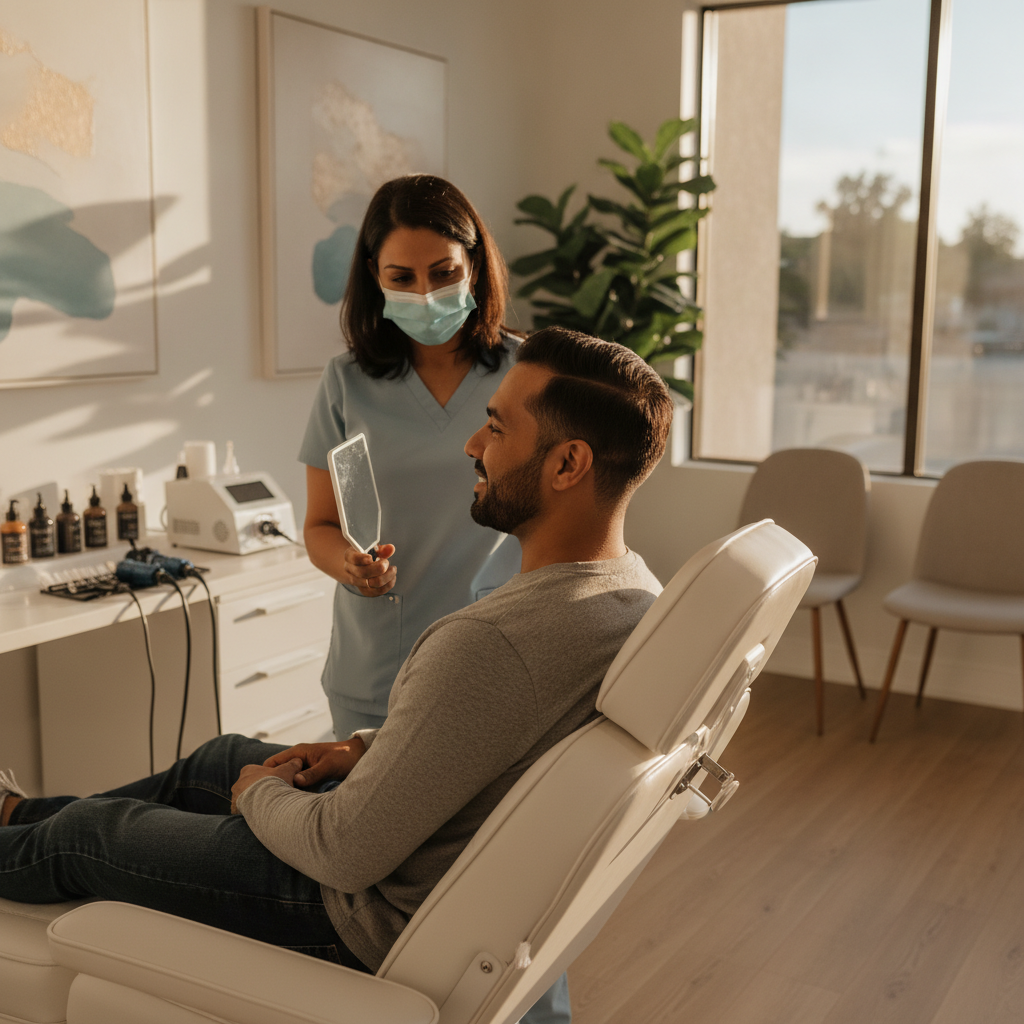
At Infusion SMP in Stockton, consultations are the place to have exactly this kind of conversation — honestly and without pressure. You can reach out to book a free consultation and get answers specific to your skin before you commit to anything.
What to Look for in an SMP Artist If You Have a Darker Complexion
If you’re comparing SMP studios in the Central Valley — or even weighing Stockton providers against options in Sacramento or Tracy — here are the questions you should be asking every artist before you book:
- Can I see before-and-after photos of clients with a similar skin tone to mine? Not just one example — multiple, across different stages of healing.
- What pigments do you use, and how do you adjust them for darker skin? A knowledgeable artist should be able to explain their approach clearly without being vague or dismissive.
- How do you handle hairline design for different ethnic hair patterns? Black hair and Latino hair often have different natural hairline shapes than the templates used for lighter-skinned clients.
- What does the healed result look like at 6 weeks versus 6 months? This is especially relevant for darker skin because pigment can shift slightly during healing — an experienced artist anticipates and accounts for this.
You deserve an artist who has actually done this work across a full range of skin tones — not one who is figuring it out on your scalp.
SMP for Women of Color in the Central Valley
This conversation isn’t just for men. Women of color dealing with thinning hair, alopecia, or a widening part line face the same skin-tone-specific considerations. For Black women in particular, alopecia and traction alopecia — which can result from years of tight styling — are common and emotionally taxing concerns. SMP can help fill in thinning areas and restore the appearance of density without affecting existing hair.
Women in Manteca, Modesto, and across San Joaquin County who are exploring options for diffuse thinning or alopecia coverage should know that density enhancement SMP is a real, effective option — and that the same pigment-matching principles apply. Finding an artist with experience across diverse complexions matters just as much for women as it does for men.
Frequently Asked Questions from Stockton Clients of Color
Will the pigment turn blue or green on my dark skin over time?
Quality SMP pigments used by experienced artists are formulated to avoid the color shifts you sometimes see with cheap ink or inexperienced providers. Using the right pigments from the start — and choosing an artist who knows how they behave on darker skin — is the best protection against unwanted color changes over time.
Do I need to shave my head for SMP if I’m Black or Latino?
Not necessarily. If you want density enhancement or hairline restoration while keeping existing hair, SMP can be placed between your existing follicles to add the appearance of fullness. The shaved-head look is one option, but it’s not the only one.
Will SMP look natural on my skin tone, or will people notice?
When done correctly with the right pigment match and technique, SMP on darker skin tones is genuinely undetectable. The goal is always for people to notice that you look great — not to notice a procedure.
Is there a risk the treatment looks different across my scalp because of uneven pigmentation?
An experienced artist accounts for natural variation in scalp tone and adjusts pigment placement and density accordingly. This is another reason why artist experience across diverse skin tones matters so much.
Can I get SMP if I have hyperpigmentation or dark spots on my scalp?
In many cases, yes. Depending on the location and nature of the discoloration, SMP can actually help blend and minimize the appearance of uneven pigmentation. This is something to discuss specifically during your consultation.
You Deserve Results That Look Like You — Not an Afterthought
Stockton is one of the most diverse cities in California. The Central Valley is home to communities from across the world — and the people who live and work here deserve SMP results that reflect the full range of what natural hair looks like across all of those backgrounds. If you’ve been holding off on SMP because you weren’t sure it would look right on your skin, the answer isn’t to keep waiting. It’s to find an artist who truly has the experience to get it right.
At Infusion SMP, serving Stockton and the surrounding Central Valley, we work with clients across the full spectrum of skin tones. Learn more about what SMP can do for you, or take the first step and book a free, no-pressure consultation. We’ll look at your skin tone, your hair loss pattern, and your goals — and give you an honest picture of what your results could look like.
Ready to see what SMP can look like on skin like yours? Contact Infusion SMP today to schedule your free consultation in Stockton.