
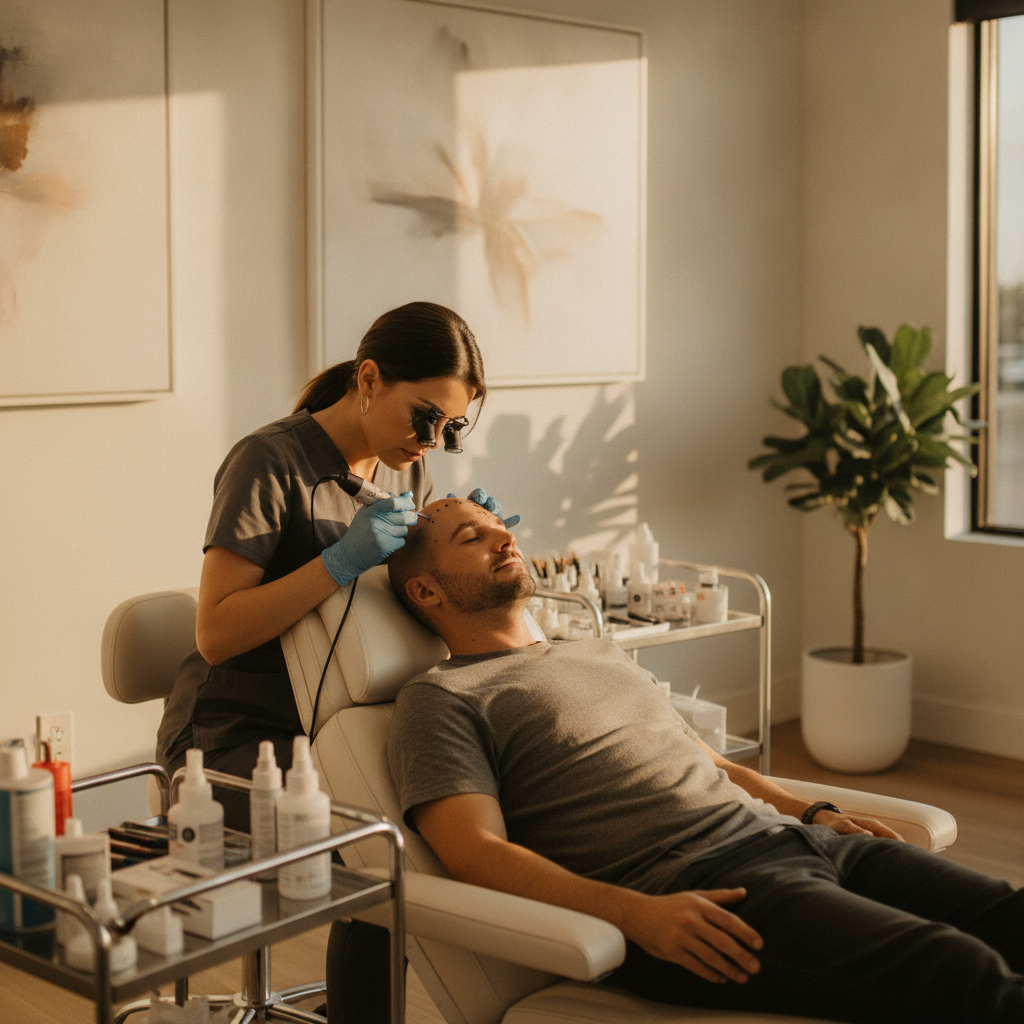
Is SMP Permanent? What Lathrop and Stockton Clients Should Know About Touch-Ups, Fading, and Long-Term Results
Scalp micropigmentation is considered a permanent procedure — the pigment is deposited into your scalp and it stays there — but that doesn’t mean it looks identical ten years from now as it does on the day you walk out of the studio. If you’re based in Stockton, Lathrop, or anywhere along the Highway 99 corridor and you’re seriously considering SMP, understanding how the results age over time is one of the most important conversations you can have before you commit. The good news is that with proper aftercare and an occasional refresh, SMP can look sharp and natural for many years. Here’s what that actually means in practice.
What “Permanent” Really Means in the Context of SMP
When SMP artists say the procedure is permanent, they mean the pigment doesn’t wash off, it doesn’t peel away like a temporary tattoo, and it doesn’t require daily maintenance the way hair fibers or a hairpiece would. The dots placed on your scalp during your sessions remain in the skin indefinitely. What changes over time is the intensity of those dots — they soften and lighten gradually, much the way any tattoo mellows as your skin naturally turns over and sun exposure accumulates.
This is actually a feature, not a flaw. Fresh SMP that’s too dark or too sharp can look harsh. As it settles and softens slightly over the first few weeks, it tends to look more like real stubble and less like ink on skin. Over the following years, the pigment continues to soften in a way that looks natural rather than faded in a patchy or uneven way — provided it was applied correctly with quality pigments and proper technique.
What you want to understand going in is that SMP is not truly “set it and forget it” forever. Think of it as a long-term relationship with your appearance rather than a one-time fix. Most clients find that a maintenance session every three to six years is all it takes to keep things looking fresh.
What Causes SMP to Fade — And Why It Matters in the Central Valley
Several factors affect how quickly SMP pigment softens over time, and some of them are especially relevant if you live and work in the Central Valley’s hot, dry climate.
- Sun exposure: UV rays are the single biggest accelerator of pigment fading. If you spend time outdoors in Stockton summers — whether you’re working in agriculture, construction, healthcare campus parking lots, or simply enjoying the Delta — unprotected sun exposure will fade your SMP faster than almost anything else. This is why aftercare guidance consistently emphasizes SPF on the scalp once you’re fully healed.
- Skin type and oiliness: Clients with oilier skin tend to see slightly faster fading than those with drier skin. Oil naturally breaks down pigment over time. That said, a skilled SMP artist accounts for this during application by adjusting needle depth and pigment saturation appropriately.
- Pigment quality: Not all SMP pigments are created equal. Low-quality pigments — common with budget providers or overseas clinics — are more prone to color shifting, turning blue or greenish as they age rather than simply fading to a softer grey or brown. This is one of the clearest reasons why going with an experienced, reputable local artist matters enormously for long-term results.
- Aftercare in the healing phase: The first four weeks post-session are critical. Scratching, picking, heavy sweating, or skipping moisturizer can cause pigment to lift unevenly before it fully sets. Clients who follow aftercare instructions carefully tend to retain pigment better from the start.
For clients in Lathrop, Manteca, Tracy, and the broader San Joaquin County area, the summer heat is a real consideration. High UV index days are common from May through September, and that’s exactly the period when protecting your scalp becomes most important for preserving your results long term.
The Touch-Up Timeline: What Most Clients Actually Experience
Here’s something most competitor websites gloss over: the difference between your initial sessions and long-term touch-ups. Your original SMP treatment typically involves two to three sessions spaced a few weeks apart. This multi-session structure isn’t just about layering pigment — it allows your artist to assess how your skin has retained each layer and refine the work accordingly. By the end of your final initial session, the pigment has had time to settle and the result looks complete, natural, and consistent.
After that, most clients go three to six years before they need any additional work. Some clients with naturally dry skin and diligent sun protection push that window even further. When you do come back for a refresh, it’s typically a single session — not a full restart from scratch. The pigment is still there; it just needs to be brightened up to match the density and crispness of when it was fresh.
This is a meaningful contrast to alternatives like hair systems or hair fibers, which require daily application and replacement every few months, or prescription medications that require indefinite use to maintain results. SMP’s maintenance cycle is genuinely low compared to most other hair loss solutions. Learn more about how SMP works as a complete solution for different types of hair loss.
How to Protect Your Investment and Extend Your Results
The steps that extend your SMP results are simple — and most of them cost nothing. Once your scalp is fully healed after your final initial session, here’s what makes the biggest difference:
- Apply SPF 30 or higher to your scalp whenever you’re outdoors. A light, non-greasy sunscreen designed for the face or scalp works well and won’t feel heavy in Central Valley heat.
- Keep your scalp moisturized. Dry skin fades pigment faster. A simple, fragrance-free daily moisturizer applied after showering takes about thirty seconds and goes a long way.
- Avoid prolonged soaking — extended time in pools, hot tubs, or the Delta on long summer days can accelerate fading if it becomes a daily habit without SPF protection.
- Stay consistent with any follow-up appointments your SMP artist recommends. A quick check-in at the one-month mark after your final session can catch any spots that need minor reinforcement before they become noticeable.
If you work a physically demanding job — in agriculture, logistics, or one of the healthcare systems in the Stockton or Modesto area — and you’re spending time outdoors or sweating heavily during the healing phase, communicate that to your artist upfront. They can adjust the timing and pacing of your sessions and give you aftercare guidance that fits your actual lifestyle, not a generic pamphlet.
What to Ask Before You Book: Questions About Longevity That Most Studios Won’t Volunteer
One of the gaps you’ll find when researching SMP providers — including many of the Sacramento-area studios that market to Central Valley clients — is that they don’t proactively address longevity in a straightforward way. Here are questions worth asking any studio you’re considering:
- What brand of pigments do you use, and how do they age in terms of color stability?
- What does a typical refresh look like for your clients three to five years out?
- Do you offer touch-up pricing for existing clients, and is there a loyalty rate?
- What aftercare guidance do you provide specific to hot, sunny climates?
An artist who gives you confident, specific answers to those questions has likely done this work long enough to know what their results look like years later — which is exactly the kind of experience you want working on your scalp.
Frequently Asked Questions About SMP Longevity from Stockton and Lathrop Clients
Will my SMP look the same in five years as it does right after my sessions?
Not identical — the pigment will soften and lighten somewhat over time, which typically looks natural rather than patchy. Most clients find the three-to-five year mark is when a single refresh session helps restore the original crispness.
Does SMP fade faster in hot climates like the Central Valley?
Sun exposure is the main accelerator of fading, so yes — clients in Stockton, Lathrop, Manteca, and the broader San Joaquin Valley who spend significant time outdoors without SPF protection may see faster softening. Consistent sunscreen use largely offsets this.
Can SMP pigment change color over time instead of just fading?
With high-quality, SMP-specific pigments applied at the correct depth, the pigment should simply soften to a lighter tone over time. Color shifting — turning blue, green, or purple — is more common with tattoo inks used improperly for SMP, which is why choosing an experienced, specialized artist matters.
How much does a touch-up session cost compared to the original treatment?
Touch-up sessions are typically a fraction of the cost of the original treatment since the foundational work is already there and only needs to be refreshed. The exact pricing depends on how much of the scalp needs attention. Reach out to Infusion SMP to discuss what a refresh would look like for your specific situation.
Is there anything I can do right now to slow down fading before it starts?
Follow your aftercare instructions closely during the healing phase, protect your scalp with SPF once healed, keep the scalp moisturized daily, and avoid prolonged soaking. These habits collectively make a significant difference in how well your pigment holds over the years.
Ready to Talk About Long-Term Results That Work for Your Life?
If you’re weighing SMP and you want honest answers about what your results will look like not just next month but five years from now, that’s exactly the kind of conversation we have at Infusion SMP Scalp Micropigmentation. Whether you’re coming in from Lathrop, Tracy, Stockton, or Stanislaus County, we’ll walk you through what to expect at every stage — the initial sessions, the healing process, the way results mature over time, and what a long-term maintenance plan looks like for your scalp, your skin type, and your lifestyle. Contact us today to schedule your free consultation and get a clear picture of what SMP can do for you — not just on day one, but for years to come.