
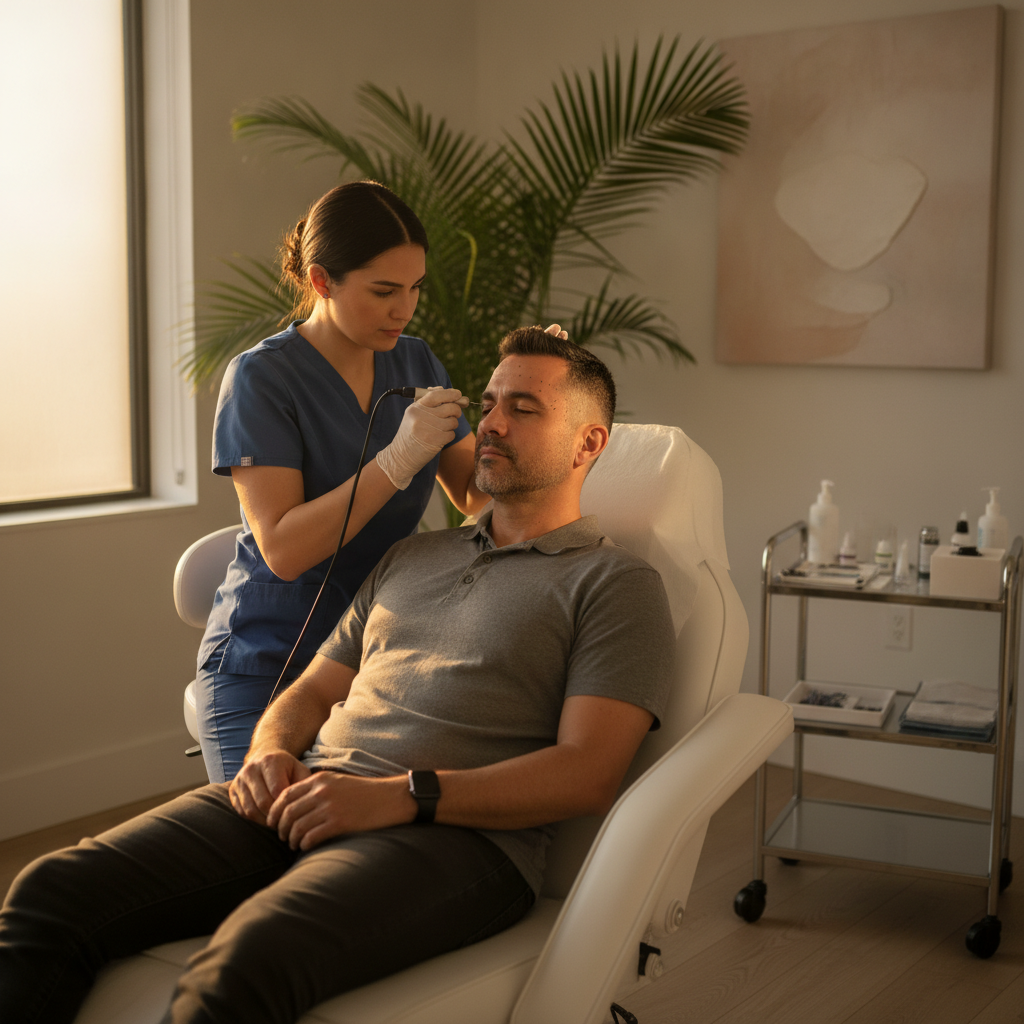
Can SMP Help with Alopecia? What Manteca and Stockton Clients Should Know About Patchy Hair Loss
Yes — scalp micropigmentation can be one of the most effective visual solutions for alopecia, but how well it works depends on your specific type of hair loss and where your condition currently stands. If you’re dealing with alopecia areata, alopecia totalis, or diffuse thinning across the scalp and you’ve been searching for a real answer beyond steroid injections and waiting — this article is for you. Clients from Manteca, Stockton, Tracy, and throughout San Joaquin County have come to us with exactly this question, and the honest answer is nuanced but genuinely encouraging.
What Is Alopecia and Why Does It Make Hair Loss So Hard to Treat?
Alopecia is an umbrella term that covers several types of hair loss caused by immune system dysfunction, hormonal changes, genetics, or stress. The most common forms are:
- Alopecia areata — patchy, unpredictable hair loss that can affect small or large areas of the scalp
- Alopecia totalis — complete loss of hair on the scalp
- Alopecia universalis — total hair loss across the scalp and body
- Diffuse alopecia — widespread thinning without a clearly defined pattern, often affecting women
What makes alopecia especially frustrating is the unpredictability. Unlike pattern baldness, which tends to follow a gradual, somewhat predictable progression, alopecia can appear and disappear, shift locations, or suddenly worsen. Medications like minoxidil or cortisone injections may slow it down for some people, but they rarely stop it entirely — and they do nothing to address what’s visible right now.
That’s where scalp micropigmentation comes in. SMP doesn’t treat the underlying condition — no cosmetic procedure does — but it addresses the thing that matters most in your day-to-day life: how your scalp looks.
How SMP Works for Alopecia Clients Specifically
Scalp micropigmentation uses specialized pigment and fine needles to replicate the look of hair follicles on the scalp’s surface. For someone with alopecia, the approach depends heavily on which type you have and whether your hair loss is currently active or stable.
If You Have Alopecia Totalis or Are Fully Bald
This is actually one of the more straightforward applications of SMP. When there’s no remaining hair to work around, a skilled artist can design a complete, even stubble effect across the entire scalp — replicating the look of a closely-shaved head with natural follicle density. The result is clean, consistent, and — when done well — completely undetectable. Scalp micropigmentation for complete hair loss gives you a defined, permanent appearance that doesn’t shift, fall off, or require daily effort the way hairpieces and hair systems do.
If You Have Alopecia Areata with Patchy Loss
This is where the conversation gets more specific. Patchy alopecia creates smooth, bare patches surrounded by existing hair — and blending pigment into those patches while matching the surrounding follicle pattern requires real skill and an experienced eye. It can be done effectively, but the honest caveat is this: if your alopecia is still actively changing — new patches appearing, old ones partially regrowing — the finished result may shift over time as your scalp changes around the pigment.
That’s not a reason to avoid SMP. It’s a reason to time it thoughtfully and to work with an artist who understands alopecia specifically, not just pattern baldness. We’ll talk about what to look for in that conversation below.
SMP for Women with Alopecia
Women make up a significant portion of alopecia clients, and their needs look different from what most SMP studios talk about publicly. Women with diffuse alopecia or alopecia areata rarely want a shaved-head aesthetic. What they want is coverage — a scalp that doesn’t show bare skin through thinning hair, or patches that blend seamlessly when the hair is styled. SMP for women focuses on adding the appearance of density and darkening the scalp where it shows through so that the contrast between skin and hair nearly disappears. It’s subtle, deliberate work — and it can genuinely change how a woman feels about her reflection.
The Question Most Studios Skip: What If Your Alopecia Is Still Active?
Here’s the gap that most SMP providers — including many of the Sacramento-area studios drawing clients from Modesto and Tracy — don’t adequately address: timing matters. If your alopecia is in an active flare and patches are still appearing or shifting, SMP over a new patch may look out of place once that patch partially regrows. And if a previously treated patch comes back, it can look different from the surrounding pigmented area.
This doesn’t mean you have to wait forever. But it does mean the consultation conversation should include honest questions about:
- How long your current hair loss pattern has been stable
- Whether you’re undergoing any medical treatment that might change regrowth
- Your realistic expectations if alopecia continues to progress after SMP
- Whether a full-scalp approach makes more sense than patching individual spots
A practitioner who skips these questions is one who isn’t thinking about your long-term result — only about booking the session. At Infusion SMP, we’d rather have a thorough consultation and set you up for an outcome you’ll still love in five years than rush into a result that doesn’t hold up.
What Results Actually Look Like: Realistic Expectations for Alopecia Clients
SMP for alopecia typically takes two to three sessions, spaced a few weeks apart, to build the right layering and density. The first session establishes the base. Subsequent sessions refine the tone, sharpen the hairline if applicable, and fill in any areas that healed lighter. Most clients see the full result settle in the weeks after the final session — and the change is often striking.
If you’re considering SMP for hair density rather than complete coverage, the same session structure applies — it’s about building a realistic, layered impression of fullness rather than a flat, uniform fill.
One thing worth knowing for clients in Manteca, Stockton, and across the Central Valley: the hot, dry summers here can affect scalp healing after SMP sessions. Protecting the treated area from direct sun exposure during the first few weeks is important — both for pigment retention and for keeping the scalp from drying out during the healing phase. Your artist should walk you through specific aftercare guidance tailored to the season you’re being treated in.
Frequently Asked Questions: SMP and Alopecia
Can SMP make alopecia worse or trigger new patches?
There is no clinical evidence that SMP triggers alopecia flares. The procedure works on the surface layer of the scalp and does not affect hair follicles. If you have active alopecia, a flare after SMP would be a continuation of the underlying condition, not caused by the procedure itself.
What if my alopecia comes back in a treated area?
If a previously treated patch loses hair again due to alopecia regrowth or a new flare, that area typically still blends reasonably well — especially if the surrounding scalp was also treated. Spot touch-ups are an option if the change is significant. Your artist should discuss this possibility with you before the first session.
Is SMP permanent for alopecia clients the same way it is for pattern baldness?
The pigment itself is long-lasting and behaves the same regardless of the cause of hair loss. SMP generally holds well for several years before a light touch-up may be needed. The variable with alopecia isn’t the pigment — it’s that your scalp’s hair pattern may continue to change over time in ways that pattern baldness clients don’t experience.
Do you work with women who have alopecia areata?
Yes. Women with alopecia areata, diffuse thinning, or alopecia totalis are all candidates for SMP, though the approach varies significantly based on your specific hair loss pattern, current hair coverage, and goals. A consultation is the best way to map out what’s possible for your individual situation.
How much does SMP for alopecia cost compared to other treatments?
SMP is typically a fraction of the cost of ongoing medical treatments, hair systems, or hair transplants — and unlike those options, it requires no daily maintenance. Pricing depends on the scope of coverage needed. We’re happy to discuss realistic cost ranges during a free consultation — no pressure, no obligation.
You Deserve to Feel at Home in Your Own Skin
Alopecia isn’t just a hair loss condition. It’s something that can quietly reshape how you carry yourself, how you approach a mirror, how you feel walking into a room. If you’ve been sitting with that feeling — managing it, minimizing it, working around it — you don’t have to keep doing that indefinitely.
Infusion SMP Scalp Micropigmentation is based in Stockton and serves clients throughout San Joaquin County, Stanislaus County, and the surrounding Central Valley — including Manteca, Tracy, Modesto, and beyond. Whether you’re dealing with full alopecia totalis or patchy areata, we’ll have an honest conversation about what SMP can do for you and what it can’t, and we’ll build a plan that makes sense for your life.
Schedule your free consultation today and let’s talk about what’s actually possible for your scalp.